At 6:00 AM local time in Switzerland on May 27, 2015, four separate operations targeting FIFA and CONCACAF were launched simultaneously.
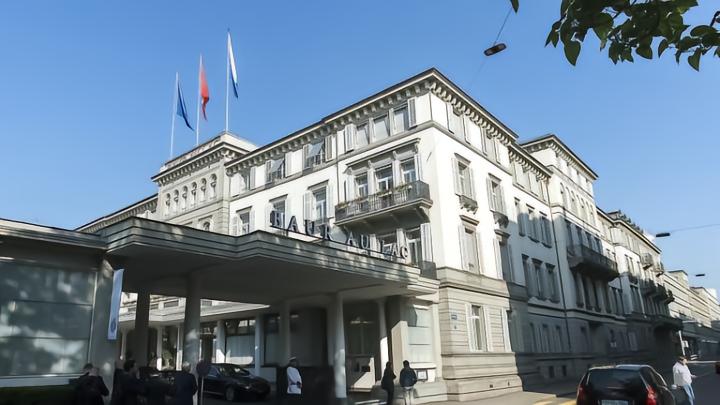
Hotel Barlack, Zurich
At the request of the U.S. Department of Justice for judicial assistance, plainclothes officers from the Swiss Federal Police, armed with arrest warrants issued by the Federal Office of Justice, raided the Barlác Hotel in Zurich and arrested seven people on the spot.
At this time, there were 48 hours left before the opening of the 65th FIFA Congress, and senior officials from football associations of more than 200 countries around the world were staying here.
The seven people arrested are: Jeffrey Webb (FIFA Vice President and CONCACAF President), Eugenio Figueiredo (FIFA Vice President and former CONMEBOL President), Eduardo Lee (Costa Rica Football Federation President and FIFA Executive Committee Member), José Marin (former Brazilian Football Confederation President and senior official of the 2014 FIFA World Cup Organizing Committee), Rafael Isqueville (Venezuela Football Federation President), Julio Rocha (Nicaraguan Football Federation President), and Costas Takas (CONCACAF executive).
(Source: The New York Times)
Lake Wallishofen, Zurich
Meanwhile, another team of Swiss Federal Police officers arrived at the FIFA headquarters building on the shores of Lake Wolfshofen in Zurich. There, they interviewed Walter de Gregorio, then FIFA's Director of Communications and Public Affairs. They retrieved written materials related to the World Cup bid, voting records, and financial documents.
Miami
At the CONCACAF headquarters in Miami, USA, the FBI and the IRS conducted a simultaneous search and seized dozens of boxes of financial statements and offshore account documents.
Brooklyn, New York
U.S. Attorney General Lynch held a press conference to publicly release an indictment detailing 47 charges. The initial indictment includes 14 individuals, including seven arrested officials, four businessmen who pleaded guilty in the U.S., and three executives of sports marketing companies. The indictment alleges that " FIFA, its six continental federations, regional associations, member associations, and marketing partners constitute a de facto interconnected corporation. For 24 years, the individuals involved repeatedly engaged in extortionate conspiracy through this organizational structure " (FBI official press release). Marketing companies monopolized broadcasting and sponsorship rights for events in the Americas through kickbacks, and officials participated in the distribution of huge sums of cash and offshore assets. The total amount of bribes involved exceeds $150 million. This formally discloses this 24-year-long systemic corruption case.
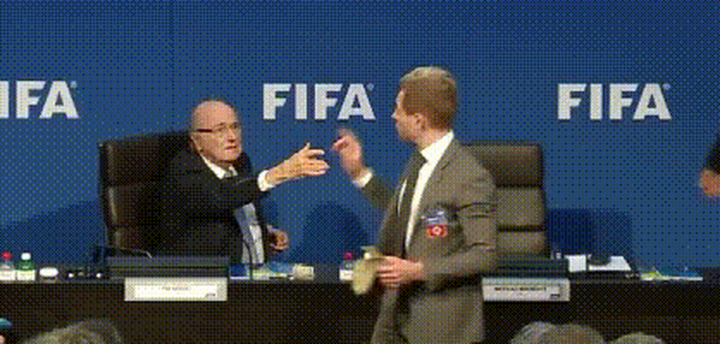
However, on May 29th, the 65th FIFA Congress was held as scheduled in Zurich. Then-President Blatter ran for re-election and was successfully re-elected. Global media were in uproar. Football associations from several countries, including England, Germany, and the Netherlands, issued strong statements demanding Blatter's immediate resignation. Meanwhile, American sponsors such as Coca-Cola, Visa, and McDonald's immediately issued public warnings, threatening to terminate their multi-billion dollar long-term sponsorship contracts.
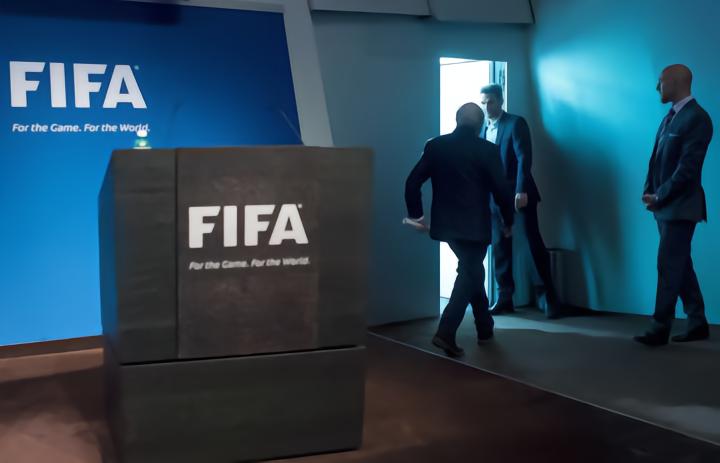
On June 2, under pressure from the US judiciary, European football, and sponsors, Blatter announced his resignation and planned to launch a new election for FIFA president, creating a temporary power vacuum in international football.
Caught and turned into an informant, Blaze infiltrated FIFA.
Chuck Blazer is an American who served as Secretary General of CONCACAF from 1990 to 2011 and as a member of the FIFA Executive Committee from 1997 to 2013. He was known in the football world as "Mr. Ten Percent" because he would take a 10% cut of any broadcasting rights or commercial sponsorship deals in the region.
During his more than two decades in office, he amassed over $15 million in illegal income through accepting bribes from sports marketing companies and misappropriating funds from the Football Association, all of which he deposited into offshore accounts in the United States or overseas. To conceal this enormous amount of illicit income, he deliberately failed to declare his taxable income to the IRS for many years, owing substantial sums in taxes.
While reviewing cross-border fund flows, the IRS discovered a large amount of money continuously flowing from accounts in the Caribbean to Blazer's private accounts, and subsequently launched an investigation in conjunction with the FBI. In 2011, law enforcement officers apprehended him in New York, facing six counts of tax evasion, as well as charges of conspiracy to commit racketeering, wire fraud, and money laundering. If convicted on all charges, he could face a maximum sentence of 15 to 20 years in prison.
In exchange for a reduced sentence, Blazer agreed to act as a secret informant for the FBI, going undercover in CONCACAF and FIFA to gather evidence of their corruption. (U.S. District Court for the Eastern District of New York, CCTV.com, The Paper)
The FBI equipped Blazer with miniature listening devices, disguised inside keychains and wristwatches. For more than two years before his FIFA executive committee membership expired, Blazer aroused no suspicion, and Blatter and the other executive committee members continued to regard him as a reliable insider.
During a closed-door FIFA Executive Committee meeting in London in 2012, Blaise brought a listening device into the meeting room and recorded all conversations between Executive Committee members regarding the World Cup bid, revenue sharing from commercial contracts, and the receipt of kickbacks. These recordings became one of the key pieces of evidence in a subsequent request for cooperation from Swiss judicial authorities.
The documents he provided confirmed that, starting in 1991, multiple sports marketing companies had been bribing high-ranking officials of CONCACAF and CONMEBOL to secure broadcasting and commercial rights for the Gold Cup, World Cup qualifiers, and Copa America at low prices, paying kickbacks in return. The total amount involved exceeded $200 million. He also exposed bribery in the bidding processes for the 1998 FIFA World Cup in France and the 2010 FIFA World Cup in South Africa. This led to a criminal investigation by Swiss prosecutors into the bidding processes for the 2018 FIFA World Cup in Russia and the 2022 FIFA World Cup in Qatar.
After completing all the evidence gathering, Blazer ultimately waived his prison sentence due to serious illness. In 2015, FIFA's Ethics Committee imposed a lifetime ban on him from all football-related activities. (US Department of Justice indictment, Sports Illustrated, CBS report)
After gathering all the leads, on May 27, 2015, the U.S. Department of Justice requested the cooperation of the Swiss Federal Office of Justice to carry out the arrest operation in Switzerland.
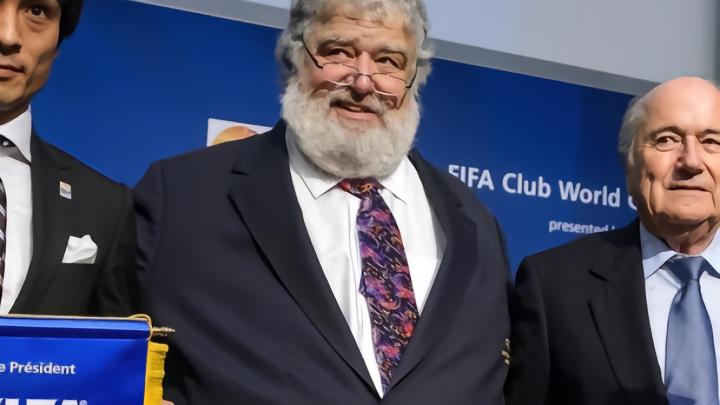
Blatter and Platini were suspended, and Infantino took over.
Following Blatter's downfall, Michel Platini, then FIFA Vice President, FIFA Executive Committee member, and UEFA President, became the undisputed second-in-command within FIFA's power structure and Blatter's long-time designated successor. FIFA planned to hold a new presidential election on February 26, 2016. Barring any unforeseen circumstances, Platini was expected to be elected eight months later.
If nothing unexpected happens, then something unexpected has happened.
On September 25 of that year, the Swiss Attorney General's Office issued an official statement, publicly disclosing for the first time the suspicious payment of 2 million Swiss francs by Blatter to Platini in 2011, and formally launching a criminal investigation against Blatter. (Xinhua News Agency, September 26)
Both parties explained that the payment was for Platini's services as Blatter's personal consultant from 1998 to 2002, but they failed to provide supporting evidence such as employment contracts or relevant work records for that period. Furthermore, the settlement was delayed for nine years, which is completely illogical.
On December 21, FIFA's Ethics Committee determined that both Blatter and Platini had abused their power and violated internal ethical guidelines, and formally issued an eight-year global ban (later reduced to six years for Blatter and four years for Platini). Platini was legally disqualified from running for election and had no choice but to withdraw from the race.
The aforementioned officials from the Americas involved in the case were extradited to the United States for alleged irregularities and money laundering in the selection of the 2018 and 2022 World Cup hosts. All pleaded guilty, and several were sentenced to several years in prison. The hundreds of millions of dollars in illicit funds were fully confiscated by the U.S. judicial system. (Xinhua News Agency)
Blatter and Platini were later acquitted criminally, but due to years of bans, they were completely disqualified from running for FIFA president.
Executives of the sports marketing companies involved in the case were sentenced to huge fines and imprisonment, and the companies were permanently banned from participating in FIFA global event collaborations.
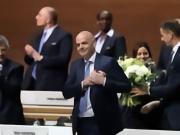
On February 26, 2016, Gianni Infantino, then UEFA General Secretary, received strong support from UEFA and defeated Salman, nominated by the Asian Football Confederation, to be elected FIFA President. This was something he could not have imagined nine months earlier.
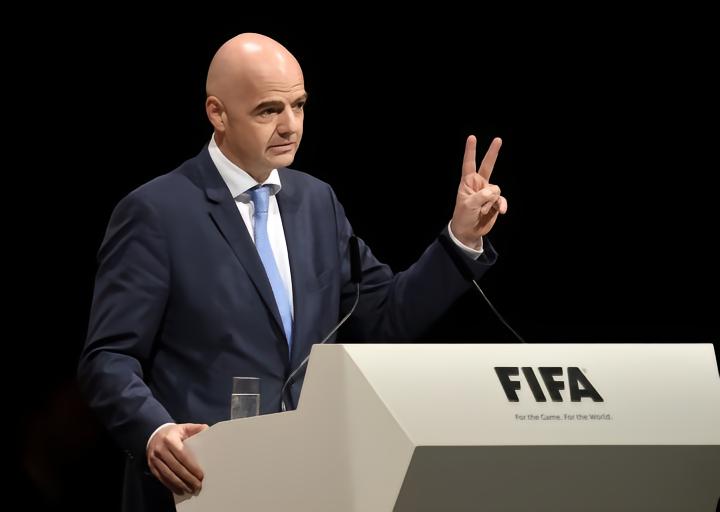
FIFA cannot escape the control of the United States.
A key weapon enabling the United States to intervene in international affairs is what it calls "long-arm jurisdiction." This essentially means that "even if someone does not reside or operate within the United States, as long as their actions have a clear connection to U.S. territory, U.S. courts can exercise jurisdiction over individuals or entities outside the jurisdiction."
More importantly, FIFA's income and expenditure are settled in US dollars, and funds flow through US bank accounts. Furthermore, international communication via email and cross-border telecommunications involves data transmission through US communication service providers. This connects to their claimed US territory and provides a justification for the US to exercise long-arm jurisdiction.
The ongoing FBI investigation into the Argentine Football Association's alleged money laundering also invokes long-arm jurisdiction.
(It should be noted that long-arm jurisdiction is a practice of the United States unilaterally expanding the extraterritorial effect of its own laws, which is not in line with the principle of territorial jurisdiction generally accepted in international law.)
Beyond the legal sphere, the United States also wields significant influence over FIFA in the commercial sector.
Coca-Cola and Visa, long-term Tier 1 partners of FIFA, were instrumental in pressuring Blatter to resign, in a joint effort with McDonald's and Budweiser. According to a report by industry analysis firm Ampere Analysis, US-based brands accounted for a staggering 52% of all sponsorship revenue for this World Cup.
Of the $3.925 billion in broadcasting rights revenue generated by this World Cup, the United States contributed $945 million, accounting for a quarter of the global total. It is the single-country market with the strongest purchasing power globally.
Furthermore, the 2026 USA-Mexico World Cup will bring unprecedented financial benefits to FIFA. FIFA's total revenue for the entire four-year cycle from 2023 to 2026 is projected to be $13 billion, with this World Cup alone contributing approximately $8.9 billion, making it FIFA's most profitable tournament ever. This is thanks to the mature business environment in the United States, with a significant surge in revenue from ticket sales, premium boxes, and city sponsorships. (The Paper, Economic Daily)
It can be said that the United States is FIFA's biggest financial backer.
More importantly, all these cross-border business transactions, sponsorship payments, and copyright settlements are conducted in US dollars, and the flow of funds must pass through the US banking clearing system. Furthermore, FIFA's global development grants and subsidies to member football associations are also disbursed in US dollars. The entire financial system is deeply intertwined with the US dollar ecosystem, making it difficult to operate independently of US financial rules.
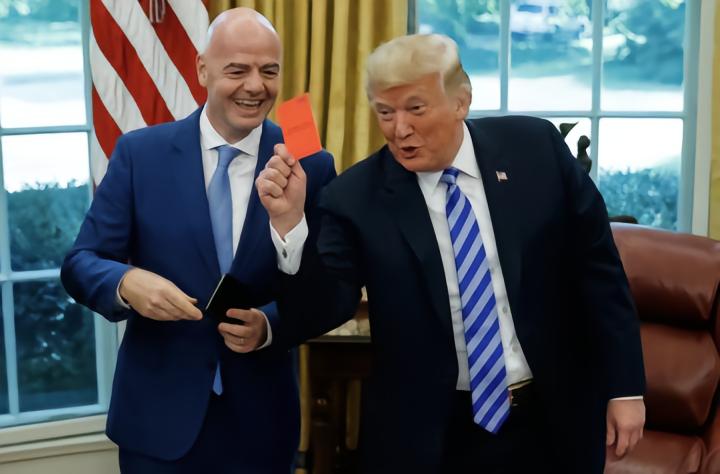
It can be said that Infantino is an objective beneficiary of the United States' long-arm jurisdiction, but it has also made him keenly aware that the United States has the judicial and commercial capabilities to "show a red card" to the FIFA leadership at any time.
Conclusion
A few days ago, Balogun received a red card for a stampede, which, according to globally unified rules, would have automatically made him absent from the Round of 16 match against Belgium. However, Trump personally called Infantino to exert pressure, and FIFA ultimately invoked a long-dormant probationary period regulation, setting a precedent in World Cup history for politicians interfering with on-field punishments.
Several European media outlets (such as Bild and Le Monde) commented that Infantino's deliberate reliance on American political power over the years stems from the fact that the 2015 FIFA corruption case was spearheaded by the US Department of Justice, and he fears potential legal repercussions from the US. Furthermore, the 2026 World Cup brings FIFA enormous revenue, and he dares not offend the White House, ultimately sacrificing the fairness of the tournament in exchange for American political protection and economic benefits.