
On July 16th, Beijing time, the second semi-final of the 2026 USA-Canadian Cup will take place, with the Three Lions and the Pampas Eagles facing off in Atalanta. The two teams will compete for the final ticket to the final at 3:00 AM Beijing time.
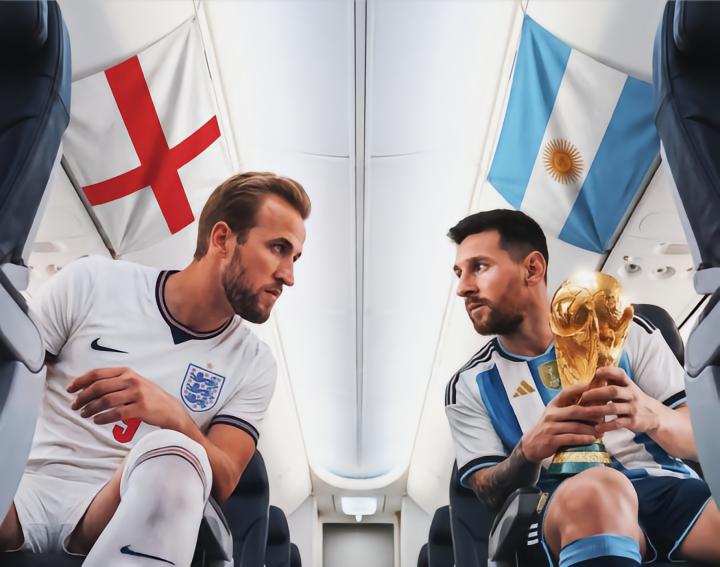
England vs. Argentina: A new rivalry resumes after 20 years.
Before the match, the long-dormant Falklands War was brought up again. This battle is bound to be a sequel to a long and saga of football history filled with grudges.
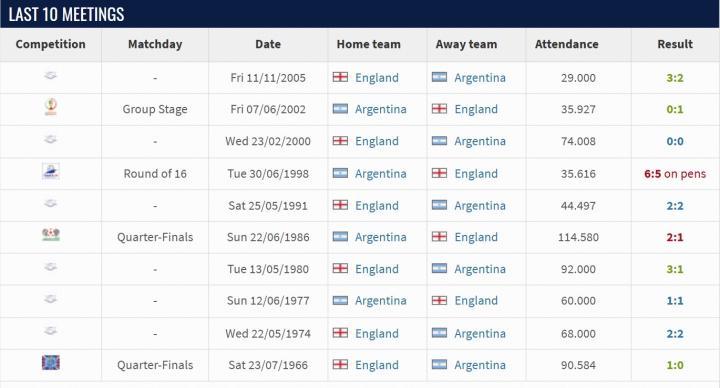
In terms of head-to-head records , England holds the upper hand against Argentina with 4 wins, 4 draws, and 2 losses in their last ten encounters. However... this history is simply too long ago. The two teams haven't faced each other for 20 years. Their last direct confrontation was in November 2005, when England won 3-2. Even Messi, the oldest player on both teams, didn't play in that match.
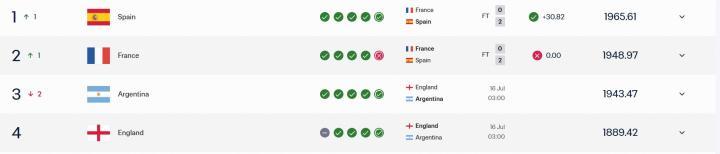
Following Spain's victory over France, Argentina now sits in third place in FIFA's live rankings, having shared the top spot with France for the past four years. England is currently fourth, but the gap between them and the teams ahead is relatively significant.
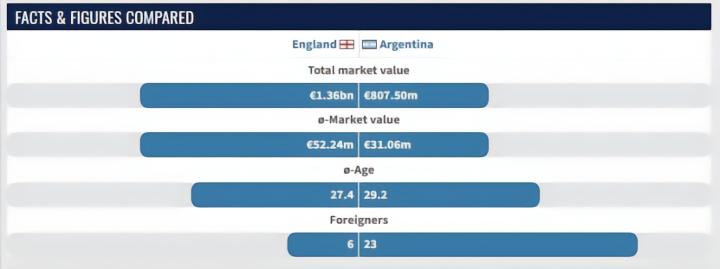
In terms of squad value, England's total squad value of €1.36 billion surpasses Argentina's €807.5 million. Regarding player composition, only five England players played for non-Premier League teams last season. In contrast, Argentina's players are spread across various leagues, with six playing in the Premier League. England's team is also younger overall, with an average age of 27.4 years. Argentina's average age is higher at 29.2 years, with nine players over 30.
Both teams had relatively smooth runs in the group stage, with their star players performing exceptionally well and playing crucial roles. However, both teams faced numerous close calls during their knockout stage journey.
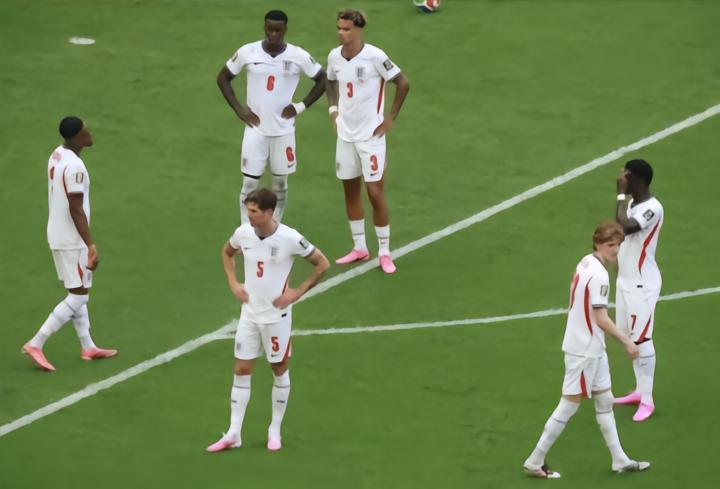
England fell behind against the Democratic Republic of Congo but rallied thanks to Kane's brace. Against Mexico, England were down to ten men after the 54th minute but fought hard until the final whistle. Against Norway, England won in extra time. The team was extremely exhausted after these three matches.
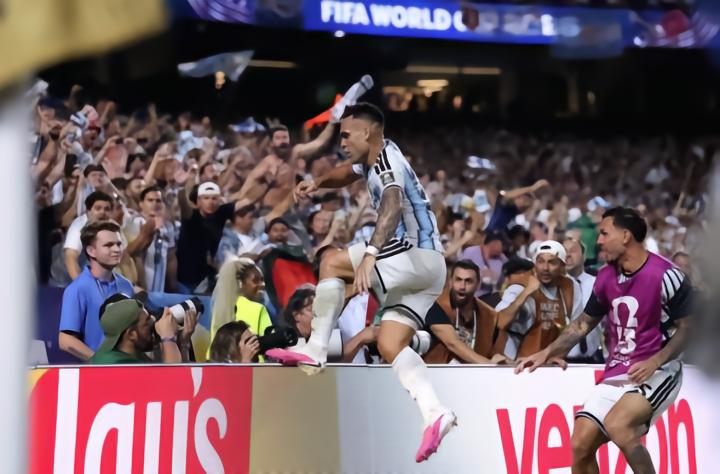
After advancing from the group stage, Argentina faced a tight battle with Cape Verde, with the match going into extra time. In the round of 16, Argentina encountered a tactically sound and disciplined Egypt, ultimately winning thanks to Enzo's last-minute goal. In the quarterfinals, Argentina took the lead but were pegged back by Switzerland. With Switzerland playing with ten men, the match went into extra time, with Argentina eventually winning 3-1.
Both teams have maintained relatively fixed formations since the start of the season.
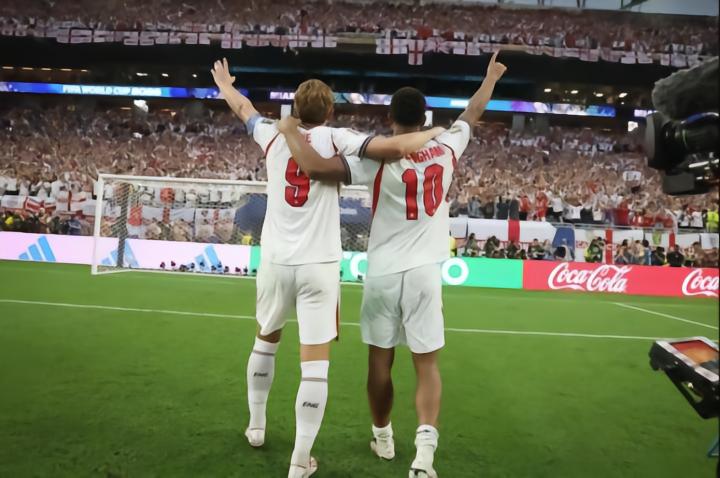
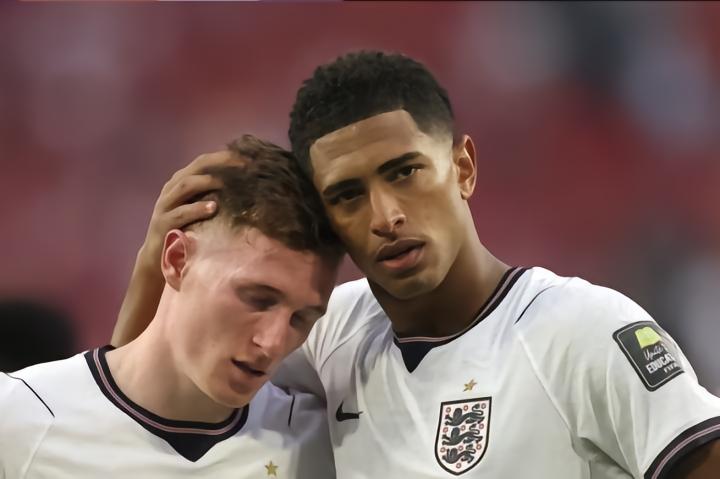
Tuchel's England team primarily employs a 4-2-3-1 formation, with Kane leading the attack and occasionally dropping back to create opportunities for attacks down the flanks . Behind Kane is Bellingham, who has been dubbed a "hexagon" by the British media. He can attack from deep, push forward, and participate in defense, and is younger, more athletic, and has an increasingly better goal-scoring touch than Kane.
On the left flank, Gordon is currently performing better, and his finishing touches and extensive running are a better fit for Kane. Rashford's performance in the starting lineup has been average, but he can still be used as a late-game option to try and break down the opponent's defense. On the right flank, Arsenal's two players, Madou Ke and Saka, will take turns playing. While Madou Ke's conversion rate isn't high, he can wear down the opponent, while Saka, when in good form, can pose a deadly threat on the right wing.
The double pivot in midfield depends on Rice's fitness. If Rice recovers, he and Anderson will be the fixed pairing. Rice will take on more forward runs, while Anderson will focus more on interceptions and tackling. Rice's absence will be a huge loss for England's midfield, as Menu has yet to play in this tournament and Henderson is injured. James can fill in as a makeshift midfielder to provide more long diagonal passes, but he is clearly better suited to right-back.
The central defensive pairing is usually Gue paired with Konsa or Stones, with Dan Burn able to come on when aerial defense is needed. On the flanks, James anchors the right, while Konsa can also drift wide. O'Reilly fills the left flank. Spence can play on either full-back, but he's more effective on the left and has brought tremendous attacking power in recent matches.
Argentina will primarily employ a diamond 4-4-2 formation. Up front, either Alvarez or Lautaro will partner Messi. Alvarez and Lautaro's athleticism will create space for Messi, drawing defenders away from him, and they can also receive passes from Messi to create scoring opportunities when defenders close in. Argentina is one of the few teams in this tournament capable of penetrating through the middle using technical skill; Messi, Alvarez, and Lautaro can also create threats through one-two passes with overlapping players. The 188cm Lopez can also serve as a new focal point for Argentina's attack, disrupting the opponent's defense in the final moments.
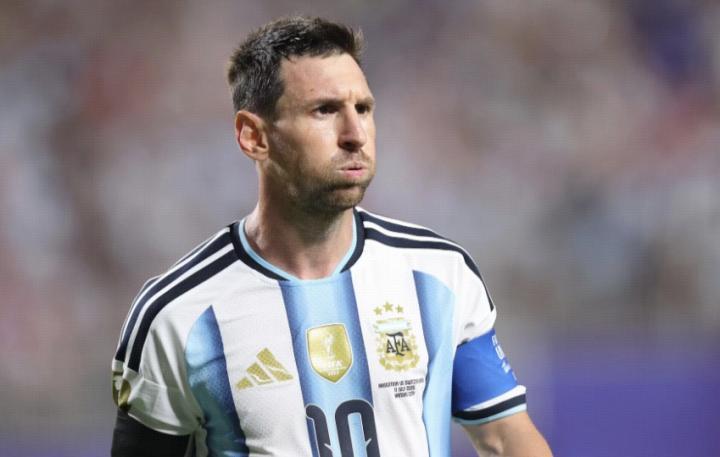
Paredes is gradually taking over the defensive midfield position in the starting four. Ahead of him are Maicah, Enzo, and De Paul. Argentina's central midfield numbers and passing options are reliable, but the lack of attacking power on the flanks is a concern. This could be dangerous against a physically strong and fast England team. Furthermore, under constant pressure, Paredes' position as the lone defensive midfielder could be directly challenged.
To enhance the attacking threat on the flanks, Nicolás González can push forward from deep to attack and try to pressure the opponent's defense. Giuliano Simeone can also improve the team's athleticism and defensive solidity on the right flank, but he has been rarely used in this tournament.
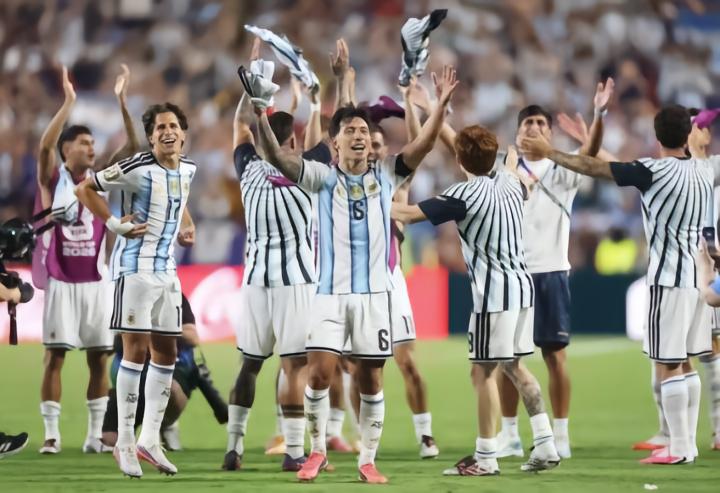
The central defensive pairing is quite clear: Romero and Lima, one 185cm and the other 175cm, seem to offer Argentina no real concern in terms of mobility and aggressive tackling. However, aerial defense and set pieces remain key areas for Argentina to watch out for. Senesi and Otamendi can both contribute from deep to solidify the defense. As for the full-backs, Tagliafico is on the left, and Molina on the right, with Medina and Montiel on the bench.
This match is expected to be evenly matched, with both sides exchanging attacks and defenses. There will be periods of intense pressing and periods where both sides will have to relinquish possession. Both teams will have numerous attacking opportunities; the key will be who can convert those opportunities into goals.
A significant concern is the issue of stamina after seven matches. Neither team's key players—39-year-old Messi and 32-year-old Kane—have received sufficient rest, and neither side has had the opportunity to catch their breath after taking a commanding lead in the knockout stage. In this crucial match, the core players may not be able to perform at every moment, but both need to give their all to drive the team's attack in critical moments.
We eagerly await to see who will become a legendary hero in the first major battle between England and Argentina in over 20 years, and who will become a tragic hero with tears streaming down their face.
Basic information about the competition
Match time: 3:00 AM Beijing time on July 16th
Venue: Atlanta Stadium, USA
Match Referee: Ismail Alfas (USA)