
The Daily Telegraph points out that Argentina has always been adept at skirting the rules, and in this tournament, Argentina is arguably the team most skilled at creating conflict. England needs to learn to adapt in their upcoming match. Rooney once urged his players to "understand the game better," and the match against Norway has provided the psychological groundwork for facing Argentina.
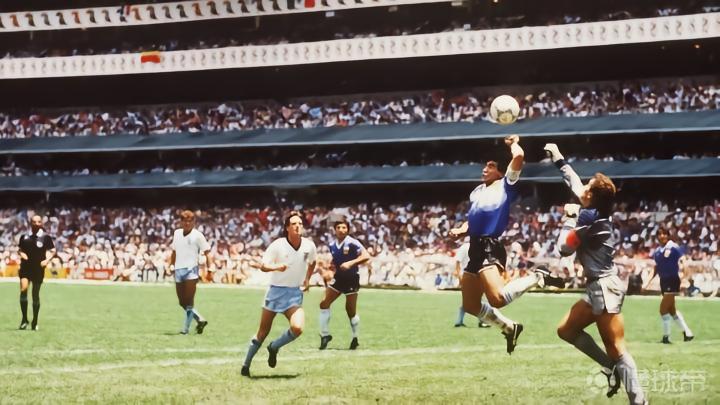
The Daily Telegraph (original text)
The match against Norway also showcased unprecedented qualities in England: in the intense, high-pressure competition of a major tournament, they finally learned the wisdom of survival on the field, turning every minor controversial call into an advantage.
Did they try to win a controversial penalty? England made no secret of it. Spence went down after making contact with Bob, and the confrontation seemed more like a deliberate entanglement of his legs than a real foul.
Using a slight shove to induce a fall? During the corner kick scramble, Haaland did indeed push Elliott Anderson with both hands, which is quite normal given the frequent physical contact and stretching during set pieces in modern football. However, Anderson fell heavily, as if hit by a ten-ton truck. In the stands, Haaland's father, Alf, made no secret of his dissatisfaction with England's style of play, mimicking a dive on Spence and even holding up two fingers in mockery.
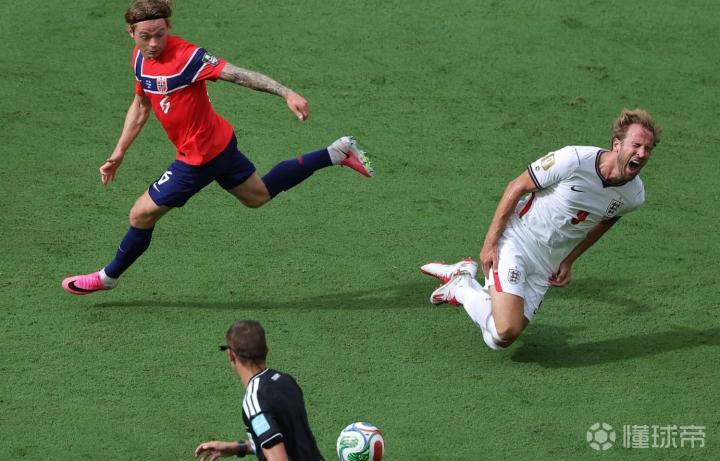
This match against Norway served as a psychological preparation for facing Argentina. While Argentina is the defending champion and can play breathtaking football at their peak, their sometimes ruthless tactics can also alienate opponents. Argentina has always been adept at skirting the rules, constantly pushing the boundaries of refereeing decisions. In the 2022 World Cup quarter-final against the Netherlands, the game completely spiraled out of control, accumulating a record 18 yellow cards and one red card.
That match was later known as the "Battle of Luselle," in which the Dutch team suffered a setback, complaining that the referee was too lenient towards Argentina.
After England advanced to the semi-finals, similar resentment arose among the Norwegian side, with Haaland's father sarcastically remarking, "Bellingham played beautifully, and the referee also had a hard time."
Seventy-two hours later, the two teams will face off again after 21 years. What kind of fiery showdown will unfold at Atlanta Stadium?
Argentina has been arguably the most adept at creating conflict in this tournament, frequently disrupting the game's tempo while skillfully avoiding unnecessary yellow cards. So far, they've averaged 22 fouls for every yellow card they receive. England, who rarely skirted the rules in the past, have become more pragmatic and adept at understanding the game under Tuchel's tutelage.
This team is no longer the same team that was eliminated in just five days in the 2014 World Cup and whose style was too simplistic.
Wayne Rooney once lamented that players who were too honest were at a disadvantage: "I got kicked ten times the whole game, but the opponent didn't get a single yellow card. Many strong teams know how to survive on the field, and we'll have to learn that sooner or later."
Understanding the game is a double-edged sword. On one hand, it represents a sharp mind and the ability to use the rules appropriately to gain a competitive advantage; on the other hand, it also carries the negative connotation of underhanded tactics and dirty tricks. Many American viewers held the latter view during this intense match in Miami. Three-time NFL Defensive Player of the Year JJ Watt was outraged by Anderson's fall after being lightly pushed by Haaland, stating bluntly, "He didn't push very hard." Many American commentators accused England of "flopping," a term commonly used in American English to describe falling to the ground to draw a foul. While not exactly a pure exaggeration, there's no doubt that Tuchel taught his players to be more astute.
David Beckham and Diego Simeone were both present in the VIP section of Hard Rock Stadium at this World Cup.
Twenty-eight years ago, the two were embroiled in one of the most famous controversies in World Cup history: Beckham lost his temper and retaliated against "bandit coach" Simeone, receiving a red card. At the time, the headlines read, "Ten brave Three Lions, one reckless teenager."
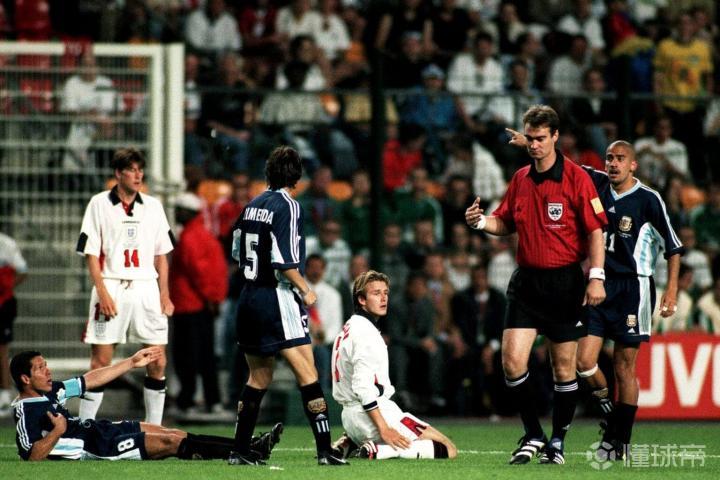
This past incident serves as a constant reminder of the potential for conflict that will erupt when England faces Argentina again on Wednesday. The rivalry between the two teams is complex: the antagonism stemming from the Falklands War, the lingering resentment from Maradona's "Hand of God" incident forty years ago, and significant cultural differences in their understanding of fair play.
Now England is finally ready to face their arch-rivals. When people think of Argentina, they often think of their endless off-field tactics, their tendency to surround the referee, and their exaggerated physical contact. But Kane also frequently fell to the ground and rolled around, signaling to the referee to make a mistake against Norway, and this same performance applies to England as well.
Ultimately, this all stems from the tough competitive mentality that Tuchel instilled in the team. He demanded that players be both highly motivated and intelligent. He wasn't encouraging players to use underhanded tactics, but rather to help them better understand how to manage crucial matches. Rooney once urged players to "understand the game better," and now England is finally putting that into practice. With a formidable opponent like Argentina approaching, the time is perfect to learn how to adapt.