
This article is reprinted and translated from The National , originally published on July 14th local time, by Andy Mitten .
Introduction: English football journalist Andy Mitten has visited Argentina multiple times, specifically to see their "Falkland Islands," the Falkland Islands, the Malvinas Islands of the Argentinians. He played football with local children, chatted with Maradona, and even dated an Argentinian woman from a military family. They always got along well, but everyone would ask him, "The Falkland Islands are Argentinian, right?"
Maradona only agreed to have a deeper conversation with me after I told him I was going to Buenos Aires to watch the game. I frankly told him that as an Englishman, it takes a lot of courage to go to Buenos Aires to watch a match.
"You've been there?" Maradona immediately became interested.
I told him that was right. On four separate occasions, when I visited 15 stadiums in the area, almost every stadium had a song being sung loudly from the stands: "The English are the ones who dare not dance."
"So what are you planning to do over there, Englishman?" Maradona asked.
I replied, "I'm prepared to lie and say I'm from Dublin, Ireland."
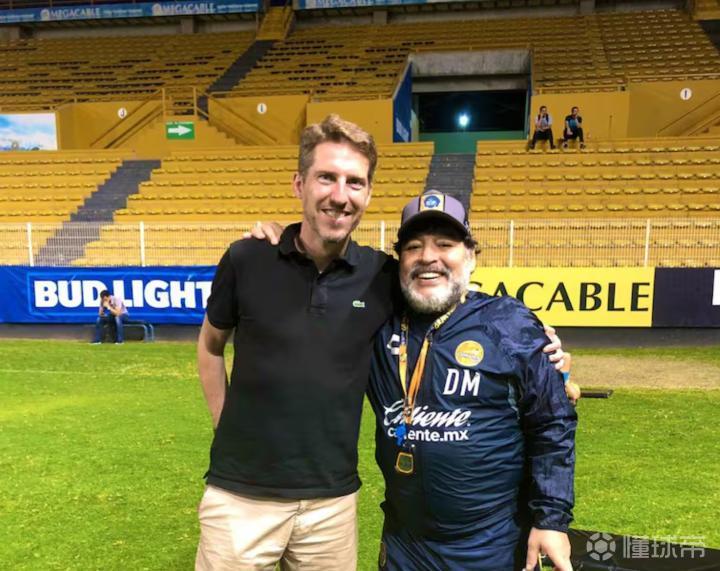
He laughed heartily after hearing this, and I showed him photos of stadiums on my phone, which made him smile. The photos included the San Lorenzo Stadium—where the entire stands shake when the fans jump around; as well as the stadiums of Boca Juniors, Banfield, Racing Club, and River Plate.
I absolutely love the loud, enthusiastic, and infectious cheering atmosphere of Argentine fans; their stadium atmosphere is unparalleled and irreplaceable.
Argentine fans are always among the largest and most enthusiastic crowds at the World Cup. The widely circulated story of "selling their cars to watch the games" has become a recurring theme because it's all true. I witnessed firsthand the scale of Argentine fans traveling to Brazil for the 2014 World Cup and the 2018 World Cup in Russia, where their numbers far exceeded those of other countries. For them, watching the games on TV at home isn't enough; being there in person is essential for a complete experience.
While the English Premier League is widely recognized as the world's top league, Argentina's football culture truly deserves global acclaim. Their original, unique cheering anthems have profoundly influenced fan culture worldwide. The typical atmosphere of a Premier League match simply cannot compare to that of an Argentinian stadium; the latter's infectious energy is on a completely different level.
This Wednesday, the semi-final of this World Cup will kick off at the world-class stadium in Atlanta, Georgia, USA, with Argentina facing England. This is the sixth official match between the two teams in their history, with England winning three and Argentina winning two. The most famous encounter is undoubtedly the 1986 World Cup, where Maradona's "Hand of God" goal secured Argentina's victory. This is the first time the two sides have met at such a crucial stage as the semi-final.
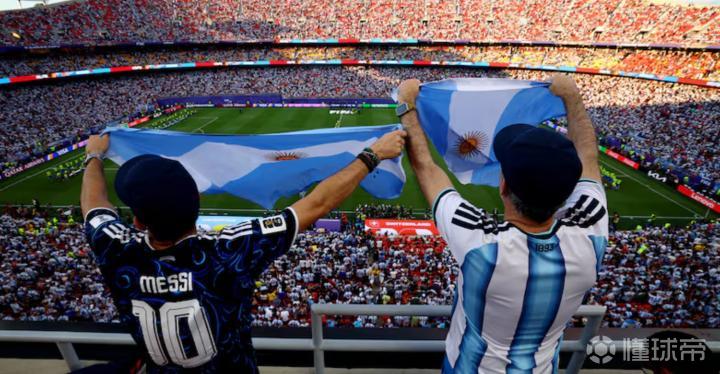
This contest has long transcended the realm of a simple football match. At this World Cup, tens of thousands of Argentine fans repeatedly sang chants supporting England. Last week, Argentine national team players publicly stated their determination to win the World Cup for the Falkland Islands (Malvinas).
In 1982, the two countries went to war over this disputed territory in the South Atlantic, resulting in the deaths of 649 Argentine soldiers and 255 British soldiers, with more than 2,300 wounded.
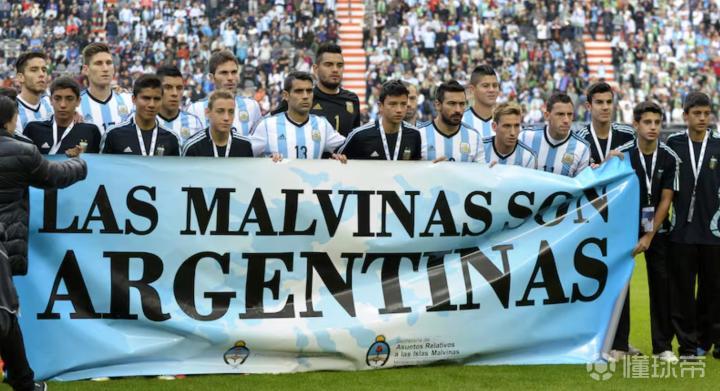
On June 7, 2014, at the La Plata Stadium in Buenos Aires Province, Argentina, the Argentine national team held a banner that read "The Falkland Islands belong to Argentina" for the media before a friendly match against Slovenia. The photo was provided by AFP.
The Falkland Islands are rarely mentioned by the British public, but in Argentina, this land is deeply etched into the national memory. There are stadiums and airports named after the Malvinas.
In 2019, the year before I met Maradona, I went to the Maradona Stadium of Atlético de Argentina to watch a league match. The stadium is located in the western suburbs of the vast city of Buenos Aires and was the first club in Maradona's professional career.
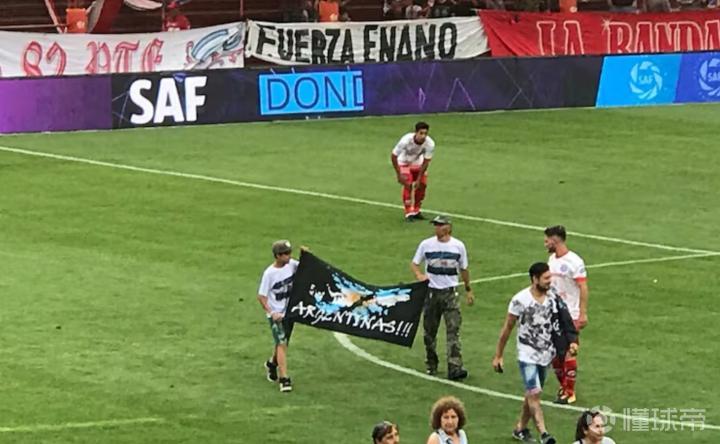
During halftime, veterans of the Falklands War were invited onto the field, and the cheers were no less enthusiastic than at the moment of a goal. Giant banners bearing the Argentine flag and depicting the islands were displayed throughout the stands. As a journalist, I wanted to immediately approach and speak with the veterans, but reason told me it wouldn't be appropriate. Several veterans in their fifties walked onto the field, one of them wearing khaki combat trousers and holding aloft two Falklands flags in Argentine blue and white. Throughout my travels, I have never encountered a single local who did not believe the Falklands belonged to Argentina.
I've always wanted to write an interview with veterans of the Falklands War who were both conscripts and professional footballers. Many of them survived the war and went on to play in top-tier domestic leagues. The Falklands War broke out in 1982, the same year Maradona arrived in European football. Before and after his move to Europe, he played alongside these veterans.
The closest I ever came to realizing this idea was when I was chatting with a taxi driver. The veteran's eyes welled up with tears as he spoke of his homeland, his tone both proud and sorrowful: "Those islands belonged to us."
In Manchester, my father had an old friend who had been a commando. Before the British captured Stanley, the capital of the Falklands, he participated in the assault on the Kent Hills, but he always avoided talking about it. The horrific scenes of the battlefield remained deeply etched in his mind; "those images still often surface in my mind to this day." He only opened up to me on the day of my father's funeral, perhaps out of empathy for my passion for football. This memory of war was a topic he always avoided.
In 2009, I embarked on a journey to the Falkland Islands. We departed from Ushuaia, Patagonia, and first arrived at the Argentine Antarctic research station. Four Argentine sailors boarded the ship, and the staff assigned me to be their translator.
These sailors spend four months each year stationed on the frozen Antarctic continent. When they asked about my hometown, upon hearing the word "Manchester," the conversation immediately turned to football—being in this polar region without stadiums, they especially missed football matches.
I told them that Manchester United fans sing anthems for the team's Argentine players, a privilege enjoyed by Carlos Tevez, Juan Sebastián Veron, and Gabriel Heinze. But not everyone is comfortable with this atmosphere. Just a month before my visit, the same anthem played during Derby County's match against Manchester United, and Derby County fans immediately retorted, "You should have died in the Falklands War!"
After a three-day sea voyage, we finally arrived at Stanley, the capital of the Falkland Islands, a town with only two thousand residents. My memories of the Falklands begin in my childhood, when the conflict broke out in 1982, and the television repeatedly showed images of the British task force heading to the South Atlantic. I was nine years old that year, and my understanding of the whole event came entirely from my father.
One evening I asked him whether Britain would win the war.
The father replied, "Of course they can. The Gurkha mercenaries and paratroopers have all gone to the front lines. If necessary, the Gurkhas will fight to the bitter end even with their bare hands."
Later, I visited Stanley myself and saw firsthand the familiar place names from the 1982 war: Green Hill, Wireless Ridge, Twin Sisters Hill, and Tambutang Hill. On the windswept hills, Argentine defenders and attacking British forces engaged in a fierce tug-of-war, where countless soldiers perished, including the paratroopers and Gurkha troops mentioned earlier. A war memorial stands in the town, inscribed with the names of Jones and others. This officer, who led his troops in a raid on an enemy machine gun position, was killed and posthumously awarded the Victoria Cross.
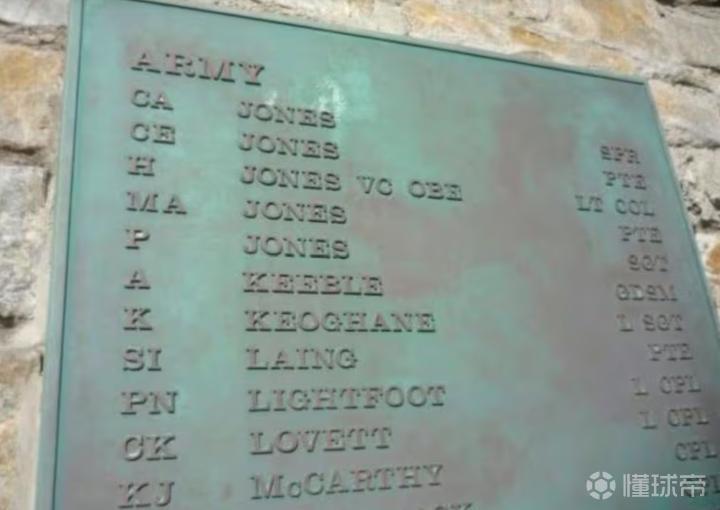
The Stanley Museum has dedicated a large section to documenting this war, and what touched me most was a handwritten note from a young Argentine soldier. During the 74 days that the Argentine army occupied the Falkland Islands until their surrender, 500 islanders remained in Stanley. This note was left by an Argentine soldier for the local residents.
The note began in English: “We are very sorry, but we have run out of food. Could you share some with us?” The note explained that if the officers caught them talking to the islanders, they would be severely punished. If it was convenient for the residents, they hoped that they could be secretly sent food to them.
Years later, I dated a woman from an Argentinian military family.
After spending a few weeks with her, she told me, “I was always afraid of the British when I was a child. My family lived near a military base and we were always worried that British warplanes would come to bomb us. When we were in school, we had to practice hiding in air-raid shelters whenever the air raid siren sounded. A friend of my parents lost his 19-year-old son. The military dictator who was in power back then should not have started this war, but the Falkland Islands will always belong to us.”
The Falklands issue remains extremely sensitive in Argentina, while the residents of the Falkland Islands firmly identify with British sovereignty. I have read numerous historical books on the subject and visited the Argentine War Memorial in Buenos Aires, where the names of nearly seven hundred fallen soldiers are inscribed. Standing before the monument, I felt a heavy and oppressive atmosphere.
Ironically, the monument faces a clock donated by the British government in its early years, as well as a railway station built under the supervision of Liverpool engineers, which bear witness to the once amicable exchanges between the two countries.
In Stanley, I interviewed Don Bonner, the Falklands governor's personal driver during the Argentine invasion. The octogenarian passed away in 2014. On the day I spoke with him, two Tornado fighter jets flew low over the town, then pulled up almost vertically, their deafening roar seemingly piercing to the bone.
The old man said, "This is a reminder to visiting Argentinians that we have never let our guard down. Some Argentinians come by boat, refuse to show their passports, and insist that the land they are standing on is still Argentine territory."
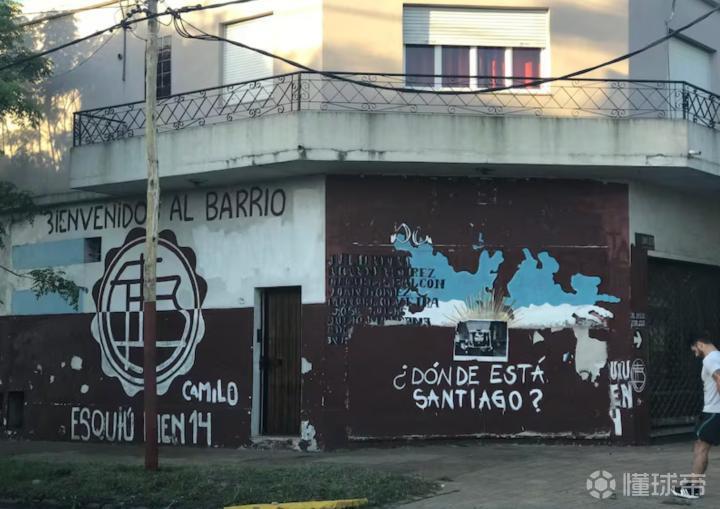
Many of Argentina's top players now play in the English league. While Argentine stadiums boast a vibrant atmosphere, affordable ticket prices, and enthusiastic crowds, the country's most talented players ultimately seek professional opportunities overseas, with Mexico and England being their primary destinations. Their exceptional skills have earned them considerable respect abroad.
In December 2018, I spent twelve days in Argentina, and everywhere I went, locals kept asking me about the ownership of the Falkland Islands. Once, I played football with twelve local lads; two of them were wearing Manchester City jerseys—they were die-hard Independiente fans and huge fans of Sergio Aguero; the other two deliberately avoided me because there were Englishmen in our group . After the game, they bought us drinks, invited us to their home, and immediately asked, "The Falkland Islands belong to Argentina, right?"
On another occasion, before the Rosario Central derby against Newell's Old Boys, we ran into a local group of extreme fans. This city has produced Messi and Che Guevara, and a woman looked me straight in the eye and said with certainty: "The Falklands belong to us. I have never seen a gentlemanly Englishman."
In the long-established club Talleres in Córdoba, Argentina's second-largest city, a fan told me a story: an Argentine fighter pilot was shot down by a British gunner years ago. The two met again by chance years later and, setting aside their differences in stance, became close friends.
Nestled in southern Buenos Aires is the elegant Constitución train station. Railways, polo, and football were all introduced to Argentina by the British. A national historic site, Constitución was designed by a British architect and originally stood on the site of the British-owned Buenos Aires Southern Railway. In 1925, the Prince of Wales laid the foundation stone for the station during his visit to Argentina. At that time, relations between the two governments were amicable, unlike the tense relationship they have today.
In the summer of 2018, I came to this southern district with its notorious crime to take the train to La Plata to interview former football star Juan Sebastián Veron.
All trains were suspended that day, and everyone waited in the sweltering summer heat for the connecting bus. A dazed woman, who appeared to be under the influence of drugs, asked me where I was from, and then loudly repeated my answer. Instantly, more than a dozen hostile gazes were cast at me.
Then she asked, "Is that Thatcher witch dead?"
The Thatcher she was referring to was the British Prime Minister during the Falklands War.
I said that Margaret Thatcher was even more disliked by the people of Manchester than in any city in Argentina, and this was agreed upon by the other passengers in the carriage. Someone even took the opportunity to ask me whether I supported Manchester United or Manchester City.
Whether in England or Argentina, football is always an unavoidable topic.
This Wednesday in Atlanta, football will once again be the focus of everyone's attention.