According to The TA, England has had no shortage of important matches in recent years, but Wednesday's World Cup semi-final against Argentina is almost the most significant.
Oliver Kay
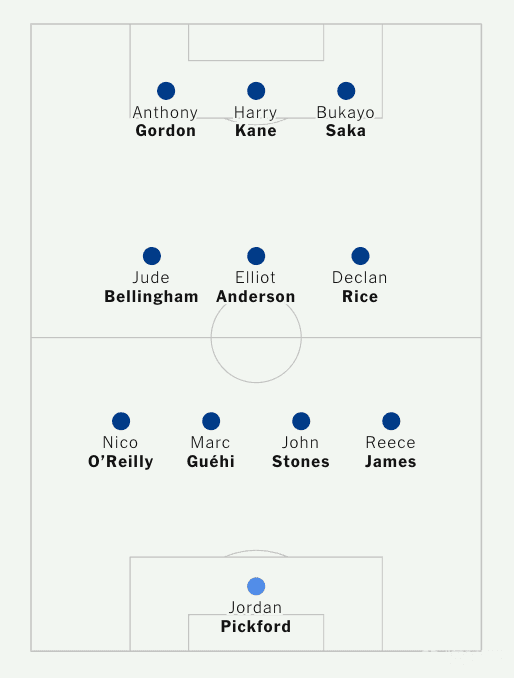
This is going to be an intense and chaotic match, likely going to go on until the very end. Will you prepare for 120 minutes? Will you try to ensure you have a reliable penalty taker by the end of extra time? Or will you simply field your strongest lineup and leave other issues for later?
It's hard to expect many players to be able to play 120 minutes again in four days. Even 90 minutes might be too much for Reece James, who has just returned from injury, so the key is to see where and when he can contribute the most – his 49 minutes plus stoppage time in midfield against Norway on Saturday complicates matters. Saka is also a similar candidate.
Overall, I would start James at right-back. Menu can serve as a Plan B in midfield. As for the right flank, how should I choose between Saka and Madoueke? I would start with the more stable Saka, letting him play for about an hour; if needed, Madoueke can come on as a substitute to bring more variety.
The real danger is that, with many players' stamina waning, England manager Thomas Tuchel may end up with only a few recognized penalty takers on the pitch. (The much-discussed Ivan Toni plan will be even more difficult to implement if it's further constrained by other substitutions.) But you can't let concerns about penalty shootouts overly influence your lineup. The primary task is to try and finish the game within 90 minutes—or 120 minutes.
Jack Pete Brook
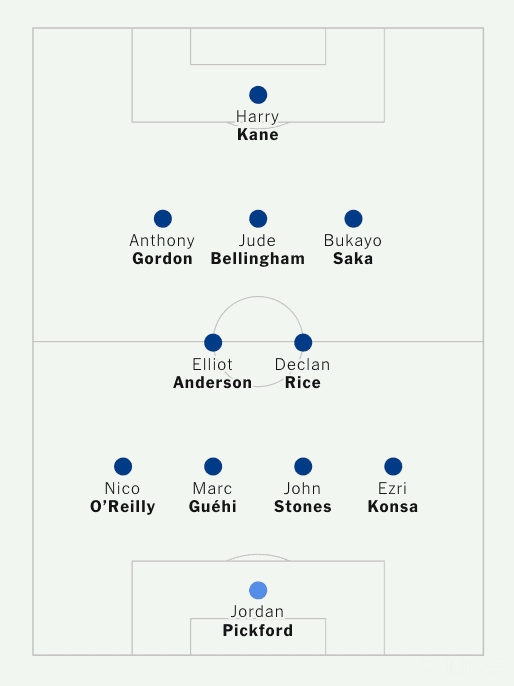
Stones must start. He has proven the value of experience against Mexico and Norway, and he has faced Messi more times at the club level than any other center-back option in England (3 times, winning twice).
Deciding who will partner him at center-back won't be easy, as neither Guido nor Konsa should be dropped. You could also move Konsa back to right-back, or of course, bringing Reece James back into that position would be very appealing. Against Norway, he looked sharper than expected after returning from injury.
This was a difficult decision, but all things considered, I'll still keep Gueye at center-back, Konsa at right-back, and James on the bench. Especially if Rice needs to come off again, England might need him to fill in at midfield in the double pivot. The other positions are mostly clear, except for the right flank, where I'll use Saka in place of Madoueke. Saka looks sharp enough to start; while I still prefer Madoueke as a backup, coming off the bench to attack the opponent later in the game.
Sarah Shepard
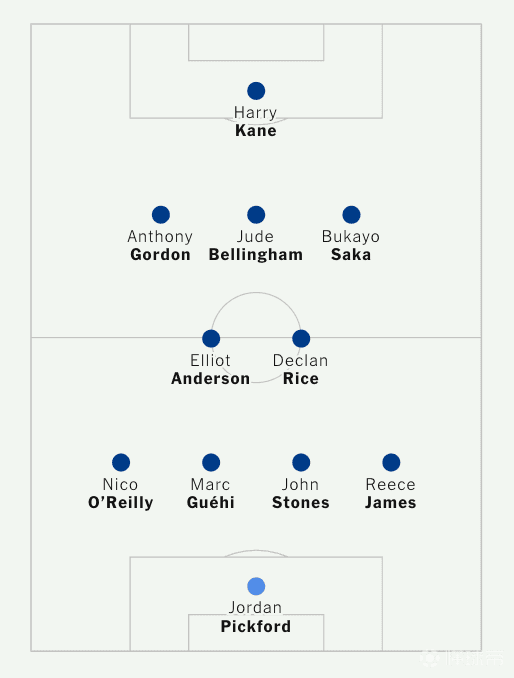
I have two questions about this starting lineup, both related to physical condition. Ideally, if I never get hamstring injuries, I would have Reece James replace Konsa at right-back, and Saka return to the right wing to replace Madouekhe. James played 49 minutes plus stoppage time in the quarter-final, first coming on in midfield and then returning to right-back in extra time, and he performed well. I would be inclined to take the risk and start him.
Saka's ability will be crucial for Argentina. He came on as a substitute in the second half and delivered a solid performance against Norway. Hopefully, he'll be in form enough to start. Stones and Gue faced a huge test against Haaland and his teammates. Although both had moments of lapse in concentration, I will continue to pair them together.
There's not much to think about for the rest of the team; we can only hope that Rice's recovery continues and that he's in better shape than he was on Saturday.
Liam Thurm
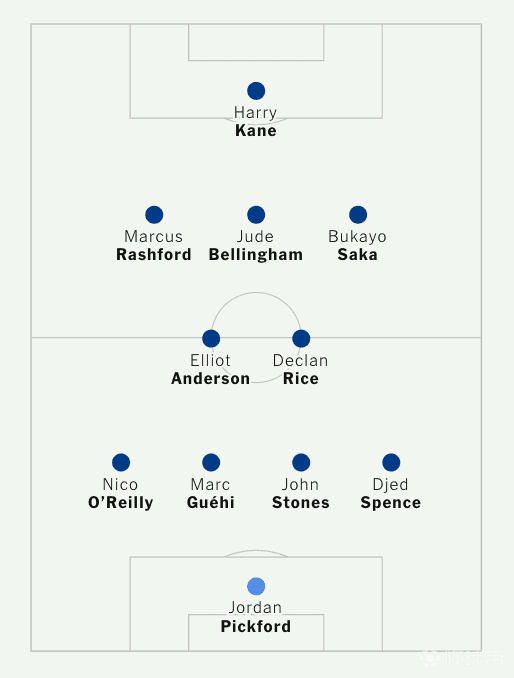
If England focuses too much on containing Messi, they might not be able to control Argentina. Argentina is a team with obvious weaknesses.
Indeed, Tuchel's team was pushed to their physical limits, but Argentina was in the same boat. Against Switzerland, much like their round of 16 match against Cape Verde, they took the lead but failed to extend it, ultimately winning only through a late extra-time goal. They also staged a comeback from 0-2 down to defeat Egypt – England knows all too well that this kind of victory is incredibly physically demanding.
The central axis of this lineup is fine. If physical condition permits, Rice should continue to partner Elliott Anderson in midfield. Argentina is too strong in making runs through the middle and breaking down defenses; Tuchel needs players with both running ability and tackling skills. To guard against the pressing style of Argentina's left-back Nicolás Tagliafico, I would play Saka on the right wing; for the same reason, I would use Spence at right-back, as he is faster at tracking back. Konsa can be dropped, and the central defensive pairing of Gue and Stones should remain.
We should also consider having Rashford replace Anthony Gordon. In the quarter-final, Switzerland scored the equalizer through a one-two pass on the left flank, and Rashford is better at that kind of play. This also means Gordon could serve as a more aggressive substitute in the second half, using his speed to attack the Argentine defenders once their stamina wane.
Nick Miller
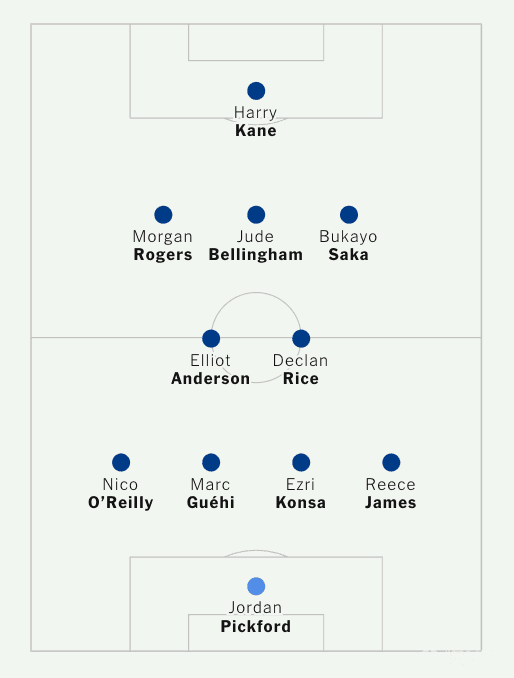
Let's assume Reece James is fit, and all the "injured" players scattered on the field after Thursday's victory over Norway have recovered. The center-back position is difficult to choose, because there's really no reason for Stones to be dropped, but if Konsa and Gui are both ready, I would choose either of them.
I would accept a Saka at 50% fitness rather than a Madou Eke, so Saka must return to the starting lineup. The other side is a slightly more difficult decision: Anthony Gordon and Rashford haven't been particularly convincing in the starting lineup, but Morgan Rodgers performed well after coming on as a substitute in the quarter-final, so I would start him, which might also help England cope with Argentina's tight midfield.
Cheris Jones
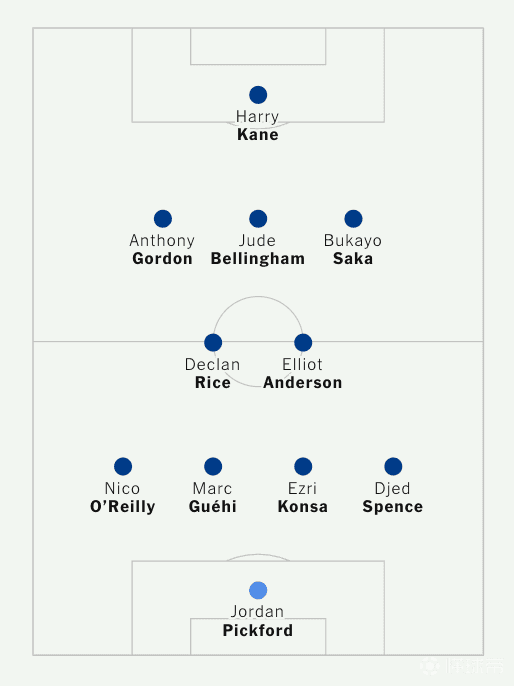
Reece James performed well at right-back against Norway, but I value his speed in recovering and his ability to exploit gaps on Argentina's flanks more, so I'd choose Spence. As Nick mentioned above, Stones isn't necessarily a must-have, but he hasn't convinced me that the defense will be more stable and alert with him in the back, so I'd move Konsa back to the center. Stones played 120 minutes on Saturday, and he only played 429 minutes in the entire Premier League last season, which makes me think he needs a rest.
While it might make Arsenal fans watching the new season a little uncomfortable, I still have to start Saka in place of Madou Ekater; I was impressed with his performance on Saturday, and even though he's not quite back to full fitness, he's still the better option. Similarly, hopefully the effects of Rice's illness are fading, and he's ready to regain control of the midfield alongside Elliott Anderson, as they will play a crucial role in cutting off Messi's supply lines.
I believe Anthony Gordon is better suited than Rashford for both tracking back and making runs behind the defense, so he will continue to start. I will also continue to support Tuchel considering switching the two wingers mid-match, so that if England struggles to break down their tenacious defense, they can use their powerful crosses.
Tim Spears
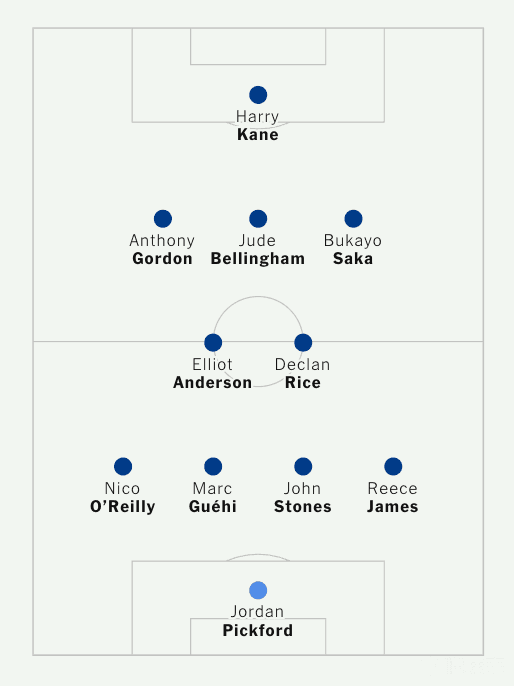
This is indeed not an easy task. England's chances of beating Argentina will increase if they play faster, wider, and more directly. Several teams in this World Cup have already caused trouble for Scaloni's team with this style of play.
However, a fast-paced, high-intensity game requires healthy and fresh players. Ideally, Reece James, Rice, and Saka should all start, and they are in my starting lineup for that reason. But the question is, how healthy are they right now?
Yes, it's a World Cup semi-final, and it's easy to want to throw in your strongest eleven and go all out against Argentina. But England must be smart and rely on accurate information from the players and medical team… They can't afford another Rice-like situation like in the Norway match: he played like a man laden with syrup for 45 minutes and had to be substituted at halftime. Because if this Argentine team—who have been nearly unbeaten in three consecutive major tournaments—gets off to a good start and scores first, England's task will become even more difficult.