
On July 14 local time, in his personal column, German legend Oliver Kahn expressed his views on the criticism of England manager Thomas Tuchel.
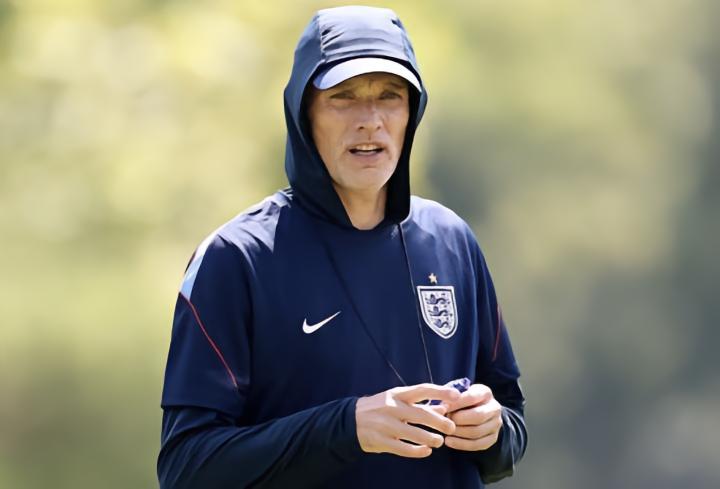
After defeating Norway to advance to the World Cup semi-finals, Tuchel criticized the team's performance, believing that although the team won, there was still a lot of room for improvement. This statement also drew some criticism from the outside world.
The following are Kahn's views.
After leading England to the World Cup semi-finals, Tuchel could have basked in the glory. But instead of discussing the victory, he pointed out the team's technical shortcomings, the lack of pace, and the inability to beat stronger opponents in the next match.
Criticism quickly followed. These reactions, rather than reflecting football itself, exposed a way of thinking in our time.
Why would a coach criticize his team after they win?
Why can't he simply enjoy the moment?
Why not give the team more praise?
Even Bellingham was initially puzzled by this.
But what truly perplexes me isn't Tuchel's approach, but rather the very fact that people are raising these questions. These questions expose a phenomenon far beyond football: we often believe that defeat is the most dangerous moment in a team's development. But in reality, many times, victory is the truly dangerous element.
Failure forces people to reflect and review, while victory easily leads people to abandon analysis.
Therefore, true leadership work does not begin after losing a game, but rather after winning a game.
In my career, there have been games where we won, but when I returned to the locker room, I knew clearly that with this kind of performance, we couldn't win the championship.
So even when the team won 5-2, I still criticized the players, speaking as if we had lost.
The score saved us, but our performance didn't.
If a person confuses these two things—result and process—he begins to deceive himself. And all serious self-deception often begins with a success that no one questions anymore.
This is why I think the discussion surrounding Tuchel is so noteworthy. The criticism isn't about the errors in his analysis, but rather that he chose to continue analyzing even after a victory.
Leadership is not about protecting people from reality, but about getting them to face it.
This approach may not win everyone's approval, but only by accepting the reality can the team truly improve.
If a person, after achieving success, merely repeats what everyone wants to hear, they are only managing the present moment; but if a person, after achieving success, still has the courage to point out problems, they are taking responsibility for the future.
True collapses rarely begin in the midst of a crisis.
It often begins at a moment when no one is willing to question success anymore.
After leading England to the World Cup semi-finals, Tuchel wasn't creating negative emotions. He simply did what's taken for granted in top-level competitive sports: he avoided letting a victory supersede his actual performance.
The difference between a good team and a great team is never revealed after a defeat, but after a victory.