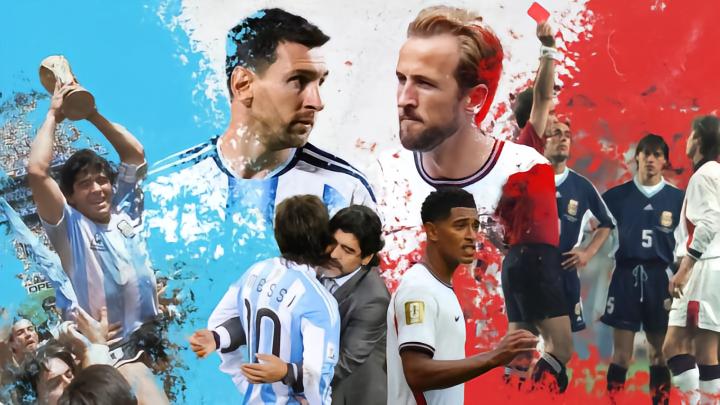
In the 1966 World Cup quarter-final, England defeated Argentina 1-0 to advance to the semi-finals and eventually lift the World Cup trophy on home soil, which remains the Three Lions' only World Cup title to date.
This match was dubbed the "Battle of Latín," in which Argentina's captain, Antonio Latín, was sent off in the 33rd minute for committing two fouls within three minutes. Because Latín refused to leave the field, the game was suspended for nearly 10 minutes.
Because of this match, British referee Ken Aston began to think about how to make referees clearly communicate their decisions. Inspired by traffic lights, Aston invented the "red and yellow cards".
The rivalry between Argentina and England extends beyond the football field; it also involves geopolitical tensions.
The Falklands War of 1982 (also known as the Malvinas War) continues to influence political relations between Argentina and the United Kingdom, and Argentine players and fans still mention the war in football songs.
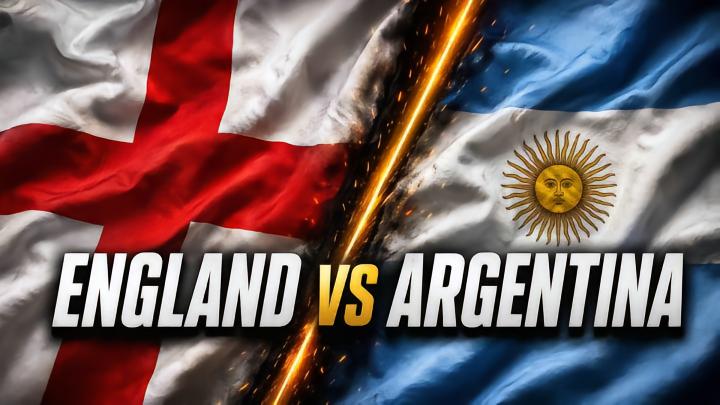
This is a long-standing rivalry in the football world that spans several generations.
(one)
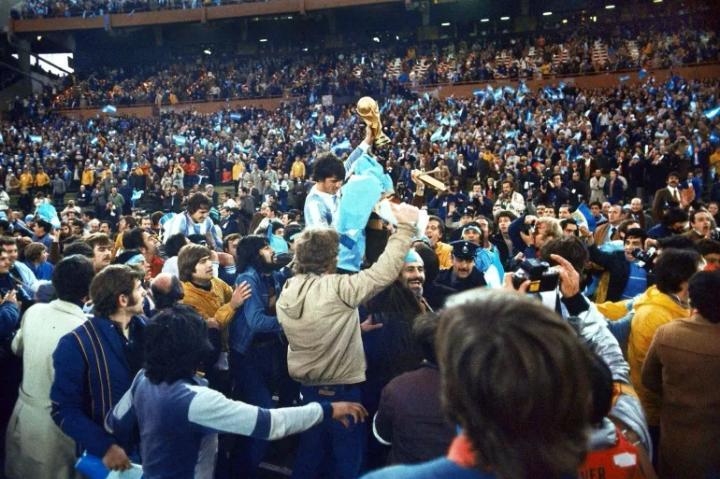
In 1978, Argentina won the World Cup on home soil, defeating the "Flying Dutchmen" 3-1 in the final after extra time. Even without Johan Cruyff, the Dutch team was still a formidable force, and the whole of Argentina rejoiced.
That World Cup was full of controversy.
In 1976, the Vidila military government launched a coup, massacring dissidents, left-wing guerrillas, and democratic progressives. It created a climate of terror through kidnapping, assassination, and torture, resulting in the deaths or disappearances of tens of thousands of people.
International human rights organizations, European left-wing parties, and Argentine refugees demanded that FIFA change the host city for the 1978 World Cup, citing a "human rights disaster." However, then-FIFA President João Havelange refused to change the host city, citing the need to "separate football from politics."
Even after the start of the 1978 World Cup, controversies continued to swirl. What exactly was the "energy drink" Argentina drank before the match? Argentina's 6-0 victory over Peru, eliminating Brazil, remains one of the biggest mysteries in football history. Argentina's 3-1 win over the Netherlands in the final also had many questionable aspects; after the match, the Dutch team refused to participate in the awards ceremony and photo opportunity, believing that Argentina had stolen the championship through off-field tactics.
The 1978 World Cup is often regarded as a "political propaganda tool" of the Vitara military government. Argentina used more than 10% of its national budget for this World Cup. They hoped to reshape Argentina's international image and divert public discontent through the World Cup.
Videla's goal was not achieved. Argentina won the World Cup with a host of stars including Ardelás, Kempes, and Passarella, but the country's economy did not improve. The huge debt incurred from hosting the World Cup and a series of flawed economic policies caused inflation to soar to 600%, leading to widespread strikes and social chaos.
(two)
In order to maintain the rule of the military government, Galtieri, who took over as president of Argentina in December 1981, decided to launch a small-scale war that he was "sure to win".
Galtieri set his sights on the British-controlled Falkland Islands, over which Argentina and Britain had been arguing for sovereignty for a century and a half. After a series of preparations, on April 2, 1982, Galtieri ordered the invasion and occupation of the Falklands, officially beginning the Falklands War.
Initially, Galtieri believed that Britain would not commit too many troops to this remote territory with limited economic potential, a desolate archipelago with only 3,600 inhabitants and 500,000 sheep.
However, Galtieri underestimated the political pressure within Britain. At the time, British Prime Minister Margaret Thatcher had extremely low domestic approval ratings, and under such circumstances, she would not give up any British territory, not even the insignificant Falkland Islands.
Margaret Thatcher ordered a military counterattack against "Argentine aggression," and the British Royal Navy fleet embarked on a voyage across half the globe. The "Falklands War" dominated global news headlines for weeks.
Argentine writer Jorge Luis Borges described the war as "two bald men fighting over a comb."
On April 25, British Army Special Forces and Royal Marines, with the support of the US military, recaptured South Georgia Island.
On May 2, the British nuclear submarine HMS Conqueror sank the Argentine cruiser General Belgrano, killing 323 people, including two civilians. This accounted for half of Argentina's total casualties in the entire campaign, making Argentina's defeat in the Falklands War inevitable.
It was this war that earned Margaret Thatcher the title of "Iron Lady".
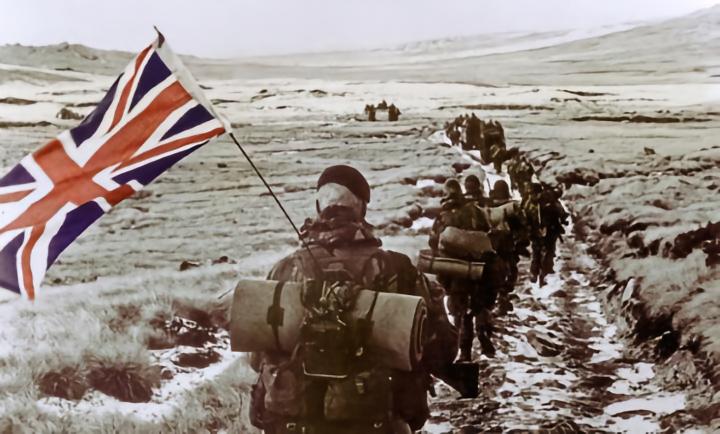
Beyond the confrontations on the battlefield, in diplomacy, and in public opinion, football has also become an arena for the rivalry between England and Argentina.
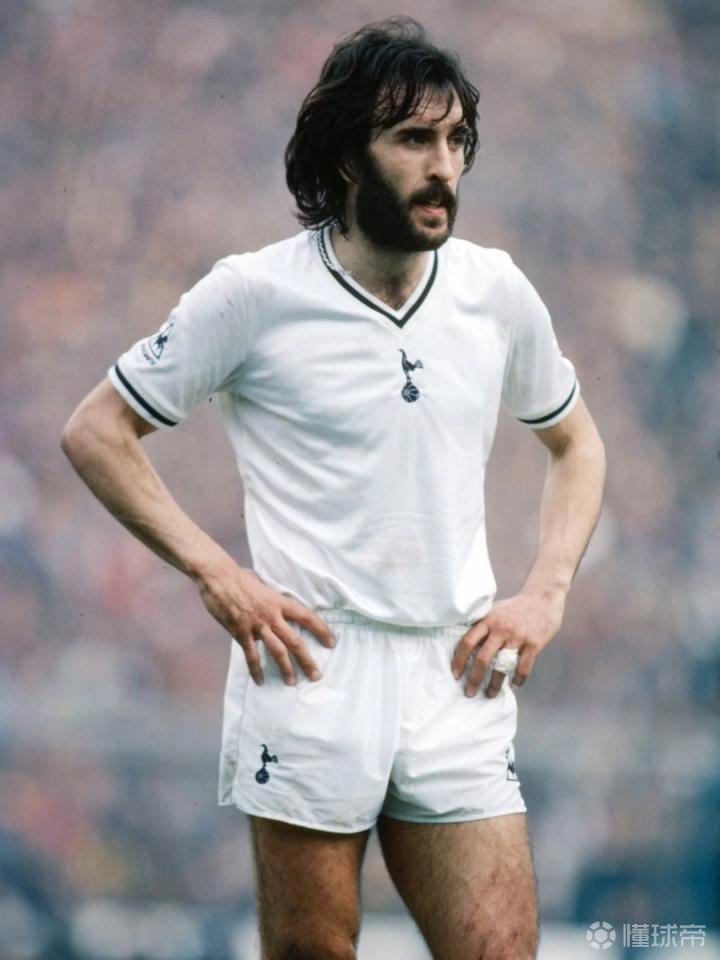
The first to be impacted were Tottenham Hotspur's "Argentine duo," Osvaldo Adiles and Ricardo Villa.
British fans launched a boycott of the two players, with insulting banners hanging in the stands and the two Argentine players being booed by the entire stadium every time they touched the ball.
Adiles said with great distress: "The country I was born in is at war with the country I live in, it's like my two brothers are fighting."
Having already reached an agreement with Tottenham Hotspur, Ardelás left the team before the end of the season to prepare for the World Cup, temporarily escaping the media storm. He was then loaned to Paris Saint-Germain in France by Tottenham Hotspur in the 1982-83 season.
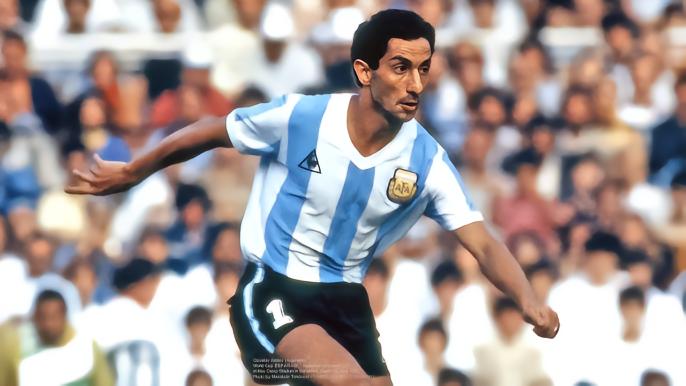
Villa remained in London, but for his personal safety reasons, he missed the 1981-82 FA Cup final between Tottenham and Queens Park Rangers.
In 1983, Villa was forced to terminate his contract with Tottenham Hotspur early and went to play in the United States.
Villa stated: "That war permanently damaged my relationship with English football."
At the same time, Britain also pressured FIFA to expel Argentina from the 1982 World Cup in Spain.
João Havelange, the then-FIFA president who supported Argentina hosting the 1978 World Cup, once again withstood enormous international pressure and insisted that "football has nothing to do with politics," stating that he would not disqualify Argentina from the competition.
Britain has threatened to boycott the World Cup, threatening to withdraw England, Scotland, and Northern Ireland if Argentina participates. However, the idea of boycotting the World Cup has not gained widespread support in Britain, given the country's boycott of the 1980 Moscow Olympics two years prior. Missing two major sporting events in a row would undoubtedly exacerbate negative public sentiment.
As the war situation began to tilt in Britain's favor, boycotting the World Cup lost its practical significance, and the British government stopped mentioning it.
(three)
Argentina's defeat on the battlefield severely impacted the morale of the nation and the national team. Domestic newspapers continued to proclaim that "victory is just around the corner," but the truth eventually came out, and rumors from the front lines and abroad plunged Argentina into a state of despondency.
Argentina's squad for the 1982 World Cup retained nine key players from their 1978 World Cup-winning team, and the 21-year-old football prodigy Maradona had just transferred to Barcelona for a record-breaking $7.6 million. On paper, they were still the favorites to win the tournament, but the looming threat of World Cup victory created an extremely tense atmosphere in the locker room.
Upon arriving in Spain, many Argentine players read reports completely different from those in their home countries. They learned that Argentina was suffering heavy casualties on the front lines and that the army was on the verge of surrender, which had left them with no will to play.
In a 2001 interview, then-Argentine captain Passarella said: "I regret participating in the World Cup held in Spain. Countless young people died in the Falklands War. As captain, I should have led the team to refuse to participate. Our compatriots sacrificed their lives in the war, and we went to Spain. I still feel ashamed. We should have withdrawn from the competition to show our condolences to our compatriots."
José Adelés' cousin, José Adelés, was an Argentine Air Force pilot who was killed in action in early May.
“At first I didn’t think things would be this bad. I never expected war to break out. It all started with the sinking of the Belgrano. It was incredibly painful to see two countries I loved fighting each other. It was a terrible moment, the darkest moment of my life.”
In his autobiography, Maradona wrote: "In Argentina, they told us that we were winning the war, sinking their ships, and having the upper hand in every way, but when we arrived in Spain, reality hit us hard. It surprised us, the local newspapers reported the exact opposite, and we realized we had been deceived, which made it impossible for us to focus on football."
Luis Menotti, then head coach of the Argentine national team, said: "Every morning, the players did not discuss tactics, but instead flipped through the latest European newspapers to find out what was happening on the island. The team's morale was low."
"The military government wanted to use us as a fig leaf, but the players are very smart. They understand that their generation's lives are being destroyed, and in such an atmosphere, it is almost impossible to defend the world championship title."
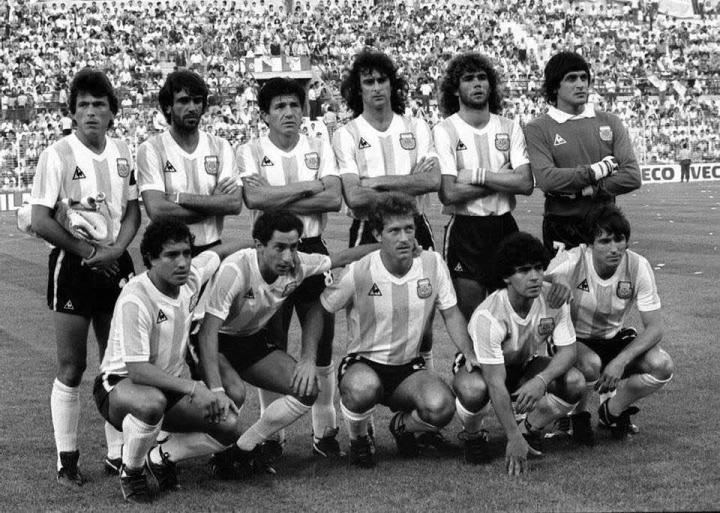
On June 13, in their first group stage match, Argentina was defeated 0-1 by Belgium; on June 14, the Argentine garrison on the island officially surrendered. The entire Argentine team was demoralized, but they still managed to defeat Hungary 4-1 and El Salvador 2-0, advancing from the first round of the group stage.
Midfielder Patricio Hernandez said: "We are trying our best to find inner strength, to help our compatriots forget the nightmare of war, and at least bring them some happiness."
"But the moment I step onto the pitch, I feel a strange chill creeping over me, and my humanity triumphs over my instinct for football."
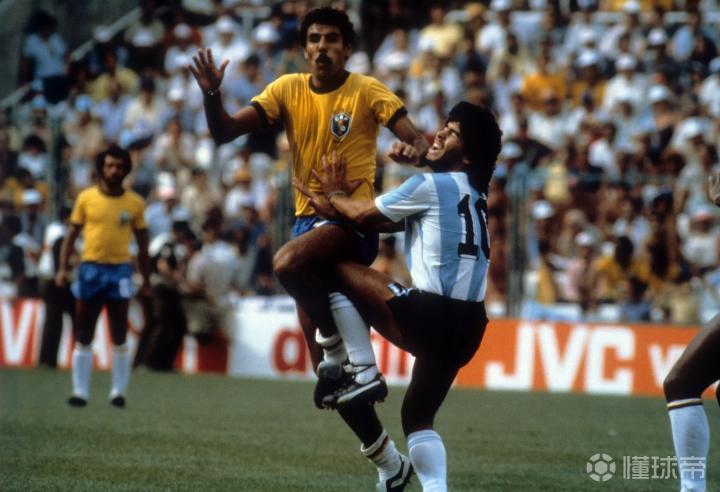
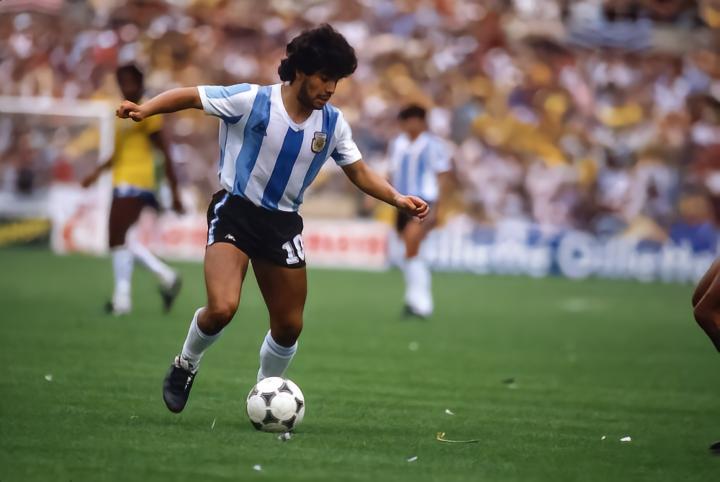
In the second round of group matches, Argentina lost 1-2 to Italy and 1-3 to Brazil. Maradona, making his World Cup debut, failed to perform to his full potential. In the 1-3 loss to Brazil, a desperate Maradona kicked João Batista in the 85th minute, ending his first World Cup journey with a red card.
Argentina suffered two major blows in just a few months after its defeat in the Falklands War and its elimination from the race. Even more unimaginable is that, within Argentina itself, these two defeats became tools for mutual attacks.
Media outlets and newspapers controlled by the military government accused the Argentine national team of being too old and criticized Maradona for being immature, attempting to divert public attention from the defeat of the Argentine national team in the Falklands War.
The opposition party argued that the World Cup is just a football match and called on the nation to pay more attention to the young soldiers returning from the Falklands War and to the compensation for the soldiers who died in the war.
In an attempt to atone for their "crimes," some Argentine national team players participated in a "patriotic charity match" organized by the military government, donating personal items and money to a "patriotic fund." It was later discovered that the funds raised at the match had also been misappropriated.
In 1983, with Raúl Alfonsin's victory in the presidential election, the military government that had lost the Falklands War completely collapsed. However, the impact of the Falklands War did not dissipate with the change of regime, but continued to permeate the political and football spheres.
(Four)
On June 22, 1986, Argentina and England met in the quarterfinals of the World Cup. For Argentina, this was not just a football match, but also an opportunity to wash away the humiliation of their defeat in the Falklands War.
In his autobiography, Maradona wrote: "Before the match against England, we said that football had nothing to do with the Falklands War, but that was a lie. We knew that Argentinians died there, they were shot like birds, and this was our revenge."
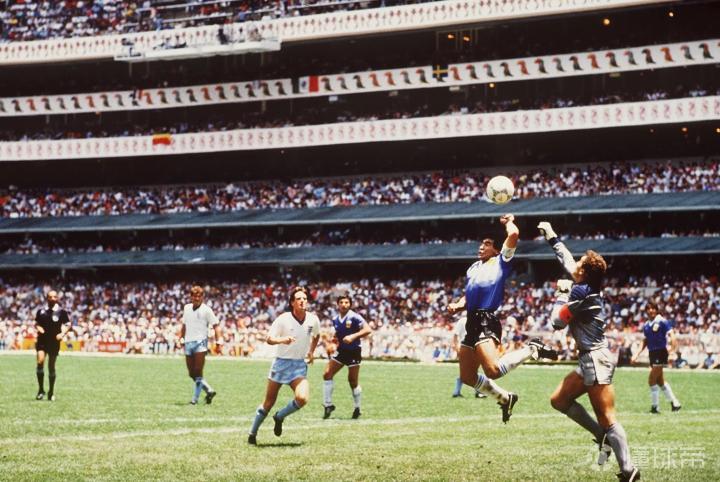
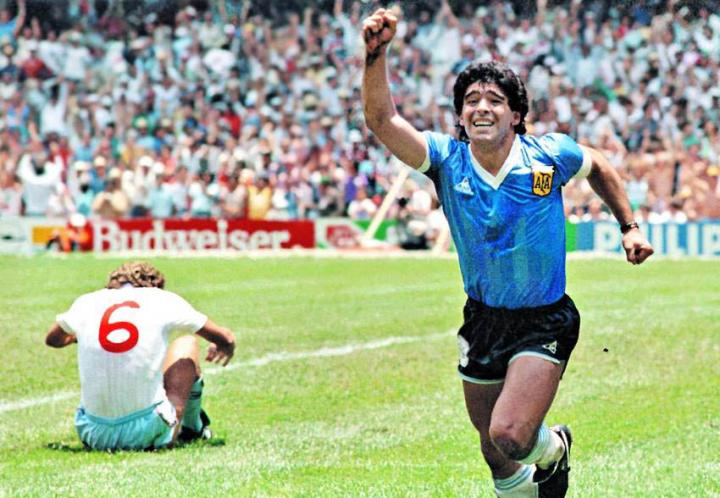
In the 51st minute of the match, one of the most memorable moments in world football occurred: Maradona leaped high in front of the goal and slapped the ball into the net guarded by Shilton with his left hand. Tunisian referee Nasser did not notice the foul by Maradona and, despite Shilton's protest, still ruled the goal valid.
Three minutes later, Maradona scored the "goal of the century." He dribbled the ball from midfield, made a long run of 55 meters, beat six English players, and put the ball in.
Argentina defeated England 2-1 and then beat West Germany 3-2 in the final to lift the World Cup trophy once again.
Maradona solidified his status as a football king at this World Cup, but compared to the "Goal of the Century," the "Hand of God" is more memorable, and this goal also made England and Argentina bitter rivals on the field.
Faced with strong protests from English players and fans, Maradona famously said: "Half is the hand of God, half is the head of Maradona."
England midfielder Glenn Hoddle recalled: "Until the first goal, the game was evenly matched, but it was an extraordinary game, and they were very emotional. They were playing for their country, for the Falkland Islands, while we were just playing against them like any other team, and that's the difference."
England goalkeeper Shilton said: "He should apologize, but he fabricated a story about the Hand of God and he stole my victory."
Maradona never truly apologized; he only said in 2008, "If I could, I would go back in time and change history."
Until his death in 2020, Maradona maintained that the Falkland Islands were Argentine territory, as he wrote in his autobiography: "This is how we reclaimed the Falkland Islands."
(five)
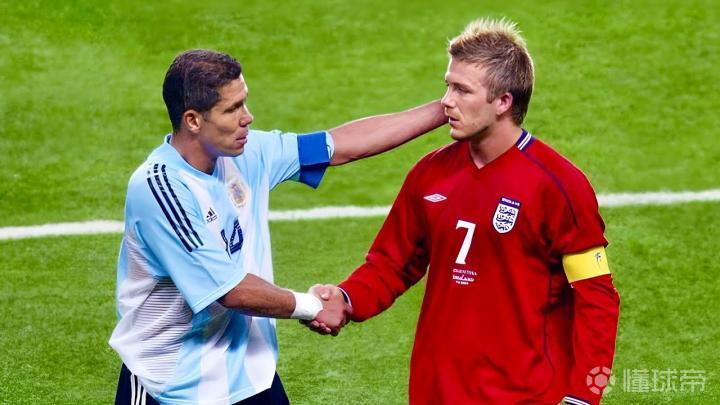
After the 1986 World Cup, Argentina and England faced off twice in the 1998 and 2002 World Cups. Both matches were highly competitive, and Beckham was the main protagonist in both games.
In the 1998 World Cup Round of 16, Beckham was sent off with a red card for kicking Diego Simeone, and England lost to Argentina in a penalty shootout. In the 2002 World Cup group stage, Beckham redeemed himself, scoring the only goal of the match from the penalty spot, leading England to a 1-0 victory over Argentina.
In these two matches, no one mentioned the Falklands War, but no one could deny its impact on either team.
In terms of referee assignments, FIFA has long adopted a strict "geopolitical avoidance principle," meaning that British referees cannot officiate matches for the Argentine national team, and Argentine referees cannot officiate matches for England.
The Falklands War had a significant impact on both Britain and Argentina, especially on Argentina.
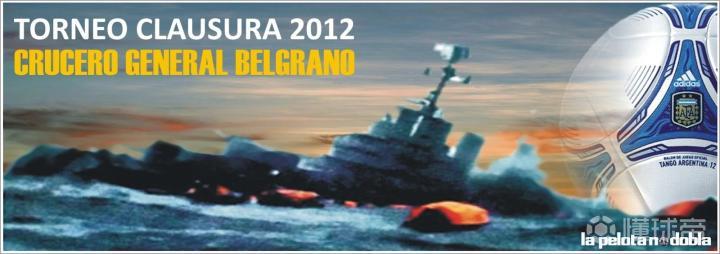
In 2012, on the 30th anniversary of the outbreak of the Falklands War, the Argentine Football Association, at the suggestion of then-President Cristina Kirchner, renamed the autumn league the "General Belgrano Cruiser League" to commemorate the "General Belgrano" cruiser that sank in the war and the crew members who died.
The British government and the English Football Association publicly criticized Argentina for linking football matches with war and hatred, believing that the Argentine Football Association was deliberately creating antagonism between the two countries. Then-FIFA President Sepp Blatter explicitly stated that sports should be separated from politics, and if the Argentine Football Association insisted on its stance, it could face suspension.
The Argentine Football Association insisted on using the name "General Belgrano Cruiser League" for the 2012 autumn league, but under pressure from various parties, it did not permanently change the name of the autumn league.
Before the London Olympics that same year, the Argentine hockey team filmed an Olympic promotional video in Port of Argentina (Stanley), the capital of the Falklands, with the tagline: "To compete on British soil, we train on Argentine soil." This promotional video once again sparked a diplomatic incident, with the British Foreign Office calling the video a "foolish gimmick" and "disrespectful to fallen soldiers."
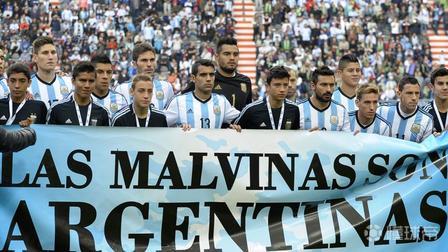
On June 7, 2014, the Argentine national team, preparing for the World Cup, defeated Slovenia 2-0 at home in La Plata. Before the match, when the team took a group photo, Argentina unfurled a banner that read "The Falkland Islands belong to Argentina" .
The FIFA Disciplinary Committee determined that the Argentine national team's actions violated Article 60 of the FIFA Statutes regarding stadium security (prohibition of provocative and aggressive conduct) and Article 52 of the FIFA Code of Discipline (team misconduct), and announced a fine of 30,000 Swiss francs against the Argentine Football Association.
Over the past few decades, many Argentine players have achieved success in the English Premier League, and six players in Argentina's squad for this World Cup are currently playing for Premier League teams.
In the realm of football, the impact of the Falklands War is actually fading. Not everyone wants the Falklands War's influence to spill over onto the pitch. For example, McAllister wants people to focus more on football matches.
“From the first day I arrived in England, people have been very kind to me, and I have no prejudice against them. We understand all the historical grievances behind it all. It’s not the fans’ fault, but the fault of those in power. We understand that this will be a very special game. As for me, I will always respect them, but we will give our all on the pitch.”
However, if we exclude the World Cup from the football field, people always say "football is unrelated to politics," but reality is rarely as rosy as imagined. In such an important international competition, football is unlikely to be completely detached from politics.
After Argentina's come-from-behind victory over Egypt, the Argentine players sang songs about the Falkland Islands in the locker room. Argentine fans were equally enthusiastic, frequently singing provocative songs; McAllister's mother even faced online harassment from a minority of Argentine fans for refusing to sing anti-British songs.
The Falklands War continues to influence the World Cup semi-final match between England and Argentina; this is an objective fact.
In the World Cup semi-final against England, Argentina will wear a dark blue away kit. They also wore blue in that match in the 1986 Mexico World Cup.