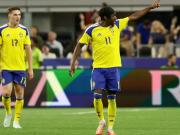
On July 15th local time, The Athletic introduced the origin of the World Cup third-place match, which will be played between France and England in this World Cup.
The following is its introduction.
The "third-place match" as referred to by FIFA has always been subject to drastically different evaluations.
For some, this is a match that no team would want to participate in; for others, it is the most famous "consolation match" in the football world; and some believe that it is just the last chance for players to pad their stats and break personal records.
The two semi-final losers of the 2026 World Cup – England and France – will compete for third place, or, to put it more grandly, bronze, at Hard Rock Stadium in Miami on Saturday, July 18. The match will take place the day before the final between Spain and Argentina at Metropolitan Life Stadium in New York.
Four years ago at the Qatar World Cup, Croatia defeated Morocco 2-1 in the third-place match to finish third, behind only Argentina and France. It's worth noting that they also finished as runners-up in the 2018 Russia World Cup, losing to France, and this time, they again celebrated their third-place finish with great enthusiasm.
So, where did this competition come from? How did it set a World Cup record? And why did it face opposition from many head coaches?
Why is there a "bronze medal final" in the World Cup?
Each additional match in the World Cup generates more revenue for FIFA and the host city, including ticket sales.
At the same time, the third-place match can fill the gap between the semi-finals and the finals, providing broadcasters with another high-profile event for broadcasting and advertising revenue.
In addition, this match will also affect the FIFA world rankings, with its points weighting being much higher than that of ordinary friendly matches.
Therefore, the players are not only competing for a bronze medal, but they also need to bounce back in just a few days after the semi-final defeat, as a victory could help the national team improve its world ranking, thereby affecting the group stage draw for the UEFA Nations League and the next World Cup qualifiers.
The World Cup's practice of awarding a third-place finisher is similar to that of another, longer-established international sporting event—the Olympic Games—providing one of the teams with the opportunity to end the tournament with a victory.
The third-place match first appeared in the 1934 World Cup, which was the second tournament in the history of the World Cup.
At that time, Germany defeated Austria 3-2 to win the bronze medal.
The inaugural World Cup in 1930 did not have a third-place match, and the two semi-final losers that year—the United States and Yugoslavia—did not play a play-off.
Later, the United States was officially awarded third place due to a better goal difference. Interestingly, both team captains ultimately received medals.
The 1938 World Cup continued with a third-place match.
However, since the 1950 World Cup used a round-robin format for the final stage, this match was not included.
In 1954, the third-place match was reinstated and has been used ever since.
Incidentally, the European Championship abolished the third-place match after 1980.
Some famous records in World Cup history were set in the third-place match.
In the 2002 World Cup, Turkish player Hakan Šuker scored against South Korea in just 11 seconds, a record that still stands as the fastest goal in World Cup history.
In the 1958 World Cup, French legend Just Fontaine scored four goals in France's 6-3 victory over West Germany in the third-place match, bringing his total number of goals in that World Cup to 13.
To this day, this remains the record for most goals scored by an individual in a single World Cup.
Will winning this match bring a trophy? The answer is simple: no.
However, as mentioned earlier, the winning team will receive the World Cup bronze medal.
In addition, the third-place team will receive an extra $2 million in prize money compared to the fourth-place team.
Ultimately, the third-place team received a total prize of $29 million, while the fourth-place team received $27 million.
Germany, a four-time World Cup champion, also holds the record for the most third-place finishes in World Cup history, winning the bronze medal four times, most recently in 2010. Of course, they have also finished as runners-up four times.
For the players individually, this match also represents an opportunity to break records.
This year, Mbappe and Kane will have their last chance to win the Golden Boot.
Despite the long history of the third-place match, many head coaches have been critical of it.
In 2014, after the Netherlands defeated hosts Brazil 3-0 in the third-place match to win the bronze medal, then-coach Louis van Gaal said: "I think this match should not have existed at all. I have been saying this for the past ten years. It's not fair. The worst thing is that you can lose two games in a row. You play so well in a World Cup and leave as a loser."
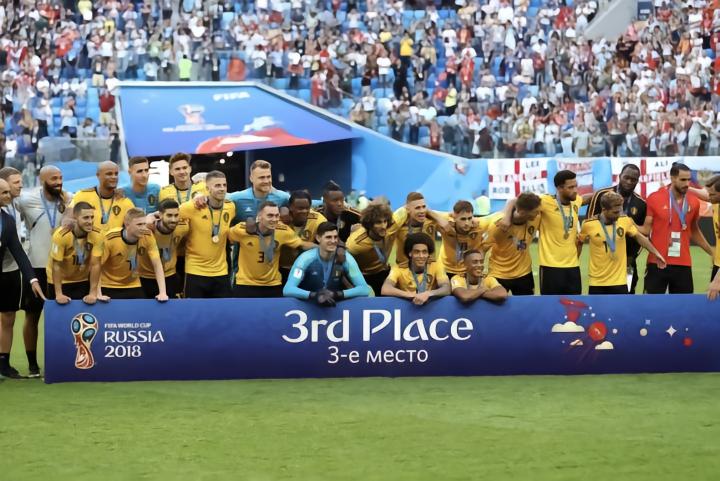
Gareth Southgate, the predecessor of current England manager Thomas Tuchel, expressed a similar view when preparing for the third-place match after England's extra-time defeat to Croatia in the 2018 World Cup semi-final: "This is not a game that any team wants to play."
Ultimately, England lost 0-2 to Belgium.
However, then-Belgium coach Roberto Martinez called the victory "a truly important milestone."
England legend and current television commentator Alan Shearer even wrote days before the match: "The World Cup third-place match is absolutely ridiculous. It's the last game any player wants to play. #GoHome"
Therefore, not all teams take the third-place match seriously.
For example, France did not field their captain Platini in the third-place matches of the 1982 and 1986 World Cups.
Many head coaches also make significant adjustments to the starting lineup, giving playing time to players who previously had limited opportunities.
However, some teams also value standing on the podium very much.
For example, in the 1994 World Cup—the last time the World Cup was held in the United States—Sweden pulled off a series of upsets to reach the semi-finals and ultimately swept Bulgaria 4-0 in the third-place match to win the bronze medal, a feat that made the whole country proud.
The 1998 World Cup marked Croatia's first participation in the World Cup since its independence. They defeated the Netherlands 2-1 in the third-place match to win the bronze medal, an achievement that has been celebrated in Croatian football for a long time.
For neutral fans still looking for a reason to watch the game on Saturday, there's a statistic worth noting: since Poland beat Brazil 1-0 in 1974, every third-place match in the World Cup has produced at least two goals, and there has almost never been a shortage of exciting moments.