The 2022 FIFA World Cup was held in Qatar, marking the first time the World Cup was hosted by a Middle Eastern country. Qatar also became the smallest country to ever host the World Cup.
Qatar World Cup logo
Qatar's successful bid to host the World Cup has brought them considerable scrutiny. During the bidding process, rumors of bribery surfaced. Qatar and its stakeholders vehemently denied these allegations, and the matter ultimately faded away. Furthermore, the World Cup is typically held in the summer, and Qatar's Middle Eastern climate is extremely hot, making it unsuitable for competition. Therefore, the tournament was scheduled for November 20th to December 18th. Even in winter, Qatar experiences high temperatures. Consequently, Qatar installed air conditioning in the stadiums in an effort to improve the playing and spectating experience as much as possible.
Hundreds of thousands of foreign workers arrived in Qatar during the construction of stadiums for the World Cup. They faced meager wages, harsh working conditions, and relentless work in the sweltering heat, resulting in numerous deaths. Hassan Tawadi, Secretary General of Qatar's Supreme Committee for Delivery and Legacy, which was involved in the World Cup preparations, admitted to reporters that between four and five hundred workers had died during the preparations. However, according to a 2021 report by the British newspaper *The Guardian*, more than 6,500 foreign workers have died in Qatar since the country won the right to host the World Cup in 2010. The human rights of these workers have become a major point of contention surrounding the Qatar World Cup.
Since the FIFA World Cup in the USA, Canada, and Mexico will expand to 48 teams four years later, the Qatar World Cup will be the last World Cup in history to feature 32 teams. The group stage draw is as follows:
Group A: Qatar, Netherlands, Senegal, Ecuador
Group B: England, USA, Iran, Wales
Group C: Argentina, Mexico, Poland, Saudi Arabia
Group D: France, Denmark, Tunisia, Australia
Group E: Spain, Germany, Japan, Costa Rica
Group F: Belgium, Croatia, Morocco, Canada
Group G: Brazil, Switzerland, Serbia, Cameroon
Group H: Portugal, Uruguay, South Korea, Ghana
As the host nation, Qatar had never played in the World Cup before; this was their first time participating, taking advantage of hosting the tournament. Unsurprisingly, Qatar displayed a clear gap in strength compared to their opponents from other continents, ultimately finishing bottom of their group with three losses, scoring only one goal and conceding seven, ranking last among all 32 teams. This is the worst performance ever achieved by a host nation in a World Cup.
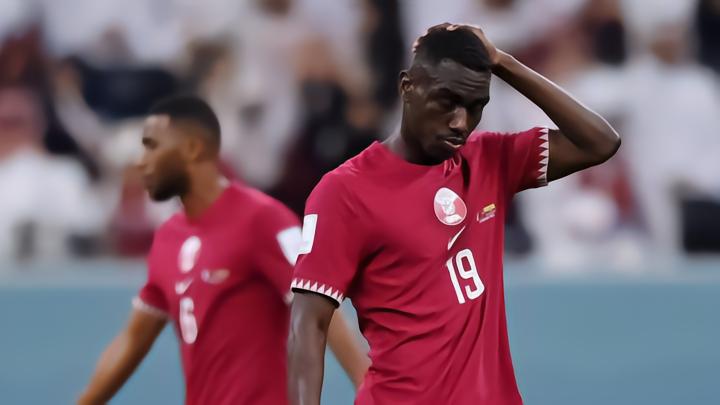
Qatar has recorded the worst performance by a World Cup host nation.
Argentina was one of the most watched teams at this World Cup, largely due to their 35-year-old captain, Lionel Messi. At that time, no one knew if Messi would be able to return to the World Cup four years later; given his age, many considered this his last. For Messi, a superstar in world football, to never win a World Cup would be a huge regret. Therefore, many of his fans hoped he could fulfill his dream at this World Cup.
Similarly, fans naturally assumed that this would be the last World Cup for veterans like 37-year-old Portuguese star Cristiano Ronaldo and 37-year-old Croatian star Luka Modric, hence the Qatar World Cup was dubbed "Twilight of the Gods." However, what was unexpected was that these stars had remarkably long careers, and Qatar was far from their final destination. Of course, that's all hindsight.
The Qatar World Cup presents Messi with the best opportunity to win a title. Firstly, Argentina's Copa America victory in 2021 ended their long trophy drought, giving them a psychological boost. Secondly, Argentina has become a mature team with a well-balanced mix of experienced and young players, excellent teamwork, and a strong squad. Another favorable factor is Messi's transfer from Barcelona to Paris Saint-Germain in Ligue 1 during the summer of 2021. Ligue 1 is less competitive than La Liga, with Paris Saint-Germain dominating the league. Furthermore, having superstar teammates like Mbappe and Neymar significantly reduces the burden on Messi at his club level. This allows him to fully adjust his physical and competitive condition before the World Cup.
But once they arrived in Qatar, Messi and the Argentine team suffered a major setback. In their opening match against Saudi Arabia, the Argentine team underestimated and failed to take the Asian side seriously. Saudi Arabia's coach, Renard, employed a clever offside trap, repeatedly putting Argentine players in that situation. Although Argentina took the lead thanks to a penalty from Messi, they ultimately suffered a 2-1 defeat to Saudi Arabia, a major upset and a disappointing start to the tournament.
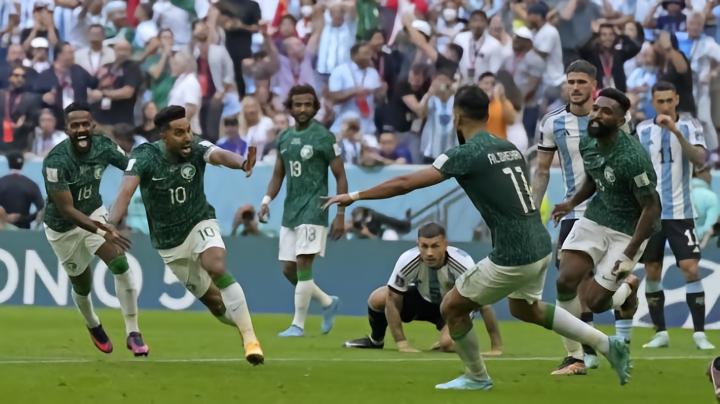
Argentina suffered a shock defeat to Saudi Arabia.
In World Cup history, only Spain in 2010 had previously managed to win the title after losing their opening match. After the loss, Messi's second son, Mateo, left the stadium in tears. Messi's eldest son, Thiago, however, remained calm, calculating the group points for his brother: "If we win the next two matches, we'll advance."
As Thiago predicted, Argentina did not allow an upset to repeat itself. They won their next two group stage matches 2-0 against Mexico and Poland, advancing to the knockout stage as group winners without much trouble. In the round of 16, they eliminated Australia 2-1. In that match, Messi scored the opening goal for Argentina, his first ever World Cup knockout stage goal.
After advancing to the semi-finals, Argentina faced their first formidable opponent in the tournament: the Netherlands, coached by the renowned Louis van Gaal. The match took place at the Lusail Stadium in Doha, and before the game, no one anticipated that its intensity would be unprecedented in World Cup history—it would be like a battle.
In the 35th minute, Messi delivered a precise pass, assisting right-back Molina to score. In the 73rd minute of the second half, Argentina was awarded a penalty, which Messi converted, extending the lead to 2-0. After scoring, Messi celebrated by placing his hands to his ears, seemingly as a show of defiance towards the opponents. Before the match, Van Gaal had declared that he would "settle the score" with the Argentine team, seeking revenge for their penalty shootout defeat to Argentina in the 2014 World Cup. These remarks angered the Argentine team, and Messi's actions were a response to these comments.
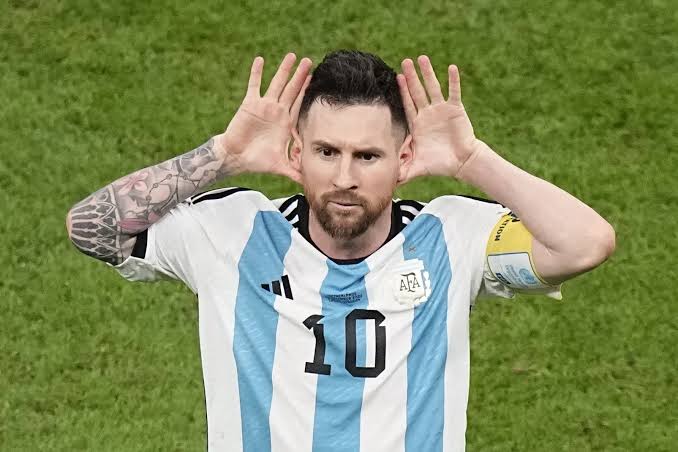
Messi's celebration was a response to Van Gaal.
Both sides had committed numerous fouls on the field, and Messi's action further escalated the tension, leading to increasingly aggressive play. The Netherlands brought on their tall striker, Weghorst, who scored a header in the 83rd minute, pulling one back for his team. The narrowing score further heightened the tension on the field.
In the 88th minute, Argentine player Paredes fouled Dutch defender Aké. After the referee blew the foul whistle, Paredes, seemingly in anger, kicked the ball hard onto the Dutch bench. The Dutch coach and players on the bench were enraged and rushed out. During the altercation, Paredes was shoved to the ground by a Dutch player. Argentine players intervened to defend their teammate, and chaos ensued. Referee Lahoz spent considerable time calming the situation.
Just as Argentina was about to secure victory in the 10th minute of stoppage time, the Netherlands earned a free kick. They executed a play reminiscent of Argentina's performance against England in the 1998 World Cup: Kupmenas cleverly passed the ball to Weghorst in the penalty area, who scored to level the score at 2-2, sending the game into extra time.
In extra time, neither team managed to score, leading to a penalty shootout. Argentina ultimately won 4-3. During the shootout, both sides engaged in psychological warfare: Berghuis, the second Dutch penalty taker, was feigned a pass to Argentina by goalkeeper Martinez, who then suddenly released the ball. Berghuis seemed affected and missed his penalty. Meanwhile, after scoring his penalty, Netherlands' Weghorst, seeing Enzo Fernandez next for Argentina, verbally provoked him, and Enzo also missed his penalty.
Lautaro Martinez scored the winning penalty for Argentina. After his goal, the entire Argentine team celebrated wildly. Defender Otamendi immediately rushed towards the Dutch players, placing his hands beside his ears in a seemingly provocative gesture. The Dutch players were enraged and a physical altercation ensued, ultimately resulting in defender Dumfries receiving his second yellow card and being sent off after the match.
This match was highly charged, with referee Lahoz issuing a total of 18 yellow cards and 1 red card, setting a World Cup record. Due to its intensity, the match was later known as the "Battle of Luselle" and compared to other World Cup classics such as the "Battle of Bern" and the "Battle of Santiago."
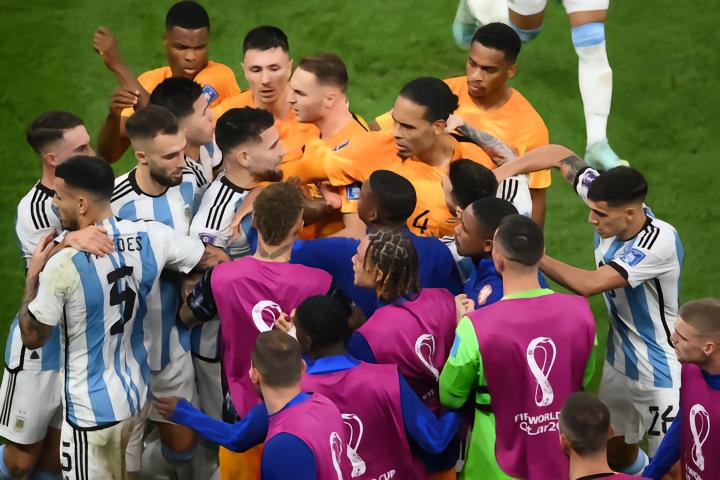
The Battle of Luselle
Referee Lahoz's officiating sparked considerable controversy. After the match, Messi said, "I don't want to talk about the referee because you can't tell the truth. If you do, they'll punish you; FIFA has to consider this issue, they can't expect to send a referee who's incompetent to handle this situation." Goalkeeper Martinez said, "I think we controlled the game very well. We were leading 2-0, but the referee started showing extreme favoritism. Suddenly, they scored a header, and the game was completely reversed. The referee added 10 minutes of extra time without any justification. He awarded them free kicks outside the penalty area two or three times. He just wanted them to score, that's all, so hopefully we won't encounter a referee like that again."
Laos's officiating has alienated both sides, and the Dutch team is also dissatisfied with him. Dutch midfielder Frenkie de Jong said, "After regular time, the Argentine players went to the referee, and from then on, he only blew the whistle in favor of Argentina. Our player Tingber's shoe was kicked off, but he called a foul on us. Luuk de Jong only won a simple header, and he blew the whistle to call a foul. Argentine players kicked the ball towards our bench, and he didn't care. Messi's handball was also overlooked. His behavior is outrageous. He's a good person, usually a good referee. But his performance in extra time was simply appalling. I think he really lost control."
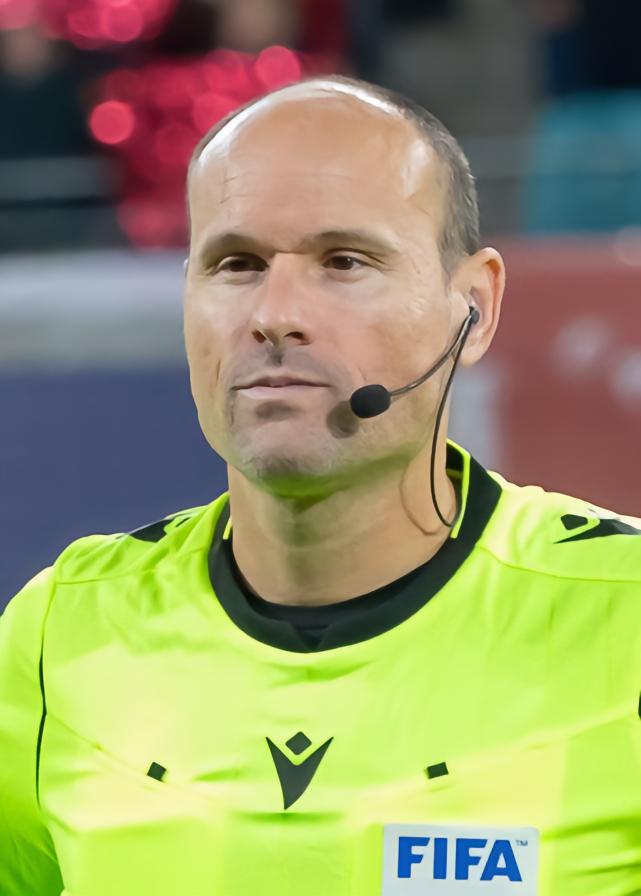
Laos's law enforcement is pleasing neither side.
After winning the match, Argentine goalkeeper Roberto Martinez didn't miss the opportunity to retaliate against the Netherlands. Before the game, Martinez screenshotted a series of harsh words spoken by Louis van Gaal on his phone and showed them to his goalkeeping coach and his psychologist. After eliminating the Netherlands, Martinez bluntly stated: "They talked a lot of nonsense before the game, which motivated me… One thing I've learned in football is that actions on the field speak louder than words. They talked too much; you can't win by just talking and not doing."
Although Weghorst scored two goals, he couldn't help his team advance, which frustrated him greatly. He ended up arguing with former Argentine international Sergio Aguero in the players' tunnel. Aguero had already retired due to heart problems, but he had still traveled to Qatar with the national team, primarily as a fan. However, considering Aguero's previous status in the national team and his personal friendship with Messi, coach Scaloni allowed him to stay with the team to boost morale. Unexpectedly, after this intense match, Aguero, who wasn't even a player, became the target of Weghorst's frustration.
Aguero remained calm throughout, repeatedly reminding Weghorst to "stop, that's enough." However, Lautaro, seeing this, assumed Aguero was being bullied and joined the argument, arguing with Weghorst. The Argentine coaching staff quickly intervened to prevent the situation from escalating. Aguero also tried several times to separate the two. After a while, the conflict was finally resolved.
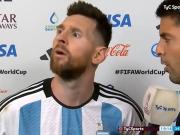
After winning the match, Messi was also extremely emotional and couldn't calm down for a long time. He was still upset about the conflict between the two sides during the game. After the match, while Messi was being interviewed, he suddenly noticed Weghorst watching him. Messi's emotions immediately erupted, and ignoring the cameras in front of him, he shouted at him in Spanish:
"¿Qué miras, bobo? Andá pa allá, bobo!"
This means: "What are you looking at, you idiot? Get out of here, you moron!"
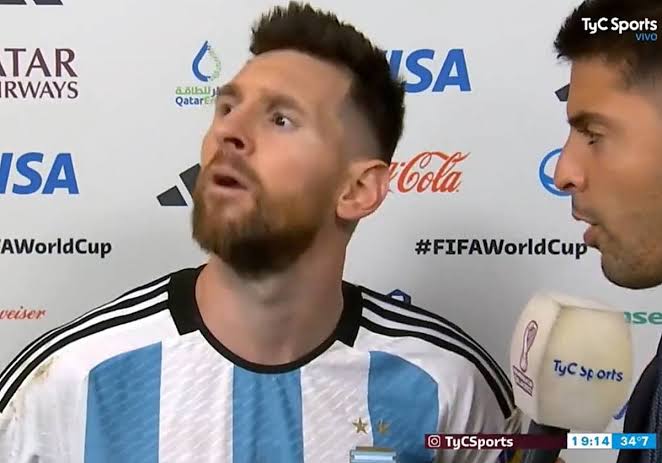
Messi lashed out at Weghorst during the interview.
The interview was being broadcast live on television, and Messi's outburst was seen by many fans. Previously, Messi had always been perceived by most fans as low-key, quiet, and emotionally stable. However, his sudden outburst caused the video to go viral online in a short time. Because the pronunciation of "Qué miras, bobo" sounds similar to the Chinese phrase "给你两窝窝" (give you two nests), many Chinese fans who didn't understand the original Spanish phrase simply used "给你两窝窝" to spread the phrase, creating a very comical effect. Abroad, even related derivative products appeared, such as mugs printed with Messi's image and "Qué miras, bobo".
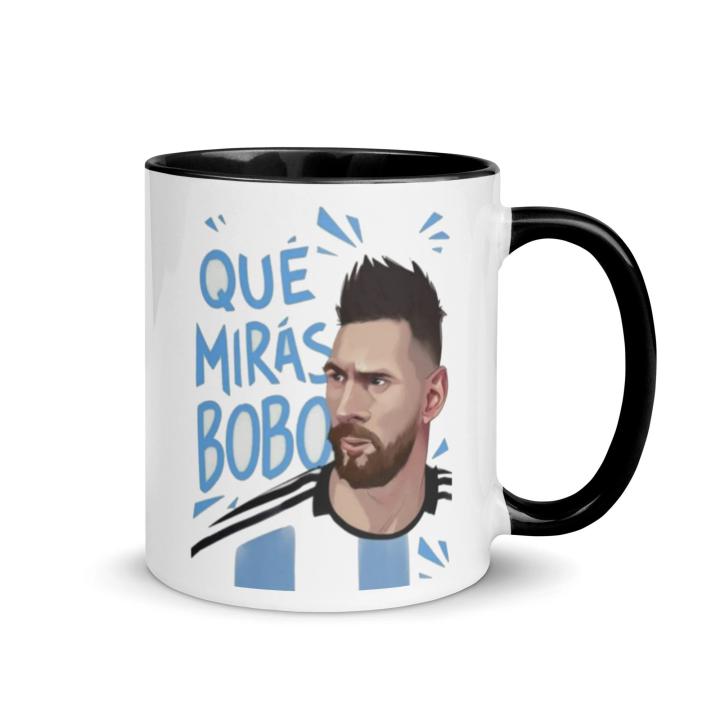
Derivative products of "Give you two nests"
Messi was actually angered by the Netherlands team's pre-match and in-match comments. He told reporters, "Van Gaal's pre-match comments made me feel disrespected, and some Dutch players also talked too much during the match... Van Gaal claimed to be playing beautiful football, but he sent the forwards into the penalty area and started long balls and crosses. We deserved to advance, and that's exactly what happened."
Weghorst later stated that he meant no harm: "After the game, I wanted to go up and shake hands with Messi. I have great respect for his achievements as a player. He didn't accept and said some nasty things, but I don't understand Spanish very well. I was very disappointed." He also told his teammates, "I was waiting for him, wanting to shake his hand. How could he do this? That's so disrespectful."
Actually, it was all a misunderstanding. Weghorst wanted to be friendly to Messi, but Messi misinterpreted it as him being hostile. Plus, the match had just ended, and Messi was still emotional, leading to this incident. Afterwards, Aguero mediated, spoke with Weghorst, and calmed him down.
Aguero didn't think it was a big deal; in fact, he found it quite amusing. He posted the video of Messi's outburst on social media, along with a joking caption:
"When someone stares at your girlfriend."
Later, Weghorst was loaned to Manchester United from Burnley in the Premier League. His clash with Messi made him even more famous than before. Even his teammates at Manchester United jokingly called him "Wowo."
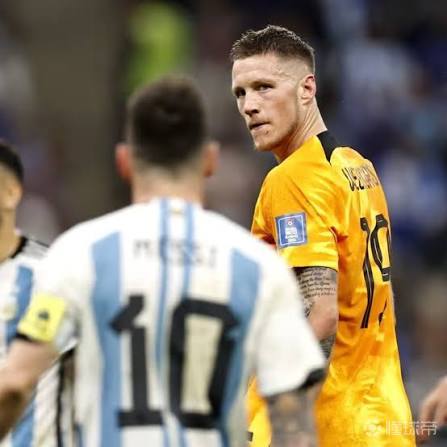
Weghorst and Messi
Looking back, Messi explained: "I don't like what I did at the time. But the atmosphere was very tense, and everything happened so fast. People react that way, but it wasn't planned beforehand. It just happened. I don't like leaving that impression, but these things do happen... Everything happened naturally. A lot happened on the field, not just that player, but several other players as well. The game was tense, there were frictions and conflicts between the two sides, and with the referee's decisions, the atmosphere became very tense."
Beyond the events on the field, another tragic and regrettable incident occurred during the "Battle of Lusail": American sports journalist Grant Wall suddenly collapsed in the press box, unconscious. Paramedics rushed to the scene and performed CPR on him for 30 minutes. Wall was taken to the hospital, but ultimately succumbed to his injuries at the age of 49.
Because the Qatar World Cup was held in a small country, the venues were very close together. This provided convenience for sports journalists from all over the world, allowing them to travel around and cover as many matches as possible; however, it also increased their workload. Especially since Qatar is located in the Middle East, the climate is very hot (even in December), and many media centers and stadiums were air-conditioned. The combination of hot and cold weather, heavy workload, and insufficient sleep and rest easily led to illness. Furthermore, it was during the COVID-19 pandemic, and many people were already in poor health. Given these combined factors, it's not surprising that such a tragedy occurred.
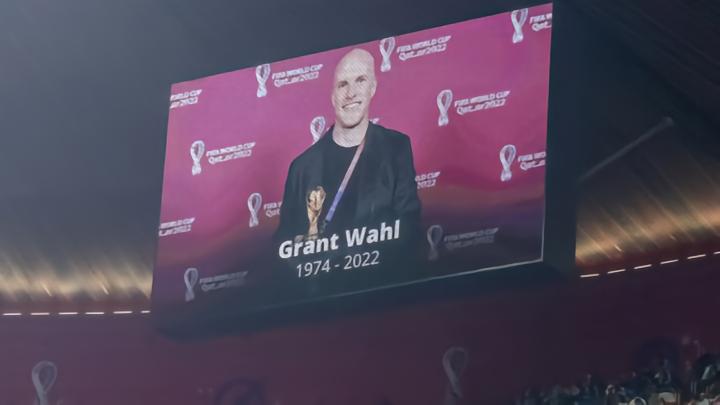
American journalist John Wall died in the line of duty.
Shortly before the tragedy, Grant Wall had complained on social media of chest discomfort. After a medical visit, doctors told him he might have bronchitis and prescribed cough syrup and antibiotics. Ultimately, Wall collapsed at his post. An autopsy revealed his cause of death to be an aortic aneurysm. Later, during the World Cup quarter-final match between England and France at the Bait Stadium, Wall's portrait and flowers were placed in the press box as a tribute from FIFA and the World Cup organizing committee.