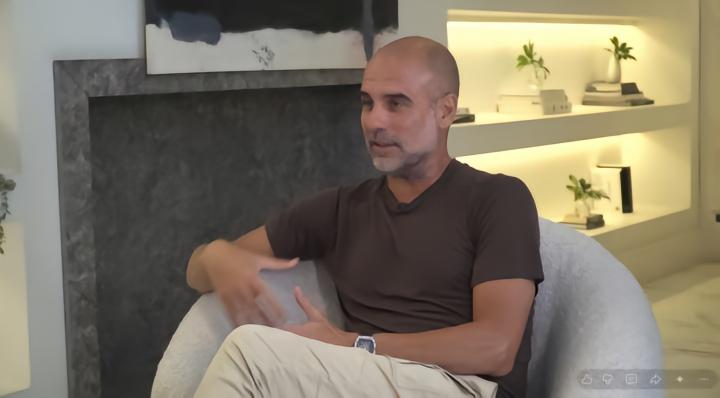
On July 16, former Manchester City manager Pep Guardiola gave an exclusive interview to sponsor OKX, in which he discussed several World Cup favorites and his predictions for the World Cup champion.
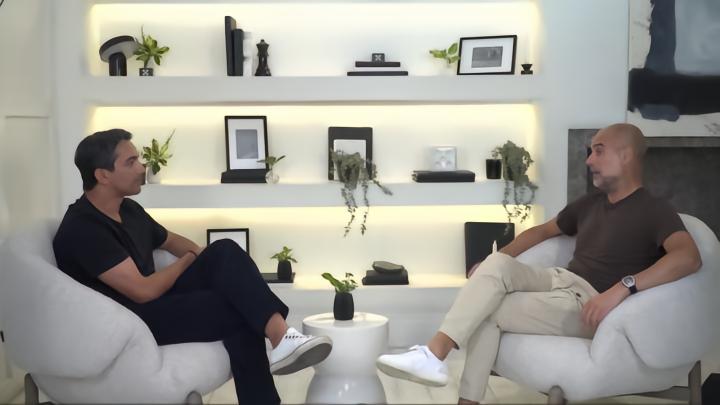
The following is part of the interview content.
Host: Speaking of passion, I'd like to ask you a question. You're definitely following the World Cup, what are your predictions for this tournament?
Guardiola: That's a good question. I think there have been some unexpected results in this World Cup, and this happens in almost every World Cup, especially in the group stage. Every time, after a draw or a loss, the coach, the players, and even the entire national team are subjected to a barrage of criticism, like being dissected on an operating table.
However, I believe that as we move into the round of 16 and the quarterfinals, the truly strong teams will gradually emerge. There might be a dark horse that makes it to the semifinals or even the finals, but the ultimate contenders for the championship will still be the traditional powerhouses.
As for specific predictions, I'm actually not very good at them. Otherwise, I would have already been betting and making a lot of money. If I could accurately predict the outcome, I would already be rich.
In this kind of short-term tournament, I think there are two factors that are more important than tactics.
First, there's the draw and the schedule. A favorable group and knockout stage matchups give a team more time to adjust. Provided there are no injuries and key players remain in good physical condition after a long season, they have a significant competitive advantage.
Secondly, there's the atmosphere within the team. National team training camps are very short, leaving almost no time for complex tactical training. Nowadays, information is highly transparent; the media and opponents study you, everyone knows your lineup, system, and style of play, making it difficult to keep any secrets.
Therefore, more important than tactics is whether the team is united and whether they enjoy this shared experience.
The World Cup is held only once every four years, and you might not have the chance to stand here again in four years. Therefore, every day should be cherished. It's not just about the matches; eating in the cafeteria, training, going back to the rooms at night, playing cards or chess together... these seemingly insignificant moments spent together are actually crucial for this short-term event.
If you asked me right now who has the best chance of winning the title, I would still choose Argentina. As long as Messi stays healthy, they will always have a chance, because that man can change everything.
Furthermore, although Spain's start has been less than ideal, if they can find their rhythm quickly, they still possess a wealth of tournament experience and formidable competitiveness. France is certainly another favorite to win the title.
As for my dark horse pick, I'd choose Morocco. I think they're a very strong team, and maybe other African teams will go very far too.
Furthermore, I also hope that England can achieve a breakthrough under Tuchel's leadership. After all, I worked and lived there for 10 years, have many friends and deep feelings for England, so I sincerely hope they can succeed.
Host: You've coached many of the world's best players from different countries. During the World Cup, how will you balance supporting which team?
Guardiola: I think I'll be happy no matter which team wins the title, because I've coached players from many countries.
If Argentina wins, I will be happy for them because I have worked with many Argentine players; the same goes for France, and for other national teams.
I don't see myself as a commentator, nor do I deliberately take sides. I'm more concerned with the players I know and like. For example, with the Portuguese team, I have very deep relationships with some of the players. If they succeed, I'll be genuinely happy for them. So, for me, as long as the players I've coached are happy and successful, I'll be just as happy.
Regarding the Spanish team
Host: Let's talk about Spain, after all, it's your home country. Now that you're no longer with the team, you can express your opinions more freely. Tell me, which player on the current Spanish team is your favorite?
Guardiola: What I think has always impressed me most about Spanish football over the years, and what has enabled them to consistently succeed in major tournaments, is their style of play.
This football philosophy begins instilled during the youth training period, with children and teenagers receiving the same education. This isn't just limited to Barcelona; it's the same in youth academies throughout Spain. It's truly remarkable that they possess such a comprehensive and systematic training system, instilling a unified football philosophy in players from a young age.
In addition, many Spanish players later go on to play abroad, gaining experience in different leagues, which also improves their mentality and ability.
Of course, I have some concerns about whether Rodri can recover to his best physical condition in time, especially since he recently suffered an injury. But for me, if I had to choose a player, it would definitely be Rodri. He's a player who can withstand immense pressure and decide the outcome of a game with his individual ability.
In the knockout stages, especially in the final stages of the tournament, you can certainly discuss tactics, but what truly determines the game are the players who can control the ball and dictate the pace of the game. I think that's the biggest difference.
If Rodri and Pedri can control the game in midfield and play their own rhythm, they could become key figures in changing the course of the game.
Regarding the Brazilian team
Host: Same question again. Who is your favorite player on the Brazilian team?
Guardiola: I've always wanted the opportunity to coach Neymar. It's one of the biggest regrets of my coaching career because this wish has never been fulfilled.
I believe that Neymar's every move at his peak was full of grace and beauty. Especially during his time at Barcelona, his MSN trio with Suarez and Messi was virtually unstoppable. I once coached Bayern Munich and faced them, and frankly, they were simply unstoppable. However, Neymar is currently plagued by injuries. I don't know how well he will recover.
As for the Brazilian team, I think they are still an unknown factor. The key is whether Ancelotti can truly instill his philosophy and playing style into the team in this tournament, especially in the knockout stages. After all, this is precisely where he excels.
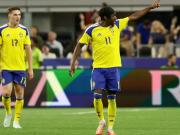
Brazil will always be a national team that no one can ignore. But at the same time, I also feel that that yellow jersey carries a heavy burden. It carries too much history, too much glory, and it's also a huge pressure for the players. When you put on the Brazilian national team jersey, you immediately realize the responsibility you bear.
Moreover, Brazilian fans are equally demanding. They've witnessed too many great players—Romario, Rivaldo… so it won't be easy for this current group of players.
I will always remember the 1982 World Cup. That tournament was held in Spain, where I grew up in Catalonia. Although Brazil didn't win, I believe football fans all over the world will remember that team. It was a charismatic, unique team that truly brought the joy of football to the world. To this day, when I think of that Brazilian team, I think first of their football, not the championship.
It's like the Dutch team in 1974. Although Cruyff's Dutch team didn't win the World Cup, they are still remembered today. I think fans certainly want their team to win, but if a team can convey passion, emotion, and joy through football, resonating with the audience, then that memory will stay with them forever. Brazilian football has always possessed this quality.