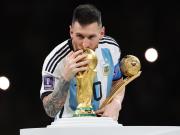
The Ballon d'Or and the World Cup are the highest honors a professional player can achieve, with only 13 players in history having won both. Before the 2026 World Cup, let's look back at the journeys of these legendary figures.
Bobby Charlton (England)
Charlton was the first player to win both honors. In 1966, he led England to their only World Cup title on home soil, scoring three crucial goals. That same year, he won the Ballon d'Or. His career at Manchester United was equally legendary, helping the club rebuild after the 1958 Munich air disaster. Known for his stamina and powerful long-range shots, Charlton pioneered this elite list.
Franz Beckenbauer (Germany)
In 1974, Beckenbauer captained West Germany to victory in the World Cup. As early as 1972, he won his first Ballon d'Or with his exceptional technique and tactical reading ability, redefining the role of the "sweeper" in modern football. In 1976, he won his second Ballon d'Or, solidifying his dual dominance with the national team and Bayern Munich. He won three consecutive European Cup titles with Bayern, making him one of the most influential leaders in history and the first defender to achieve this dual accomplishment.
Gerd Müller (Germany)
Gerd Müller joined this elite group in the 1970s. The legendary striker scored 10 goals at the 1970 World Cup in Mexico, becoming the top scorer and winning the Ballon d'Or. Four years later, in 1974, he helped West Germany reach the pinnacle of world football, scoring the winning goal in the final against the Netherlands. Müller's lethal finishing ability in the penalty area made him one of the most prolific strikers in football history. Today, there is a prize named after him, the "Gerd Müller Award," awarded specifically to the top scorer.
Paolo Rossi (Italy)
1982 was the most perfect year of Rossi's career. The striker led Italy to victory in the World Cup in Spain, winning both the tournament's top scorer and best player awards. That same year, he won the Golden Ball. His hat-trick against Brazil in the quarter-finals remains one of the most memorable individual performances of World Cup history.
Lothar Matthäus (Germany)
In 1990, Lothar Matthäus was included on this list as a symbol of German football. He led Germany to their third World Cup title in Italy, showcasing impeccable physicality and tactical execution in midfield. His undisputed leadership and consistent performance throughout the year earned him the Ballon d'Or that same year. Matthäus had a long career, participating in five World Cups and achieving success at clubs such as Inter Milan and Bayern Munich.
Zinedine Zidane (France)
In 1998, France hosted and won its first World Cup title, and Zinedine Zidane etched his name into that honor. He scored two headers in the final, defeating Brazil and becoming the tournament's biggest hero. This achievement earned him the Ballon d'Or that season. Zidane perfectly combined exceptional elegant technique with the ability to control the tempo of the game, achieving success at both Juventus and Real Madrid.
Ronaldo Nazario (Brazil)
Ronaldo won both honors at different times. He was a member of the 1994 Brazil World Cup-winning team and won his first Ballon d'Or in 1997. He scored eight goals at the 2002 Korea/Japan World Cup, including two in the final against Germany, helping Brazil win their second World Cup title and also earning his second Ballon d'Or that year. This "Alien," with his speed, power, and surgical finishing ability, became one of the greatest center forwards of all time.
Rivaldo (Brazil)
Rivaldo achieved a double at the turn of the century. He led Barcelona to the La Liga title in 1999 and Brazil to the Copa America, winning the Ballon d'Or. He scored five crucial goals at the 2002 Korea-Japan World Cup, helping Brazil win their fifth World Cup title. This left-footed player possessed exceptional technique, a powerful long-range shot, and the ability to create opportunities for his teammates. His attacking partnership with Ronaldo and Ronaldinho formed one of the most formidable combinations in World Cup history.
Ronaldinho (Brazil)
Ronaldinho joined this golden list after winning the 2002 World Cup with Brazil, and at just 22 years old, he was already a key member of the team. His personal peak came in 2005, when he won the Ballon d'Or with a stunning performance for Barcelona. Ronaldinho's career was known for its joy, improvisation, and extraordinary technique, always delivering unexpected and dreamlike performances.
Kaka (Brazil)
Kaká marked the end of Brazil's golden generation of football in the early 21st century. He was a member of the 2002 World Cup-winning team. Five years later, in 2007, he reached the pinnacle of his career—leading AC Milan to the Champions League title, winning both the Golden Boot and the Ballon d'Or. Kaká was known for his powerful strides in vertical runs, his accurate final passes, and his efficiency in front of goal.
Fabio Cannavaro (Italy)
In 2006, Cannavaro made history as a center-back and was selected for the club's national team. As captain of the Azzurri, he led the team to victory in the 2006 World Cup in Germany, commanding a defense that conceded only two goals throughout the tournament. His outstanding performance at the World Cup, coupled with his consistently high level of play for Juventus and Real Madrid, won him the Ballon d'Or that year. Cannavaro compensated for his lack of height with excellent anticipation, jumping ability, and leadership qualities.
Lionel Messi (Argentina)
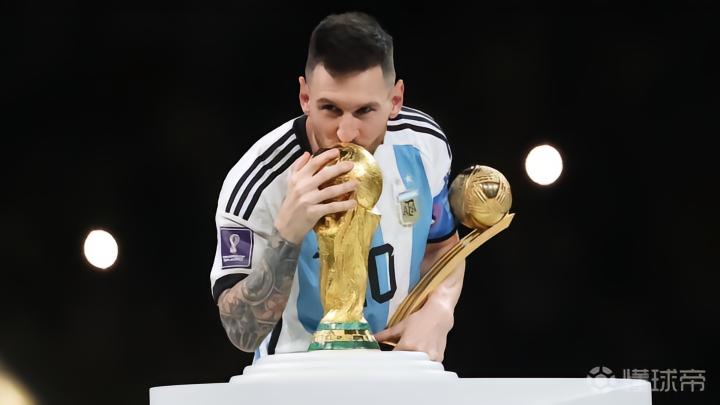
Messi joined this exclusive club after the 2022 Qatar World Cup, where he captained Argentina to their third World Cup title. He scored seven goals in the tournament and was named Man of the Match. This achievement completed his illustrious personal trophy cabinet, earning him his eighth Ballon d'Or in 2023. Unlike most members of the list, Messi was already the player with the most Ballon d'Or wins in history before lifting the World Cup trophy (2009, 2010, 2011, 2012, 2015, 2019, 2021).
Ousmane Dembélé (France)
Ousmane Dembélé joined this elite club after winning the Ballon d'Or in 2025, making up for the collective honors he achieved seven years earlier. In 2018, at the age of 21, he won the World Cup in Russia with France, earning the country its second star with his speed and dribbling ability. His ultimate personal recognition came during his phenomenal season at Paris Saint-Germain. Under Luis Enrique's guidance, Dembélé's playing style matured, scoring 35 goals and leading PSG to a historic quadruple, including the Champions League title.