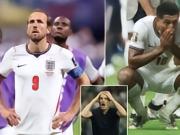
England's defeat to Argentina in the World Cup semi-final exposed numerous problems on and off the field for Tuchel's team. According to British media reports, England's elimination was foreshadowed from pre-match preparations to tactical execution.
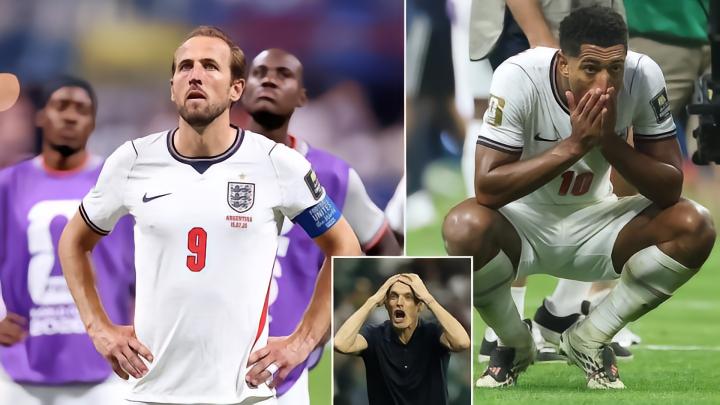
Tuchel had blood on his hands, but a smile on his face.
"You're not going to punish yourself like Guardiola did, are you?" we asked him before the knockout stage started.
"Not yet!" the England manager replied.
He must be scratching his forehead by now.
Tuchel failed to achieve his goal of adding a second star to the jersey. Instead, another scar, another regret, was added to the shirt. Losing to world champions Argentina is understandable, but England almost lost to themselves. Tuchel defeated England.
However, this defeat was also the result of weeks of accumulation.
While chatting at the England team's camp in Kansas City, the manager was scratching a mosquito bite, and we both noticed the blood on his fingertip. But for Tuchel and the FA hierarchy who paid him a hefty sum to win the World Cup, the wound is now much deeper.
Yes, he led the team to the semifinals. Yes, there will be memories of the Mexico match and the camaraderie forged. Yes, Tuchel deserves to stay. But no, the results on paper don't mean history will see it as a glorious defeat.
As we understand it, the England team's hotel experienced a power outage three days before their match against Argentina. In retrospect, this became an unfortunate metaphor. The situation was exactly the same in the final half hour in Atlanta—the lights went out, and the white flag was raised.
But for those who reported with England from day one of the Florida training camp, warning signs were present from the start. First came the red face issue – how could staff allow players like Rice and Elliott Anderson to get sunburned? This was laughed off, but it raised more serious questions about whether the pre-season preparations were truly as meticulous as promised. Sunburn increases the risk of dehydration and muscle injuries – and these two midfielders are expected to cover the most distances.
This may be just one small example, but these mistakes, when combined, could lead to big problems. For instance, Tuchel didn't even know if the first warm-up match in Tampa was being played indoors—he only realized this after the Daily Mail's sports section showed him a photo of the questionable turf, at which point he learned the field had just been laid. "Well, now I'm worried," he said, before inquiring about the specifics of the venue.
England had been preparing for their US tour for years, yet the manager was unaware that the first match venue had a roof. This should have been the job of the FA's performance and operations team, like sunscreen or shipping players' boots and training gear from Florida to Missouri.
The scene of chaos that the support staff found when they were robbed—before the official match even started—was nothing like the welcoming ceremony at Swap Football Village that any FA official had imagined. A smashed ping-pong table lay across the roadside, along with scattered shoes, a football, a tactical board, and a plush lion. It was a serious security incident.
A truck transporting valuable England team gear was contracted to a third party and was scheduled to travel 1,400 miles across four states. However, two drivers—later identified as Afghan—stole $18,000 worth of goods. Most of the items were recovered, and in the words of the mayor of Kansas City, the "robbery" was a close call. It could have been much worse. Reportedly, some players even called to inquire whether their custom-made match boots were among the stolen items. Ultimately, everything turned out alright.
Against this backdrop, a shooting incident occurred on a highway where a gunman randomly opened fire on passing vehicles, resulting in one death. The incident took place near the England team's training grounds. Police presence at the training center was noticeably increased, and media access procedures were altered. The suspect was found a week later, already deceased.
Meanwhile, the England players began exploring more of the area surrounding their base at Meadowbrook Park Hotel. Goy would cycle to watch the sunset every night. Dan Burn enjoyed walks. You could hear Bellingham, Saka, and Rashford playing basketball, their cheers breaking the tranquility of the lakeside.
There was a record player in the hotel, which Harry Kane used to play country music for his teammates. Games like backgammon, UNO, and Werewolf were both competitive and fostered teamwork. There were also diving competitions, barbecues, special milkshakes—such as "Tuchel Cool" and "Brukaya Saka"—and visits from Ed Sheeran. Bellingham, Anderson, and Anthony Gordon, among others, would bike to the nearby Odyssey Cafe. Tuchel, on the other hand, preferred to bike there for ice cream.
And then there's golf, lots of golf. When Kane was asked how the players spend their free time, Tuchel, sitting next to him, even mimicked a golf swing. They've played with Brooks Koepka and Tom Watson. Several younger players didn't know who the latter was, but immediately showed respect upon hearing he'd won eight majors.
The night after defeating the Democratic Republic of Congo in the round of 32, they booked out Kansas City's top golf facilities. It was so hot that Gordon, who wasn't a golf enthusiast, had sweaty hands, and his club slipped from his grasp and hit the corrugated metal roof, sending his teammates scattering for cover.
The England team is happy here. The choice of hotel and environment is correct. But is the choice of location correct? No team in the competition has traveled as far as England – 14,500 miles. They return to their base after every match, meaning they fly more times than any of their opponents.
The Argentine team, also based in Kansas City and having played two matches there, had only flown 6,500 miles. The difference became apparent in the final 15 minutes in Atlanta – England looked like a team that had been traversing the United States for the past six weeks, rather than conquering it.
As we understand it, in the days leading up to the Argentina match, some key players had extremely low training levels. They were physically and mentally exhausted. One phrase circulating within the team was "completely worn out"—a common sentiment expressed by the players when they saw their families and friends in the stands after the Mexico and Norway matches.
However, Argentina also expressed anger after the match. It's understood that some players felt the tactical adjustments didn't help the team. Particularly puzzling was the substitution of goal scorer Gordon, especially considering his excellent performance in securing the lead late in the game against Mexico. In the hours following the match, those close to the team were questioning the head coach.
Tuchel is popular with most of the players—he's witty and outspoken—but it ended bitterly. As the team left the Atlanta stadium, no one wanted to speak to the British media (several had already given interviews to other broadcasters). Almost everyone pulled up their hoods and covered their faces. Given that Tuchel was standing to the side questioning whether his player DNA prevented them from controlling the ball better, covering their ears and filing past was perhaps the best option.
Not all the players seemed happy throughout. Menu didn't get a single minute of playing time, despite Rice's fitness issues and Henderson's injury. A week before the second match, when Rice began to struggle, Menu partnered with Anderson in midfield in training. There was a sense he was likely to play, but Tuchel didn't see what he wanted in training. After almost every match, Menu was the first player to leave the pitch, always alone, wearing headphones.
Watkins spoke with Bellingham at the hotel about his role as a substitute, but he only got a total of 7 minutes of playing time to make an impact. That's 6 minutes more than Ivan Toni, who often looked confused and indifferent. Rashford was visibly dejected after being dropped from the starting lineup following the round of 32 match and only played for another minute.
These are the pressures and tensions of the World Cup – and in the final stages of the most crucial matches, England looked both tense and exhausted. Tuchel blaming the players is unlikely to be popular. But his dissatisfaction with the team's performance throughout the tournament was also evident – their performance on the training ground did not match their performance in matches.
In the first match against Croatia, he shouted at Pickford, "Do as I say!"
During the same game, he yelled at Anderson, "Elliott, what the hell are you doing?"
After Nico O'Reilly made two mistakes on throw-ins against Mexico, he told him, "This is the second time!"
He would swear at Spence during almost every game.
Even in that triumphant 3-2 comeback victory against Mexico, which he was so proud of, Tuchel was dissatisfied with the team's quality of possession. But given the difficulties they overcame, some obvious flaws in the team's coordination seemed to be overlooked, which almost cost them in the next match against Norway—a 2-1 victory barely won thanks to Bellingham's individual brilliance.
Mexico's experience fostered a siege mentality—television cameras missed footage of assistant coach Anthony Barry charging into the opposing coaching staff during a sideline altercation—and England mistakenly believed this team spirit would carry them through. Tuchel was furious when he learned 48 hours before the match that the kickoff time at the Aztec Stadium had been changed. "It's a dirty trick!" he exclaimed. "They're cheating the fans!"
Henderson's 36 hours in Mexico City were nothing short of legendary—a joke about Viagra at a press conference fell flat, he was marked as a substitute who didn't play, and he broke his arm while celebrating by throwing an advertising board—but his calm control of the midfield against Argentina was exactly what the team needed.
When Tuchel returned to the Kansas City media centre a few days after the Mexico match, a DJ played "The Three Lions" as he entered the main building. The manager didn't seem to find it funny, and an FA staff member spoke to the DJ. He was also heard complaining to FA technical director John McDermott that he wanted to go back to the hotel, seemingly wanting to watch football rather than continue talking about it. A source of frustration during the match.
FA staff had previously been warned by senior Chelsea colleagues that Tuchel could command respect with his presence, but over time he could become domineering. Sources say his confidence and determination are both a strength and a weakness. However, he has also expressed some insecurity.
After a narrow 1-0 victory over New Zealand on the equally poor pitch in Tampa, Tuchel tore off the washing tag from his training shirt while talking to reporters. We noticed at the time that he seemed quite agitated. A few weeks later, he admitted that he had begun to doubt himself after that match.
When Tuchel learned before the final warm-up match that one of the opposing team's best players was absent due to attending a wedding, he held his head in his hands. What followed was an easy victory, creating a false impression of England's form—at least as a cohesive unit.
This is why they had to rely on individual brilliance from Bellingham and Kane to defeat Panama, the Democratic Republic of Congo, Mexico, and Norway. After the 2-1 victory over the Democratic Republic of Congo in the round of 32, Tuchel asked us reporters, "Are you satisfied? You'd better be satisfied." But why? England was just lucky, and the problems exposed in the match later proved fatal. The warning signs were already clear long before Argentina reopened the wounds.
Tuchel certainly brought us some sausage rolls this week, saying, "Feed the animals, and they'll be friendlier." He's very likeable. He remains an elite coach. His decision to stay and lead the team in the European Championship on home soil was the right one.
But there were many lessons to be learned. As the knockout stage progressed, the German coach began using the motto "grind the rock" with his players—a phrase often used by the NBA's San Antonio Spurs. It's about endurance and willpower. When the final buzzer sounded in Atlanta, all we could do was bang our heads against that rock, regretting a missed opportunity.
Tuchel talked about marginal gains throughout the tournament. Ultimately, it was these marginal gains that defeated him. Each loose thread could hold its own on its own. But when they came together, England's World Cup campaign crumbled. By the time Argentina applied real pressure, nothing could hold everything together.
Tuchel's blood on his fingertips in Kansas City was an accident. England's blood on their hands in Atalanta, however, seems like a self-inflicted wound.