If you're not a Messi fan, how can Spain beat Argentina in the final? If you are a Messi fan, how can Argentina find Spain's weaknesses? The World Cup final is about to begin, so let's preview the tactical prospects of this match to provide some directions for you to observe while watching the game.
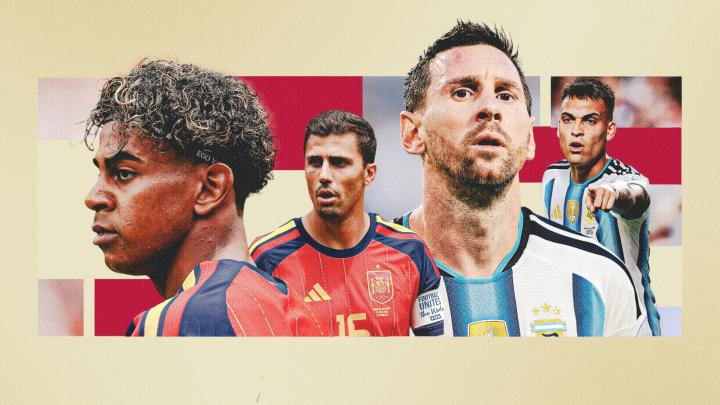
With the World Cup trophy right in front of them, it's possible for anyone to win or lose. Finals are never easy to determine a clear advantage or disadvantage, but from a tactical perspective, Argentina will face slightly more difficulties in this match.
The reason is quite obvious: in terms of defense, especially in terms of goals conceded, Spain only conceded 1 goal in the first 7 games, while Argentina conceded 7. Among all 48 participating teams, Argentina's defensive performance ranked only 29th.
Therefore, from a defensive perspective, this Argentine team is actually quite fragile, which is reflected in their entire knockout stage process. In a total of 4 matches, they conceded goals in every match, and in 2 matches they conceded 2 goals, and in 2 matches they were dragged into extra time. As a result, their physical exertion was far greater than that of Spain.
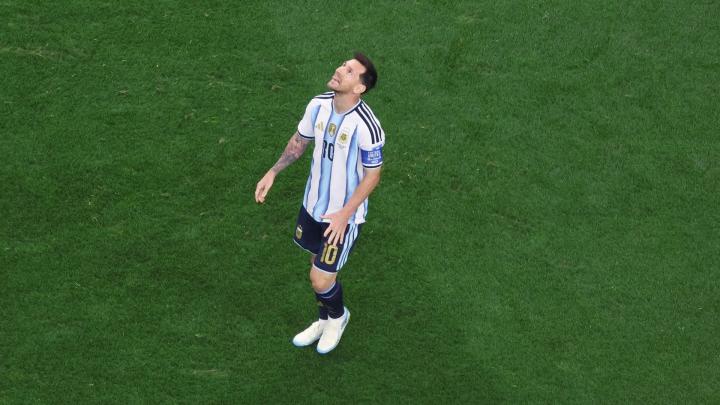
However, Argentina's real problem is not actually on their defensive end.
All four of their victories were narrow, but upon closer inspection, their scoring methods are becoming relatively clear. Of the 11 goals they scored in total, only the third goal against Egypt and the third goal against Switzerland came from attacks that quickly crossed the midfield line, which is what is generally considered a counter-attack.
The remaining nine goals almost all came from Argentina's positional attacks and set-piece attacks after the entire team crossed the halfway line. In particular, in the two games against Egypt and England, where Argentina was able to come back from behind, it was closely related to the fact that they created a siege-like situation for their opponents.
So everyone knows that this is an Argentine team that clearly lacks speed, and therefore, in the knockout stage, it becomes an Argentine team that desperately needs possession of the ball.
With possession of the ball, Messi can distribute his energy to the full 90 or even 120 minutes; with possession of the ball, Argentina can compensate for the lack of speed and wing play through Tagliafico's long runs; with possession of the ball, Argentina can allow Messi to play on the occasionally overlooked right wing position when players are making runs on both the left and the center.
Even when England decided to press high up the pitch in the first half of the semi-final against Argentina, Argentina, even with the ball, was too far from the opponent's goal to exploit the space behind England's defense or threaten Pickford's goal.
So, the question arises:
How much possession will Argentina get against Spain? With only Rodri as a veteran in Spain's midfield and attack, and the other five players all young, strong, and agile, can Argentina maintain pressure and a prolonged siege from close range to the opponent's goal?
If the answer to the above questions is no, then can Argentina maintain a safe defensive position when off the ball, and then use quick counter-attacks to threaten the space behind Spain?
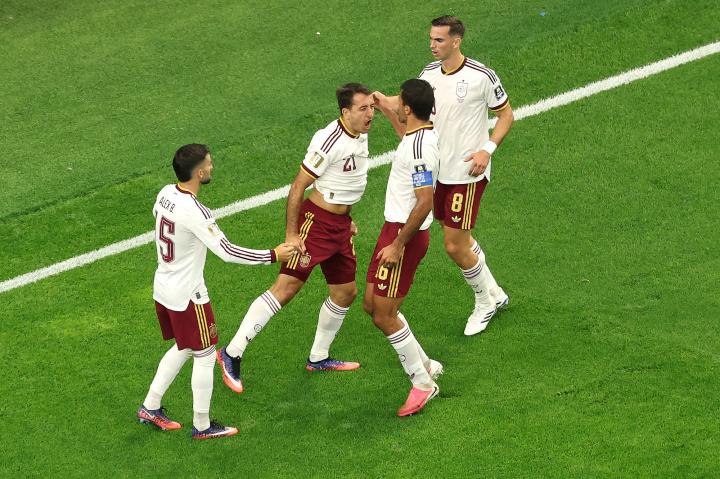
Therefore, this is why we believe the two teams are still evenly matched, but tactically, Argentina will face more and greater pressure.
Since Spain is not England, the former is likely to have more possession in the final and may continue to attack Argentina. The specific strategy is similar to that against France. In other words, Spain will still use the forward runs of the two full-backs to widen the tactical space and create various opportunities in the middle, including crosses from the byline, cutback crosses, 45-degree crosses, and combinations on the flanks similar to those between Porro and Olmo.
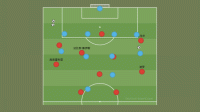
As long as Baena continues his performance from the semi-final—running, defending, and chasing back—and is substituted in time after 60 minutes, Spain's tactical weaknesses will not be very obvious.
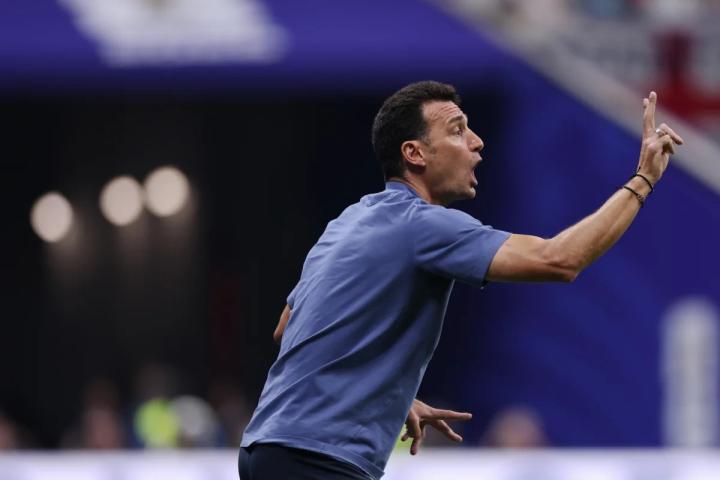
Therefore, from this perspective, Argentina should first focus on the defensive end and try its best to plug the gaps, and Scaloni is likely already considering this.
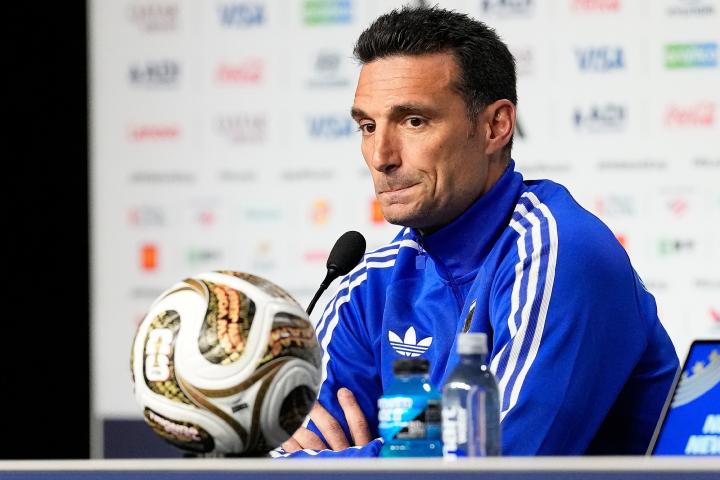
In the match against England, De Paul was surprisingly dropped from the starting lineup. According to Argentine media reports, De Paul was not physically ill, but the coaching staff believed that his form was declining. One indication of this was the goal conceded against Switzerland, where his defense in the flanks did indeed falter.
Therefore, Scaloni chose to replace De Paul with Simeone, who can both attack forward and cover backward. However, Argentina should consider Paredes as a point forward. If possible, it would be better to have Enzo and McAllister form a double pivot in midfield and then return De Paul to the starting lineup.
After successfully resolving their defensive issues, Argentina can gradually move forward, reducing their tactical disadvantages until they create a deadly cross between their weaknesses and Spain's strengths.
For example, after breaking through Spain's high press and pressing line with quick passing, Messi and Alvarez should try to use the space on Rodri's side to force this technically good but poorly mobile midfielder to move laterally and try to get him fouled and get a yellow card first.
Once Argentina gains an advantage in this area, the situation will become much clearer. At that point, you'll see the gaps left behind by Spain's two full-backs as they push forward. Argentina's wingers and full-backs will then need to make the most of this space and pull Spain back.
When Rodri needs Fabian Ruiz to support him regularly, making it difficult for him to make frequent forward runs, Argentina will find that the pressure on their defense is not so great, and it will not be so difficult for them to launch attacks.
Of course, Argentina has a key advantage to take advantage of in this match: compared to this group of Spanish players, the Argentine players, including Scaloni, are obviously more experienced in the World Cup final.
Therefore, in the final, Scaloni needs to make quick and accurate adjustments to take control of the situation, rather than following De la Fuente. He should make the best use of the five substitutions to allow Messi to perform better and longer.
If Argentina does these things well, it will have a chance to make up for its defensive problems, gradually regain the upper hand on the field, and become a truly competitive side tactically.
From another perspective, Spain will try its best to avoid most of the above situations. The best option is Yamal, who are likely to gain the upper hand against Tagliafico.
Therefore, Scaloni needs to go back to the basics of this match and think about things like, should you use Tagliafico or Medina? Or, should you try a three-man defense?