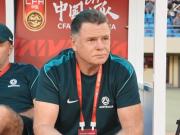
In an exclusive interview with Wang Xiaorui, a reporter from Titan Sports, Australian U17 national team head coach Welter stated, "I understand that Chinese football is developing very rapidly, and they have a very strong Chinese Super League. Looking at Asia, this Chinese U17 team is a tough opponent, and I think they should have high hopes for the World Cup." Regarding the topic of playing in European football, Welter believes, "I think players might need to play 100 games before they are truly ready to take that step into European football."
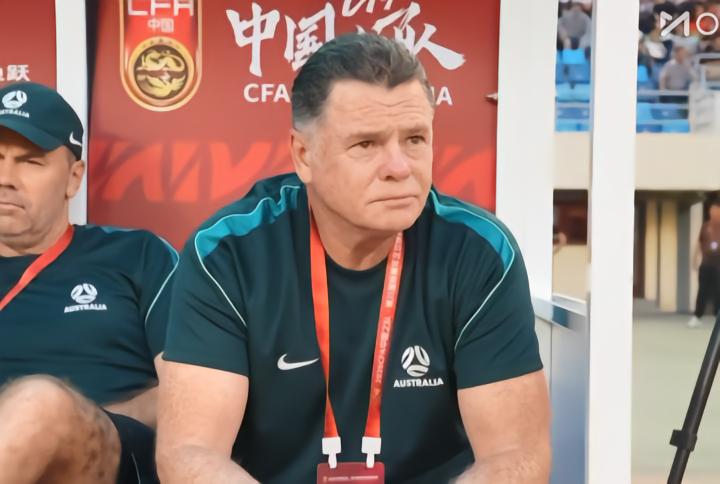
According to Titan Sports, Welter coached Adelaide United's first team for five years. During this time, in addition to leading the team to the A-League playoff semifinals for three consecutive seasons, his most commendable achievement was nurturing a group of young talents for this long-established powerhouse: Ilankunda, Luka Jovanovic, Joe Goch, Archie Goodwin, Kiki Anies… Now, these players are gradually becoming the backbone of Australia's national teams at various levels. Ilankunda, in particular, gained even greater fame through the USA-Mexico World Cup.
"Looking at Asia, China's U17 team is very strong."
Is this your first time in China? What are your impressions of Chinese football?
Welter: "This is my first time in China with this team. I previously traveled to China with Adelaide United for the AFC Champions League, but I was still a player then, and I think it was in Jinan, Shandong."
"Compared to then, I have now led this Australian U17 team in two matches against the Chinese U17 team. Besides this match, the last one was in the U17 Asian Cup in Saudi Arabia. I am very impressed with this group of Chinese players. They are technically very good and physically strong. I think the level of Chinese players is very high now, and this team is quite excellent."
Two months ago, when you first led the Australian U17 team against the Chinese U17 team, Australia lost the semi-final. What were your thoughts on the Chinese U17 team and Chinese football at that time? After this Yinchuan Four Nations Tournament, what are your views on them?
Welter: " I know that Chinese football is developing very rapidly, and they have a very strong Chinese Super League. I am well aware of this because there are now many Australian coaches coaching in China. Due to the arrival of these Australian coaches, Australians' understanding and interest in Chinese football has also greatly increased. I am very clear that the strength of Chinese football is constantly increasing, especially this U17 national team, which is very strong. Their performance in the U17 World Cup at the end of this year will be very noteworthy. Overall, I think this is a very positive sign."
"After the Asian Cup, China's U17 team made some changes to its squad, increasing its depth. I've said before that there are some very technically gifted players in this Chinese team. So let's look forward to them. Looking at Asia, this is a very tough team to beat, and I think they should be looking forward to the World Cup."
However, we also know that the Australian U17 team that came to Yinchuan this time has made many adjustments and recruited many new players. Why did you do this? Are you satisfied with their performance?
Welter: “I want to improve the depth of the squad. We rarely have the opportunity to scout young players, and this tournament gave me the chance to look at some players outside the starting lineup and see how they adapt to the international stage. The U17 World Cup is coming up, so it’s crucial for me to scout as many players as possible. Only in this way can I find those players who can perform well at this level and bring success to Australia.”
“I think I’ve achieved my goal of coming here, which is to assess which players are ready to compete internationally. I’ve seen a lot of new players, some of whom have performed exceptionally well, while others haven’t met our expectations. So from that perspective, this process has been good, helping us understand which players are ready for international competition so that we can do better in the World Cup player selection process.”
Australian football is developing a 2032 plan.
In recent years, Australian football has seen a surge of talented young players. Last year, Australia's U20 team won the AFC U20 Asian Cup. At this World Cup, we've seen many excellent young players in the Australian national team, such as Ilankunda, Lucas Herrington, Chirkati, Beach, and Jordan Bosz. How should we view this phenomenon?
Welter: "Yes, the outlook is very good. I think there has been a lot of young players emerging in the A-League, especially in the last three or four years. Most of them have developed through the national teams at various levels, so we will now have a lot of excellent young players entering the national team. This is great because we haven't seen this for a long time, and it is very gratifying to see so many energetic and promising young players entering the national team. And the reason why everyone is giving them opportunities is that, in the long run, this will make Australian football stronger."
We know that this group of Australian U17 players is the generation that will play in the 2032 Brisbane Olympics. Is this a new big plan in Australian football?
Welter: "A new and ambitious plan is in the works. We have some excellent young players emerging. As I mentioned, we already have some players who didn't make it to the Yinchuan Four Nations Tournament. They're already playing professional football in the A-League. So, as I said, Australian football is in an exciting period because many clubs are promoting younger players, which is exactly what young players need. They need playing time, opportunities to improve, and opportunities to become stronger. If you don't give young players opportunities, they won't stand out or be able to showcase their abilities."
So, the Football Association of Australia invited you to be the head coach of this Australian U17 team? Because you have mentored many outstanding young players in the A-League.
Welter: "I think it's probably because I coached Adelaide United for five years, leading the team in the A-League and nurturing many young players. Now, they are all developing steadily in professional football. When I left Adelaide, the Football Association of Australia invited me to come here to mentor young players, help them grow, and help them make their mark on the international stage. That's why I came here."
"Ilankunda's progress comes from making mistakes."
Let's talk about Adelaide United. During your years managing the team, you discovered many young talents, such as Ilankunda, Luka Jovanovic, and Kiki Anies. What do you think are the main reasons for their great progress in recent years?
Welter: "Because they have played a lot of games. Many of Adelaide United's young players have already played three or four seasons. They have received a lot of playing time, even though they are still very young, maybe only 19, 20, or 21 years old, but they have already played three or four seasons. This helps young players maintain a consistent performance. Because what young players lack most is consistent playing time, and they have already received all of that."
“Right now, they are doing very well. Yes, they are young, but they are very experienced. Because they have played a lot of games, many of them have played 50-100 professional football games, which has given them more experience and made them more confident in performing consistently at this level.”
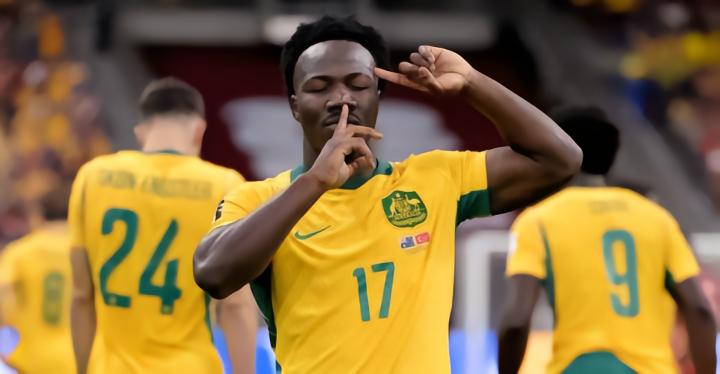
Let's talk about Ilankunda again. After this World Cup, he has become a superstar in Australian football. What is your assessment of him, as the coach who brought him into the first team?
Welter: "He's definitely an A-level player, a very talented player. I remember when he was 15, we worked together, and the way he played was always a joy to watch, it made you smile. But he's still learning, still growing, trying to become better and better. So, maybe you can see that he still has a long way to go before he reaches his peak, but I think he's very promising."
“Ilankunda is a very enjoyable player, and I’m delighted with his outstanding performance at this World Cup. The next 12 months are crucial for him. I hope he can maintain his good form throughout the upcoming season. He needs to keep improving and getting better.”
Do you remember how you felt about Ilankunda when you first trained him? And how do you feel now?
Welter: "I'm not surprised by his performance since then. I've worked with him and know his talent. He now has a deeper understanding of the game and what he needs to do. I think this is a challenge he's been working hard to overcome. Ilankunda has always put a lot of pressure on himself to perform well. I think he's starting to mature and understand the pressure of playing at a high level. This is evident in his performance now, from when he was a young player joining the first team to his performance at the World Cup."
We all know that Ilankunda is a very individualistic player; for example, he was often late for meetings and had serious disciplinary problems. How did you manage him back then?
Welter: "First of all, he's a young player. At Adelaide United, I set individual development paths for them. They grasp things at different times; some understand quickly, some don't. Ilankunda did have some problems before, but the important thing is to work with him, to help him understand the importance of doing things well and respecting his teammates. He'll realize he made mistakes. All young players make mistakes, and they need to make mistakes to improve. If they don't make mistakes, it means they're not challenging themselves on the pitch."
"Off the field, they also need to learn how to become the best players. We can't expect them to be morally upright professionals from the very beginning, from day one. We must work with them to help them improve and make them understand what they need to do to become better players."
"The improvement of young players goes beyond just the field."
During your time managing Adelaide United, what were your strategies for developing young players? What do you consider to be the most important factor for their future?
Welter: "The most important thing for them is to train hard, do their best every day, and play to their strengths, focusing on what they do well. Many young players have their own skills and strengths, and the important thing is to let them play to their strengths. Don't just focus on improving themselves through hard training; this is important not only on the field but also off the field. Make sure they take care of themselves, including diet, sleep, recovery, injury prevention, and daily gym training. All these factors combined will help them become better. Some people need more time to understand the importance of these factors, and the important thing is to continuously encourage them to do their best."
It's not just Adelaide United that's developing so many new players; almost all A-League clubs are increasingly using young players. After one or two seasons, they're sent to Europe. How can we understand this phenomenon?
Welter: "That's true. As I said, many clubs, especially A-League clubs in the last two or three seasons, have been promoting young players. I think this is largely because many clubs are facing some financial difficulties, so they are providing these young players with such development opportunities. If they perform well, as you mentioned, they will have the opportunity to go to Europe to play and generate transfer fees. And these fees can help A-League clubs reinvest and improve the overall level of the clubs."
"To play in Europe, you need to play 100 matches first."
You just mentioned that you were impressed by this Chinese U17 team. Which players do you think have the potential to become the "Ilankunda" of Chinese football?
Welter: "I think so. I'm not sure which midfielder specifically, but he performed exceptionally well, including in this tournament. I remember in Saudi Arabia (referring to the U17 Asian Cup), he scored the first goal against us (Shuai Weihao). Of course, there are many other outstanding players, such as the center forward, number 24 (Zhao Songyuan). I think he performed brilliantly in the Yinchuan tournament. He is a very good player. He is tall, technically excellent, and can control the ball and link up play, making a huge contribution to the whole team."


These players are only 17 years old now. What do you think will be the most important factor for their future development?
Welter: "I think players in this age group need to start playing at the senior level. Chinese clubs should give them that opportunity. If these young Chinese players can get more playing time in the Chinese Super League, Chinese football will benefit greatly in the future. Because from 17 to 20 years old is a very crucial age group. They need to hone their skills in high-level senior matches, which will help their next stage of career development. I think if these excellent players can get such opportunities, it will be of great benefit to the future development of the Chinese national team."
But in China, many people believe that these players should go abroad to play football, specifically to Europe, between the ages of 17 and 20. Is this really important to them?
Welter: "I think it depends on the specific situation. Every player is different, it varies from person to person. I don't think there is such a thing as an age limit for 'having to play in Europe'. If your level is very high, and you play well in the Chinese Super League, if you can ensure consistent playing time, then you can definitely play in Europe before you are 23 or 24 years old."
“I think it depends on each young player’s individual circumstances and how well they adapt to the European football environment, because it’s a huge transition after all. Many Australian players have encountered difficulties after going to Europe. After that, they go back to Australia for a year or two, and then go back to Europe when they are older and more mature. So, sometimes I think age isn’t the key; what’s more important is how many games they’ve played. I think they might need to play 100 games before they are truly ready to take that step into European football. ”
Finally, let's talk about Australian coaches in the Chinese Super League. What are your thoughts on this phenomenon? Have you had any recent contact with them?
Welter: "I think it's a very good phenomenon to see so many Australian coaches' hard work pay off, not only in China but also in other parts of the world. It's very gratifying. I think they have proven their abilities. For example, Kevin Muscat has won the Chinese Super League title for two consecutive years, and a total of three titles. He has brought tremendous success to his club. John Aloisi has also done a great job at Chengdu Rongcheng this year, and they are currently far ahead of other teams in points. So, I am very happy to see them achieve such results. As I said, I know how much effort these Australian coaches have put in to get opportunities and to strive for success."
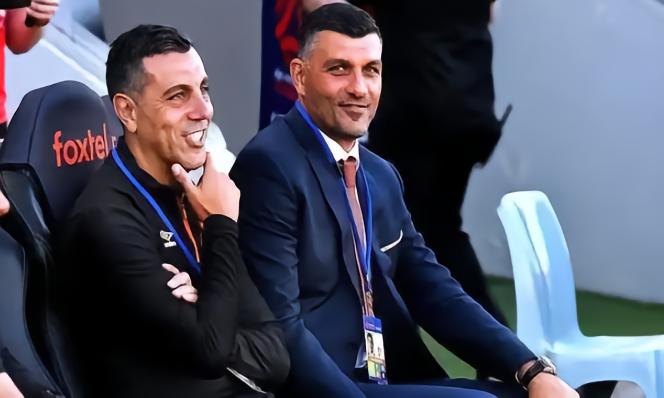
“But I haven’t seen them for a while. However, I know them very well, like Ross Aloisi, whom I worked with at Adelaide United. Now, I’m very pleased to see them being recognized. As I said, I know how much effort they’ve put in during this time. So it makes me very happy to see Australian coaches being recognized in China.”