As one of the world's greatest footballers, Lionel Messi's career with the Argentine national team has been fraught with difficulties. For years, despite having Messi, Argentina has struggled to achieve significant success in international competitions, repeatedly falling short of championship trophies. As the team's most capable player, Messi has borne the brunt of public criticism. He's been criticized for not performing well enough, for lacking leadership qualities, for his national team performances falling far short of his club performances, and for not being able to lead Argentina to victory like Maradona did…
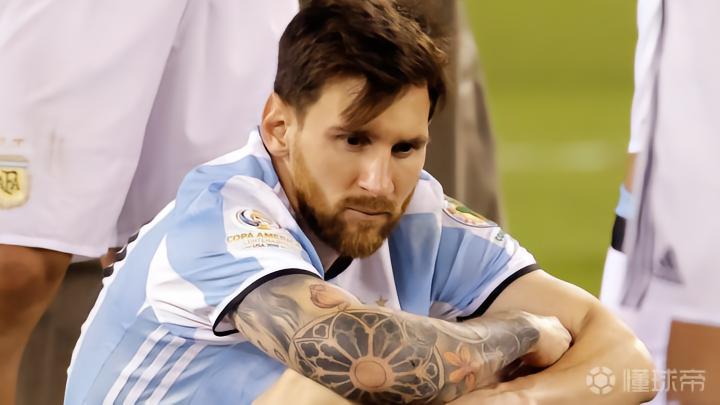
For a long time, Messi faced a lot of criticism in the national team.
The pressure first came from the Copa America: since joining the Argentine national team, Messi has repeatedly missed out on the Copa America title. In the 2007 Copa America final, Argentina lost 0-3 to Brazil; in the 2011 Copa America, playing on home soil, Argentina failed to even reach the semi-finals, being eliminated by Uruguay in a penalty shootout in the quarter-finals. In the 2015 Copa America, Argentina lost to Chile in a penalty shootout in the final. Later, CONMEBOL added another Copa America in 2016 to commemorate its 100th anniversary. Argentina's experience in this tournament was the same as the previous one: reaching the final, they again lost to Chile in a penalty shootout. The only difference was who missed the penalty: Messi was the first to step up for Argentina in the penalty shootout, and he missed the target entirely.
This defeat was a huge blow to Messi. He lost the World Cup final in 2014, followed by consecutive Copa America finals in 2015 and 2016, suffering a "three-peat" in major tournaments within three years. This left Messi exhausted, mired in deep self-blame and self-doubt. He even felt that the criticism and doubts from the outside world might be justified. Therefore, after the match, Messi suddenly announced in an interview that he would retire from the Argentine national team.
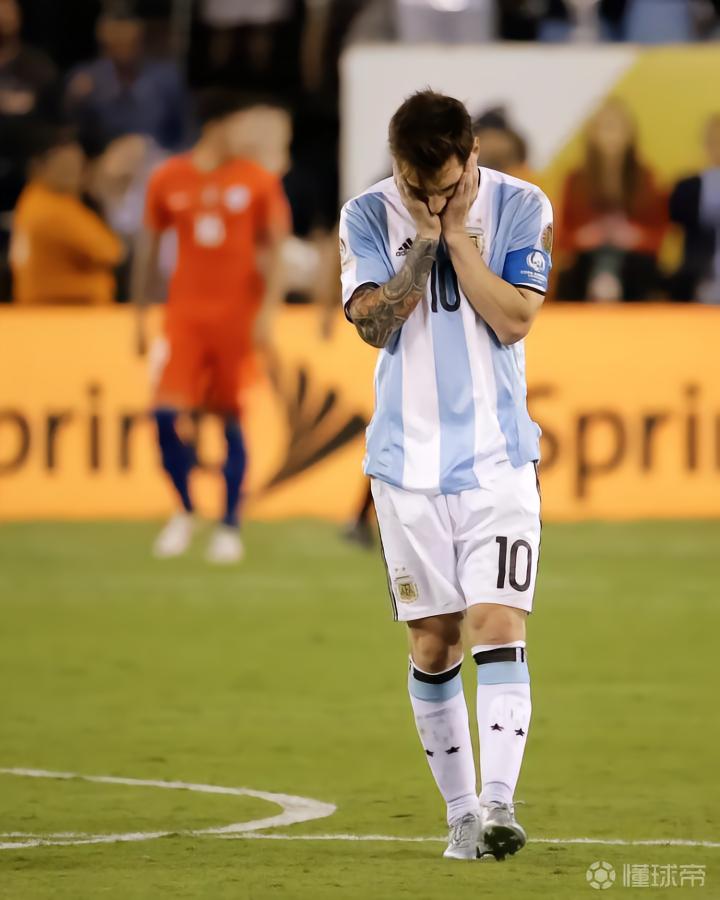
After suffering three consecutive runner-up finishes in major tournaments, Messi was utterly disheartened and announced his retirement from the national team.
Messi told the media: "My national team career is over. I made this decision for myself and for many people who hoped for it. I tried very hard to win a championship with Argentina, but unfortunately, that didn't happen. I thought about it in the locker room, and this is how I feel right now. I'm really sad, and it happened to me again: I missed a penalty, which was crucial."
Messi's decision caused a huge uproar. At the time, there was a 15-year-old Argentine boy named Enzo Fernandez. After learning that Messi was going to retire from the national team, he wrote a heartfelt letter and posted it on social media, trying to persuade Messi to stay. He wrote:
If we've never experienced even one percent of the pressure you bear in our lives, how can we convince you? If we can't understand that you're also a human being, a player with unparalleled talent, the best player on earth, but ultimately just a human being, how can we convince you? Lionel (Messi's name), do what you want, but please consider staying. Stay, enjoy the game. In this world full of immense pressure, we can still derive the most precious thing from football—joy. Seeing you play in the blue and white jersey is my greatest pride. Enjoy the game, because when you enjoy the game, you can't imagine how happy we are. Thank you, and please forgive us.
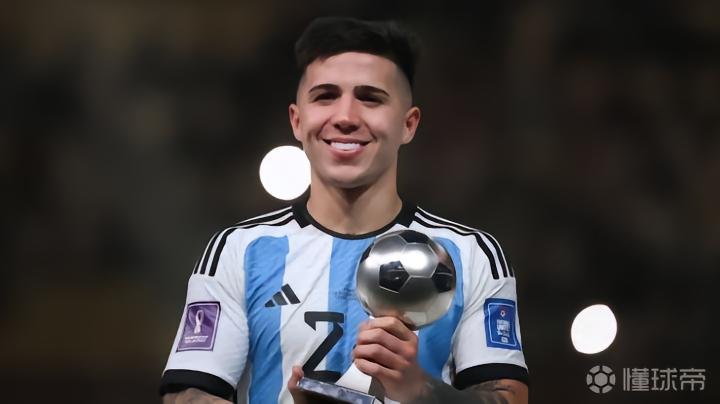
The boy who tried to persuade Messi to stay back then eventually became Messi's teammate.
Ultimately, after much persuasion, Messi reversed his decision and announced his return to the national team in August 2016. Six years later, Enzo, the boy who wrote him that letter, joined Messi as a teammate in the Qatar World Cup. Recalling that letter, Enzo said:
I remember the team was going through a tough time, and the media was very harsh on Messi. I tried to explain my feelings to him. I begged him to stay because he said he wouldn't play for the team anymore. I strongly urged him to stay and continue playing for the team. I was so young then! He means so much to everyone in the world. He's an Argentinian legend. He's deeply loved and an idol to all Argentinians, including our children. Personally, I have no complaints about him. He always showed me a lot of care. He always respected me and was a great teammate in every way. I'm so grateful to have played alongside him.
We discussed the transformation of the Argentine team and Messi himself in detail in the previous chapter. Argentina won the Copa America in 2021, breaking their long title drought, which was undoubtedly a huge achievement for Messi and his teammates. The Argentine team that came to the Qatar World Cup had matured and was no longer the "pseudo-powerful team" of the past. Besides his skills, Messi himself has also grown in character: he is more willing to face challenges and has developed more leadership qualities.
At the Qatar World Cup, Argentina had a poor start, losing 1-2 to Saudi Arabia in their opening match, but gradually improved in subsequent games. Especially after eliminating the Netherlands in a penalty shootout in the quarterfinals, the team's morale and confidence reached their peak. In the semifinals, facing the previous World Cup runners-up Croatia, Argentina achieved a resounding 3-0 victory, with Messi contributing a goal and an assist. Ultimately, Messi and the Argentine team, with a completely different mindset and momentum than in 2014, entered the World Cup final.
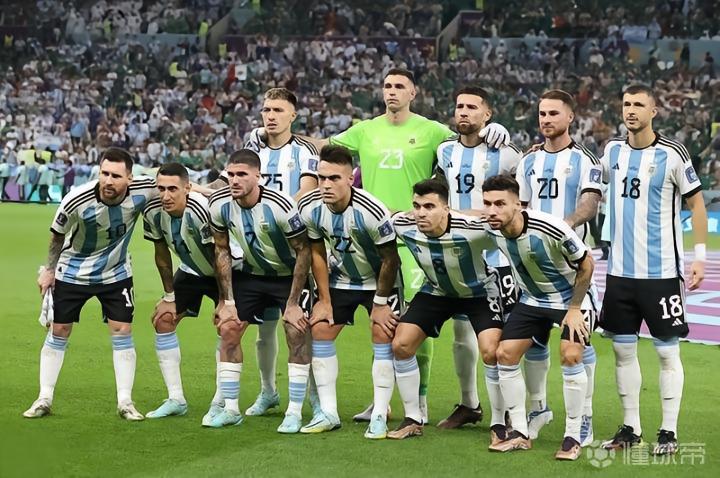
Argentina's starting lineup in the 2022 World Cup final.
On December 18, 2022, the Qatar World Cup final was held at the Lusail Stadium in Doha, with 88,966 spectators in attendance. Argentina faced France, the defending champions, who had eliminated Argentina four years earlier in Russia and ultimately claimed the top spot on the podium. Four years later, the team's lineup remained strong, especially Kylian Mbappé, the rising star who burst onto the scene four years ago, now a highly mature player and the undisputed core of France's attack.
And beside Messi, his best partner remains reliable: Di Maria. The two have played together in the national team for many years and have excellent chemistry. In the 2008 Beijing Olympics men's football tournament, Messi and Di Maria were a "golden duo," winning the gold medal together in Beijing. In the final held at the Bird's Nest National Stadium in China, Argentina's Olympic team defeated Nigeria 1-0, with Di Maria scoring the only goal of the match. And now, in this World Cup final, it is once again Di Maria who has scored the winning goal for Argentina.
In the 22nd minute, Di Maria cut inside from the left wing into the French penalty area and was brought down by Dembele, resulting in a penalty. Messi calmly slotted the ball into the net, giving Argentina a 1-0 lead. Just 14 minutes later, Argentina launched another quick counter-attack. Di Maria surged into the penalty area, received a pass from teammate McAllister, and calmly fired a shot into the far corner, extending their lead to two goals.
In the second half, Argentina maintained firm control of the game, with France barely managing a single shot on goal. Then, in the 79th minute, French striker Kolo Mouani broke into the Argentine penalty area and was brought down by Argentine defender Otamendi, earning France a penalty. Mbappe converted the penalty, pulling one back for France.
Less than two minutes after the score became 2-1, the tide of the game turned dramatically: Messi was dispossessed by French winger Kingsley Coman in the northern half. France then executed a brilliant passing move, with Mbappe surging into the penalty area and unleashing a powerful half-volley to breach the Argentine goal. In just two minutes, France had equalized.
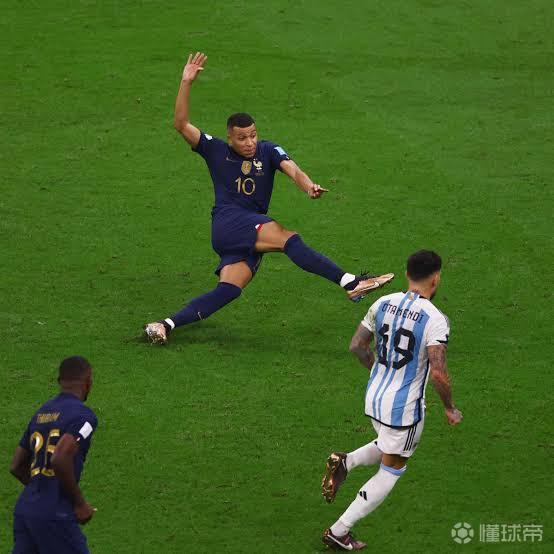
Mbappe equalizes the score
After extra time began, Argentine striker Lautaro Martinez squandered two excellent chances. When the third opportunity came his way, he still failed to convert. Fortunately, Messi followed up and slotted the rebound into the French net. Although a French player cleared the ball from inside the goal, Messi's shot had completely crossed the goal line. Argentina led 3-2 with just over ten minutes remaining. If Argentina could hold on, they would win the championship.
But in the final moments of the match, Argentine defender Montiel handled the ball in the penalty area, conceding a penalty to France. Mbappe calmly converted the penalty, leveling the score and becoming only the second player since England striker Hurst in 1966 to score a hat-trick in a World Cup final.
With just over ten seconds remaining in the match, France even had a chance to seal the victory: Kolo Moani was unmarked in the Argentine penalty area, but his close-range shot was miraculously saved by Argentine goalkeeper Martinez with his leg. Ultimately, for the third time in World Cup history, the champion had to be decided by a penalty shootout.
In the penalty shootout, both Messi and Mbappe converted their penalties for their respective teams. Mbappe, in particular, demonstrated exceptional mental fortitude, having taken his third penalty of the match without missing. Martinez showcased his solid goal-line skills, saving penalties from France's Coman and Choameni. Ultimately, with Argentine defender Montiel scoring the winning goal, Argentina defeated France 4-2 on penalties, 7-5 on aggregate, to claim their third World Cup title!
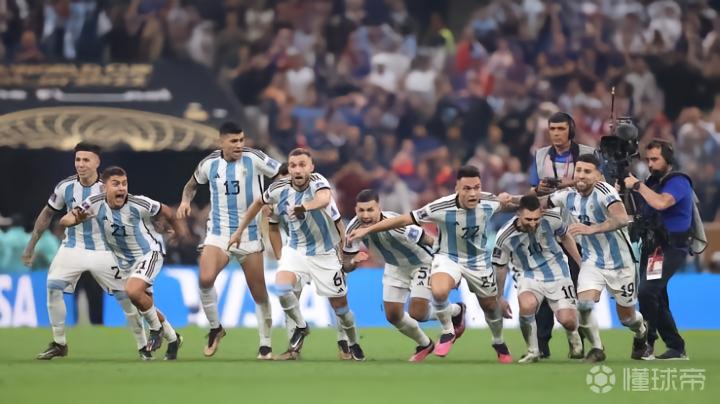
Argentina wins the World Cup for the third time
All four Argentine penalty takers converted their penalties. Dybala, the second to take a penalty, boldly aimed for the center of the goal. Initially, he intended to shoot towards the left corner, but Martinez had advised him beforehand. Martinez reasoned that if an opposing player misses a penalty, their goalkeeper will likely dive to the side on the next attempt, rather than staying in the center. Having seen their teammate miss, they will be more likely to try and recover. Therefore, shooting through the middle offers the highest probability of scoring.
Before Dybala took his penalty, France's Coman had just missed. So, Dybala remembered Martinez's advice and changed his mind at the last minute, opting for a shot down the middle. French goalkeeper Lloris indeed dived to one side, precisely the side Dybala had originally intended to shoot.
Martinez is a highly individualistic goalkeeper. His personality has also brought him some controversy: after winning the World Cup, Martinez was named the tournament's best goalkeeper. However, when accepting the award, he publicly placed the trophy between his legs, arching his genitals forward in a vulgar gesture. After the match, he repeatedly mocked the French team and suggested a minute's silence for Mbappe in the locker room. Upon returning to Argentina, he even held up a doll with Mbappe's image during his celebrations. These smug behaviors drew widespread criticism from the football world, and even his club Aston Villa's manager, Unai Emery, said he would "have a word with him."
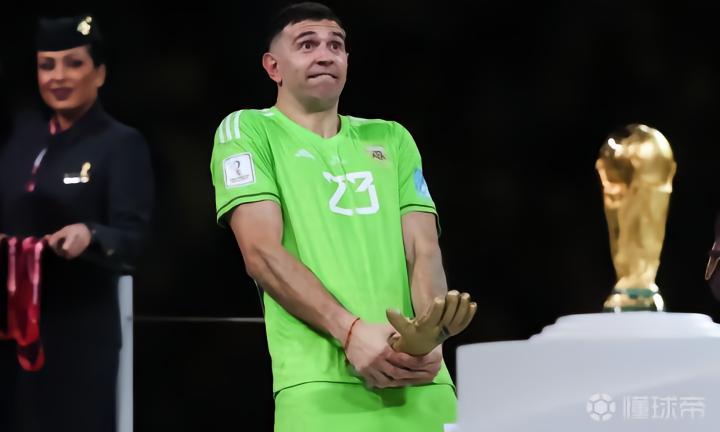
Martinez's controversial actions
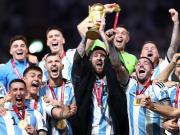
Putting aside these off-field incidents, the final was incredibly exciting and a truly high-level contest. Many fans consider it the best World Cup final ever, even a contender for the title of best match in football history. After this epic final, the Argentine players walked onto the champion's podium one by one. As captain, Messi was the last to go up, tasked with lifting the World Cup trophy on behalf of his team. But before lifting the trophy, the Emir of Qatar, Tamim bin Hamad Al Thani, draped a black robe with gold trim over Messi. Messi, unaware of the robe's significance, was momentarily bewildered but unable to remove it directly. Ultimately, he could only stand among his teammates, wearing the black robe, and raise the World Cup trophy high.
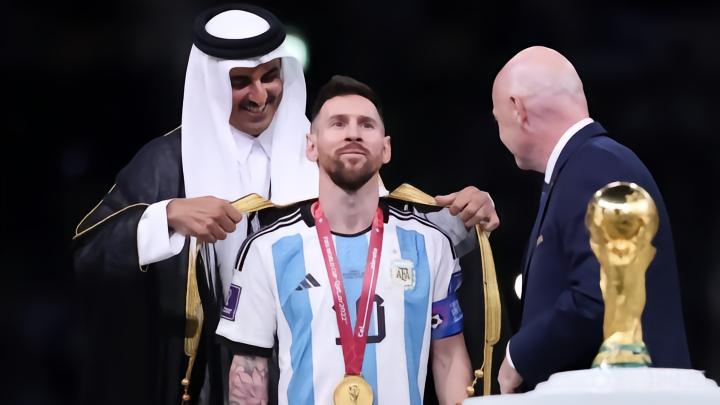
Messi was draped in a black robe
This black robe is called a "bisht," a traditional men's robe from the Arabian Peninsula with a history of over a thousand years. Typically made of camel hair or wool, the bisht comes in various colors besides black, including brown, gray, white, and beige. Originally, the Bedouin, a nomadic people in the Arabian Peninsula desert, wore the bisht as winter clothing. Later, it gradually became a formal garment worn by Arabs on important ceremonies such as weddings, religious prayers, and national celebrations; it was generally not worn in daily life.
Messi also indirectly advertised the "Bisht." Since he lifted the trophy wearing a "Bisht," orders for this traditional Arab garment have increased, especially among tourists. Therefore, Messi not only won the championship in Qatar but also became a successful "sales promoter."
However, Qatar's move has also drawn criticism in the Western world. Some, in particular, argue that the black robe obscures part of Messi's Argentina jersey, especially the team crest on his chest. They feel it's a real shame that Messi couldn't appear on the podium in his "original form" at such a memorable moment.
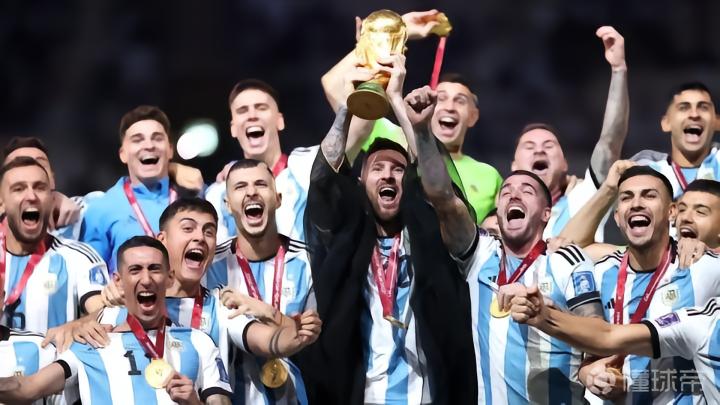
Messi raises the World Cup
But for Messi, none of that really matters anymore. Winning the World Cup fulfilled a long-held dream, not only helping Argentina stand atop the world stage again after 36 years, but also completing the final piece of his championship puzzle. At 35, Messi has won almost every honor a professional player can achieve, and his football career is now complete.
Besides the trophy, Messi was also named the best player of the Qatar World Cup. This is Messi's second time winning the award, following his win in 2014. He also became the first legendary figure in World Cup history to win the title twice. Enzo Fernandez—the 15-year-old boy who wrote him the letter years ago—was named the best young player of the tournament.