This article is reprinted and translated from The Guardian, originally published on July 19, 2026, by Marcela Mora y Araujo .
Introduction: The core of Argentine football lies in a pure love for the sport and a childlike innocence. Football is the spiritual bond of Argentinians; this deep-rooted love and sense of collective identity have enabled them to rise from the ashes time and again.
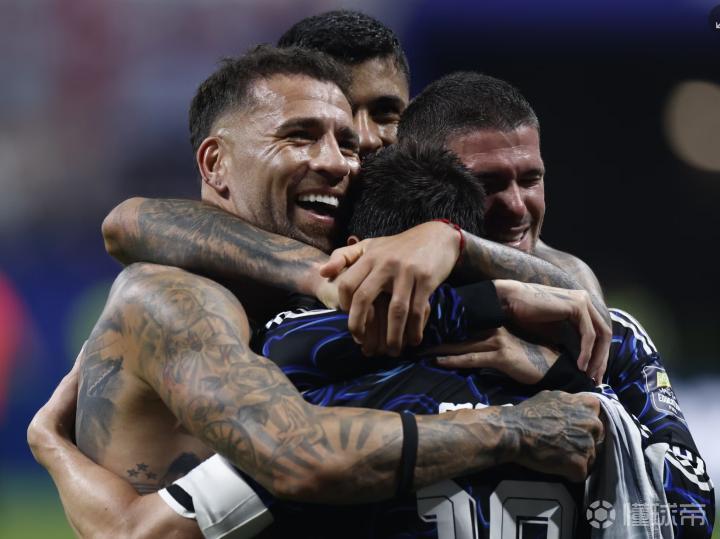
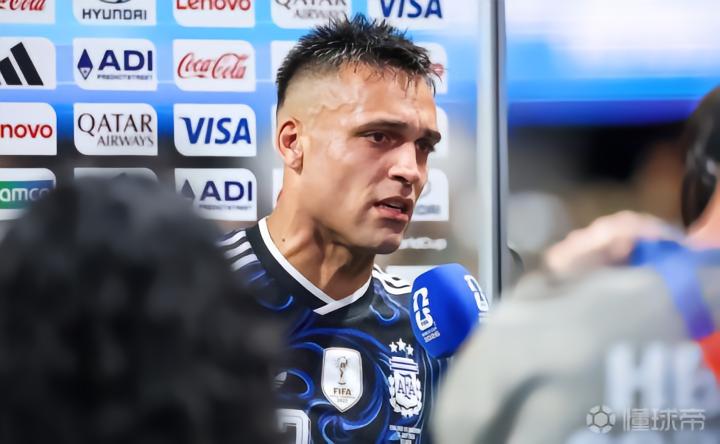
After scoring the goal that secured Argentina's place in the World Cup final, Lautaro Martinez suddenly broke down in tears during a sideline interview. He talked about the first pair of training shoes his father bought for him, and how his mother would make his bed every day after he moved to the club's dormitory in another city when he was a teenager—day after day, without fail.
Martinez stated that these things are more important to him than any goal or trophy.
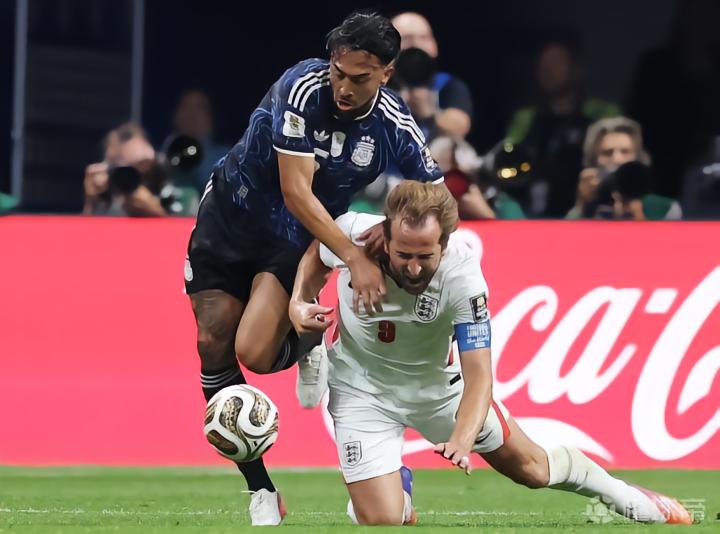
Argentina's head coach Lionel Scaloni said he had a slight concern after England scored, but never lost faith in his players.
"The environment in which they grew up made them fearless. In their respective fields, they have always been the best. From a young age, they have been competing, and everyone has high expectations for them. Responsibility has never overwhelmed them."
Scaloni said the players behaved like eight- or nine-year-old children on the field.
“They don’t think, ‘We’re about to lose a semi-final.’ They only think about playing football, which is what they’ve been doing all their lives.”
In his view, this group of players is wild, unrestrained, and free-spirited; they are fighters and people with a strong sense of honor. Despite the high expectations placed on this team by the outside world, the coaching staff has always advocated for a love of football and the childlike innocence that the players have when it comes to the sport.
Nobel laureate in economics Simon Kuznets once said that there are four types of countries in the world: developed countries, underdeveloped countries, Japan, and Argentina.
Argentina is difficult to categorize simply, especially in this era of binary oppositions. The complexity and nuances of this country are increasingly beyond our comprehension, which is precisely what makes Argentina and its people so distinctive.
A meme is circulating online that reads, "To drive out the Spanish, you first have to drive out the British. History repeats itself." The accompanying image is of the War of Independence more than two centuries ago, alluding to Argentina's two repelling of British invasions. In Argentina, we learn about the history of British invasions in elementary school, but I have never met a single British person who has heard of this history.
Argentina's status as a land steeped in anti-colonial struggle might surprise some in the Northern Hemisphere, who tend to focus on the European ancestry of its majority population. Throughout the 20th century, many players used this European heritage to acquire citizenship in other countries, enabling them to play for top European clubs. Before the Bosman ruling, this was virtually the only way for players to secure lucrative contracts in Europe's top leagues.
Since severing ties with the Spanish monarchy in 1810 and 1825, the Republic of Argentina has embraced people from all over the world. An Argentinian may have a Guarani mother and an Eastern European father. After World War II, Nazis fled here, and one of the largest Jewish communities outside of Israel continues to search for them. Former Argentine President Carlos Menem, the son of Syrian immigrants, approved the construction of the largest mosque in Latin America during his presidency. Evangelical missionaries can be seen in every corner of this vast land.
Indigenous communities fight day after day to reclaim their lost rights and land; people of African descent in Argentina are using social media to amplify their voices and make their demands heard. Russians and Africans are among the latest immigrant groups welcomed in Argentina, while Venezuelans have joined the long line of immigrants from neighboring South American countries. Here, you can find Japanese-Peruvian fusion restaurants, a Chinatown, and also sample Ukrainian cuisine.
Argentina is a diverse and open society. But that doesn't mean everyone can live happily in an idyllic, conflict-free environment.
Like other countries, Argentina faces problems of polarization, class discrimination, prejudice, and inequality.
Whatever exactly "national identity" means, football is the only thing that can give Argentinians a unified sense of belonging. We see football as an art form, a way to escape reality.
We excel at football, exporting players and coaches on a scale comparable to our grain and meat exports. The poorest children in the slums practice juggling the ball in open spaces, honing their skills in cramped conditions; and Argentina's tradition of developing youth football is on par with any country in the world.
Daniel Passarella, captain of the 1978 World Cup-winning team, once told me that in most areas of human activity, Argentina has always aspired to be one of the great powers, but has always been regarded as a second-rate country.
“Only on the football field can we stand on equal footing with any opponent, look them in the eye, and know that they also see us as equal opponents,” he said.
Argentina's connections with FIFA and Trump at this World Cup make the "revenge for the weak" narrative seem somewhat far-fetched. The Messi craze was an unprecedented marketing success in football, the Argentine Football Association's financial activities are under investigation by the FBI, and outside of Argentina, the team is one of the most unpopular. From intellectual literary publications to right-wing sensationalist broadcasters, there has been an overwhelming barrage of criticism against the Argentine team.
But the Argentinians were greatly encouraged by this, and they responded with their performance on the field.
During the match, we are immersed in Messi's magic, releasing our emotions with every turn of the football, becoming believers in the "sacred power of the football circle".
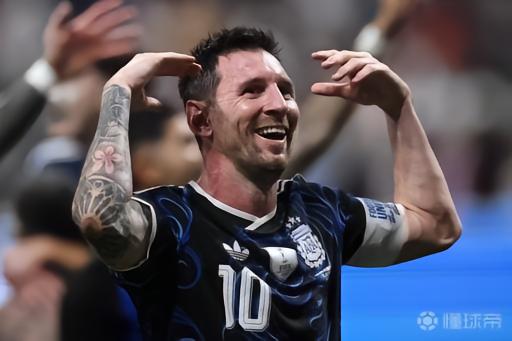
After the competition ended, we returned to reality and stopped hoping that anything would change.
Brazilian poet Sergio Vas once wrote: "People are not watching football, they are feeling football."
The satisfaction that football can bring, even when mixed with pain, tears and fear, is real and tangible.
Those emotions were so real, and could be shared by everyone.
We are experiencing, and we are not alone.
This means that we are truly alive.