This article is reprinted and translated from The Guardian, originally published on July 19, 2026, by Emma Hayes .
Introduction: Ahead of the final, legendary England women's national team manager Emma Hayes wrote an article commenting on Spanish football, describing it as a super team built on a unified youth training framework and a clear underlying logic. While superstars are undoubtedly eye-catching, all their success is based on the country's long-standing football philosophy.
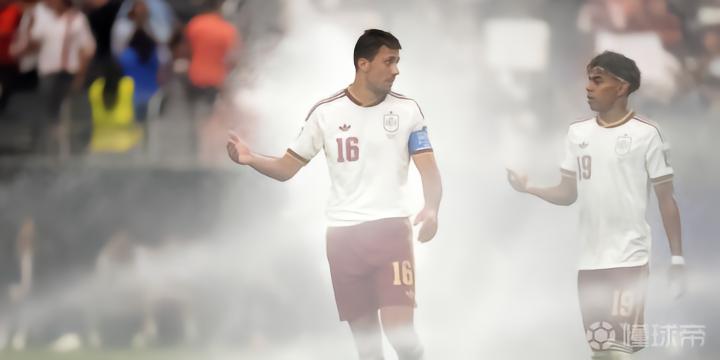
English football often focuses too much on individual players, but the core of football is always the team as a whole. Spain's crushing victory over France in the semi-finals was not due to the brilliance of a few star players, but rather to the unified consensus reached by the entire team regarding pitch space, game rhythm, and core tactical concepts.
This is the fundamental reason why they are in a class of their own in world football today, and why I am confident they will win the World Cup on Sunday.
This team's strength isn't about Rodri, Yamal, or Pedri, but rather the entire midfield system and the cohesive unity of all the players. Spain will do everything possible to create both positional and numerical advantages; this mindset is ingrained in every player from their youth academy days. They are masters of controlling the tempo and space on the pitch.
In the match against France, this mature system proved effective, with the team repeatedly creating a four-on-two numerical advantage in key areas.
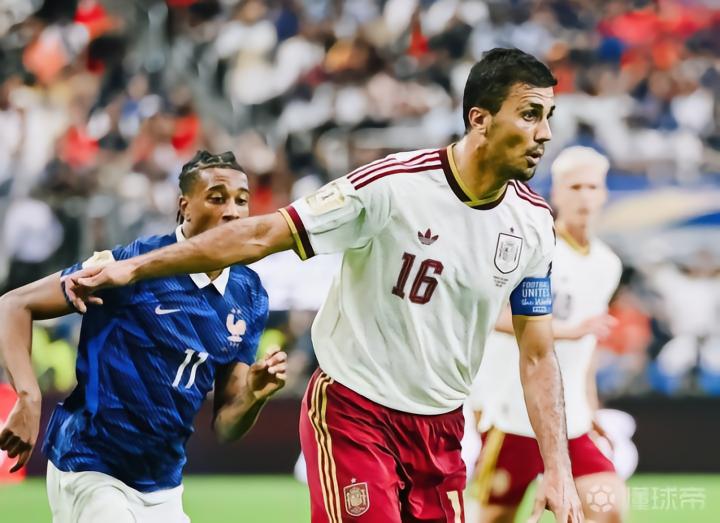
In the lead-up to the final, numerous articles lauded Rodri as the world's best player in his position—indeed, his technique, tactical awareness, and mental fortitude are impeccable. But believe me, his top-tier individual ability is by no means the root of Spain's dominance on the field.
Recalling the 2024 European Championship final, Rodri was injured and substituted at halftime, and Zubimendi came on as a substitute. The Spanish midfield still firmly controlled the situation.
For a long time, Spain has built a complete and clear tactical system that does not rely on any single player and will not be overhauled with a change of head coach. Players from age 8 to 23 follow the same youth training logic to grow, ultimately forging football champions.
How exactly does this system work?
In Spain, all players, regardless of gender, are trained within a unified framework. The entire youth training system has a clear underlying logic and a set of tactical principles. The football mindset honed based on this framework enables players to perform consistently on the highest stage.
The basic formation for all age groups in youth training is the 4-3-3 possession system. This is the starting point for all tactics and will not deviate from the framework throughout the entire process. At the same time, the players' positioning is highly flexible.
In the 2024 tournament, they used Morata as the traditional center forward; in this tournament, they used Oyarzabal as a false nine, who is good at weaving into the gaps between the two defensive lines. Both styles of play are smooth.
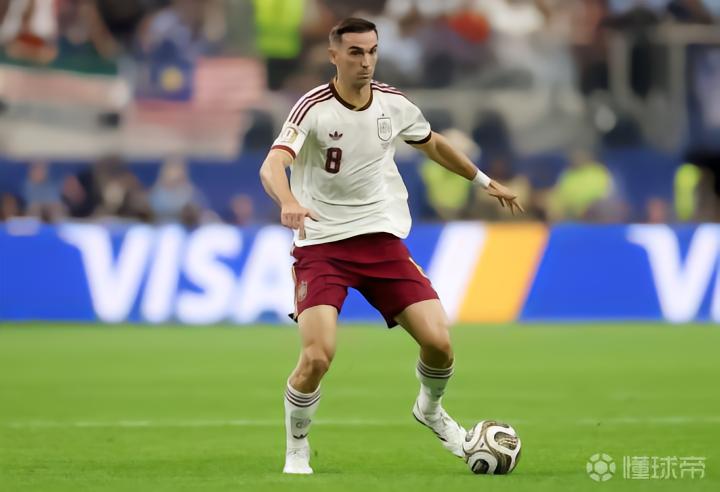
In this World Cup, when Rodri, Fabian Ruiz, Olmo, and Oyarzabal played together, the players didn't have fixed positions. Spain's innate ability was to seize open spaces at just the right moments. The entire team continuously rotated positions, constantly creating advantages on the field; the players' seamless coordination meant they could always create local numerical superiority in any area of the pitch. If they couldn't create a numerical advantage, the whole team would immediately consider how to create positional advantages through positional switching and stretching.
This football culture originated in the early stages of Johan Cruyff's coaching of Barcelona, and today both the Spanish men's and women's national teams have honed this system to a world-class level.
Based on this system, Spain has won the U17 European Championship a record nine times, reached the final of the U19 European Championship three times in a row, and won the U21 European Championship five times, tying with other countries for first place. Their women's football record is equally impressive, with eight U19 Women's European Championship titles, seven of which were won after 2017, including a five-peat. Spanish law mandates that eligible players respond to national youth team call-ups at all levels, a requirement not found in most other countries. The experience gained in these national youth team tournaments allows players to thoroughly understand the responsibilities of each position within the system under high-pressure competition, an indispensable part of player development.
Argentina also relies on teamwork, but the core of their teams is completely different.
I was deeply moved by the views expressed by sports psychologist Daniel Abraham on social media this week. He described the Argentine team as: singing their national anthem with great enthusiasm, pressing aggressively in the attacking third and engaging in fierce physical battles, sometimes pushing the boundaries of the rules, and actively applying pressure to their opponents; the whole team was filled with love for each other, their desire to win, willpower, and determination were integrated, and they were completely free of anxiety.
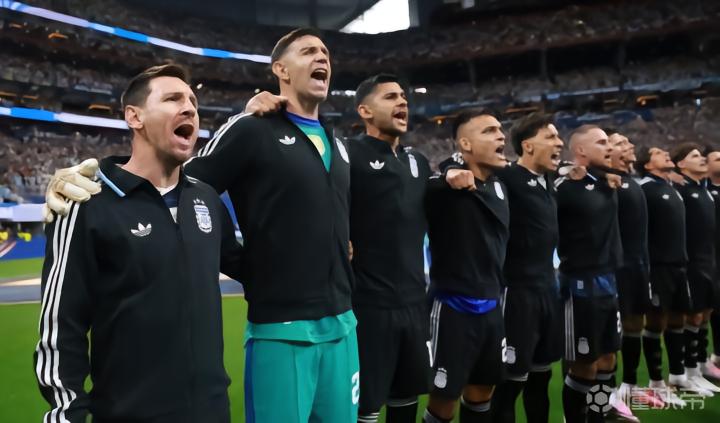
Forging such a unified team mentality is incredibly difficult. The intense dedication of everyone, the unwavering bond that transcends life and death, the adrenaline surge during the game, and the close connection between players and between players and fans are virtually unparalleled in other sports.
The Argentine coach often talks about the team's ability to cope with adversity; this nation is known for its resilience in the face of adversity. They are fighters in international football, and even when they don't have the advantage in possession, they will never give up prematurely; in the final, they will fight to the last second.
Spain excels at moving the ball across the field to one side, stretching the opponent's midfield defense, and then passing the ball back to exploit the opening they initially intended to create.
Some people think that one-on-one marking can limit Spain? That simply won't work.
They are adept at countering high presses, and their tactics have been iterated and upgraded. The team no longer relies solely on passing and possession; they dare to make long passes and through balls, attacking the space behind the opponent's defense. Their style of play has become more diverse and balanced, making them the strongest team in the world today. Before the start of this World Cup, I wrote an article in The Guardian predicting they would win the title, and I still stand by that assessment.
England fans will only feel bitter watching Sunday's final. Why can't we overcome this hurdle of winning the title? Is the root cause hidden in our own social and cultural characteristics? I believe the core issue lies in the players' mentality.
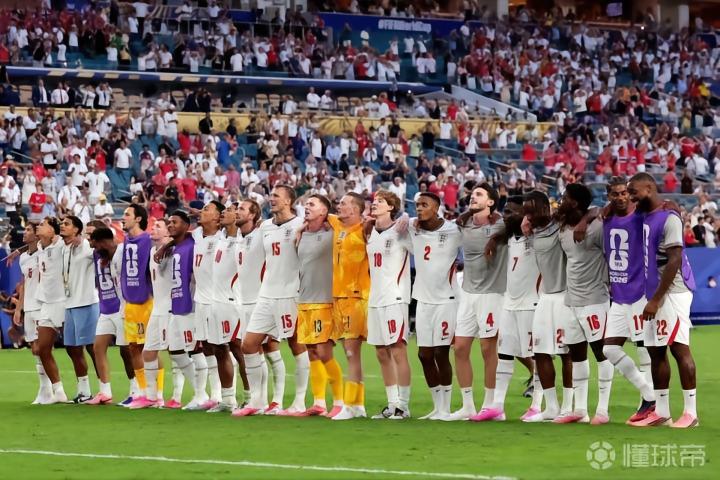
To reach the pinnacle of the world, mental fortitude must be cultivated with equal importance as physical training, ensuring that emotions don't negatively impact performance under pressure. We must reflect: why is it that Argentina consistently withstands pressure and delivers in crucial matches, while we fail to do the same?
After the semi-final defeat, getting bogged down in tactical adjustments and substitutions is just a short-sighted, emotional decision.
Looking ahead, the entire English football community needs to reflect: What shortcomings in the public's mindset are preventing us from breaking through our limitations? How can players, coaches, fans, media, and clubs all work together to make changes?
In the match against England, the Argentine team maintained confidence throughout, united as one, and never blamed or shifted responsibility. In contrast, we habitually seek out scapegoats after defeats, while praising individual stars after victories. We must establish a unified understanding: victory belongs to the whole team, and the responsibility for defeat is shared by the entire team.
This is why Spain and Argentina were able to meet in the final.
Both teams possess an incredibly clear core to their footballing philosophy, and they are also the two teams that emphasize teamwork the most in this tournament.