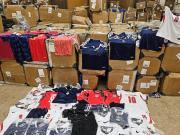
According to the Daily Mail, the number of counterfeit football jerseys on the British market has increased significantly as the 2026 World Cup heats up. Reportedly, British police seized over 220,000 counterfeit items, worth over £18 million, during "Operation Broxwich" conducted during the World Cup. Among them, 1,618 counterfeit jerseys bearing the names of star players such as Haaland and Mbappe were found in a Birmingham warehouse.
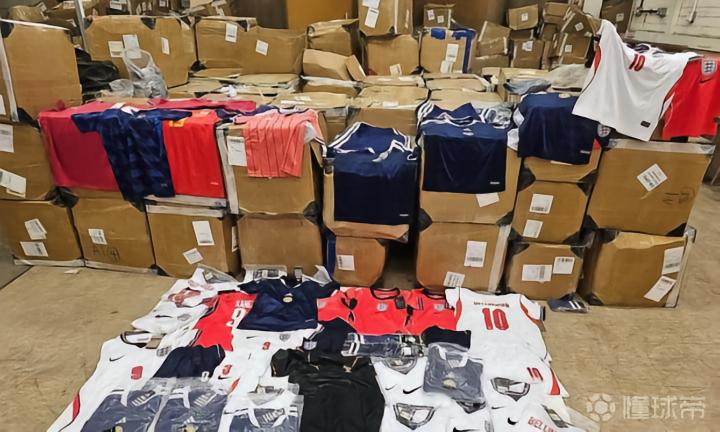
Police are warning fans that counterfeit jerseys purchased at low prices not only infringe on copyrights but may also pose serious safety hazards, including flammability and skin irritation from harmful dyes.
British police detective sergeant Jamie Kirk, who has participated in numerous crackdowns on counterfeit goods, stated that counterfeit jerseys have not undergone proper quality control and some products may be "highly flammable." He said, "I understand why fans want to buy these jerseys; everyone loves football, and the low prices are certainly attractive. But these products are not regulated and may pose a high risk of combustion."
He also pointed out that the dyes used in counterfeit jerseys could also harm the human body, especially children whose skin is more sensitive. "Although their low price is their biggest attraction, the harm these products may cause to consumers and people in the production process is simply too high a price to pay."
Firefighters conducted burn tests on authentic and counterfeit jerseys, revealing significant differences between the two. Cheshire Fire and Rescue Service personnel stated that the counterfeit jerseys melted almost instantly, while the authentic jerseys were much harder to ignite.
“I even had to work hard to get the authentic jersey to burn and melt,” firefighter Dave Jackson said.
In addition, the UK recently uncovered an even larger counterfeit goods case. Edinburgh police seized more than 58,000 counterfeit jerseys a week ago, including World Cup jerseys for England and Scotland, in one of the largest counterfeit goods seizures in British history.
The Scottish Football Association subsequently issued a statement reminding fans to avoid purchasing counterfeit merchandise. The association stated that counterfeit jerseys are not only of poor quality and often lack rigorous safety testing, but the proceeds from their sale may also end up in organized crime networks and illegal labor exploitation activities.
The statement said: "These merchandise items may be highly flammable, contain harmful dyes, and may be linked to criminal networks and human exploitation. We strongly recommend that fans choose officially licensed merchandise to protect their safety and support the development of football."
However, fans also have concerns about the high price of authentic jerseys. The 2026 World Cup England jersey has become one of the most expensive pieces of equipment in the history of the Three Lions, with the children's version priced at £114.99.
The price of adult match jerseys has increased by 6% compared to Euro 2024, reaching £89.99, while children's jerseys are priced at £69.99. Fans who wish to have the player's name and number printed on the back will need to pay an additional fee of up to £60.