
According to The Athletic, the 2030 World Cup will be co-hosted by Spain, Portugal, and Morocco, with fierce competition still underway for the venue of the final.
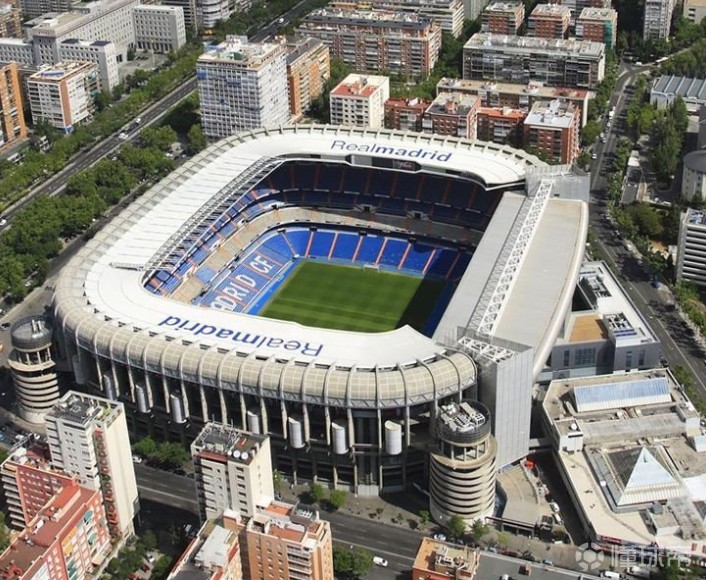
The World Cup final just ended at Metropolitan Life Stadium in New Jersey on Sunday, and the fireworks of the awards ceremony had not yet faded in the night sky when people's eyes were already on four years from now.
The 2030 FIFA World Cup will be jointly hosted by Spain, Portugal, and Morocco. To commemorate the centenary of the first World Cup in 1930, the first three matches will be held in Uruguay, Argentina, and Paraguay.
The joint bid was officially approved by FIFA in December 2024. The plan envisions the remaining matches being played in 11 stadiums in Spain, 6 stadiums in Morocco, and 3 stadiums in Portugal.
However, many details of the 2030 event have not yet been finalized. One of the issues that is of most concern to the three countries is which stadium will be honored to host the final – which will be the biggest stage in the global sports world.
Who seems to have the upper hand?
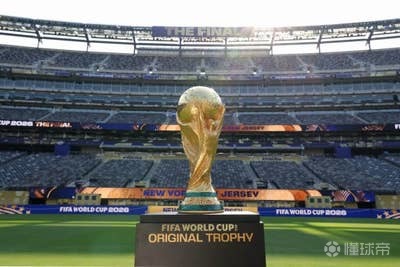
Although Barcelona's Camp Nou stadium is still under renovation, it meets FIFA's requirements for hosting the World Cup final. However, the Royal Spanish Football Federation has always preferred Real Madrid's Bernabéu stadium.
The Bernabéu Stadium is one of the most famous and iconic stadiums in world football, and the only stadium to have hosted the World Cup final, the European Championship final, the Champions League final, and the Copa Libertadores final simultaneously. In 1982, when Spain hosted the World Cup as the sole host nation, the final was held here.
In recent years, the Bernabéu Stadium has undergone a renovation of approximately €1.5 billion, adding VIP, hospitality, and media facilities, as well as a futuristic "silver exterior" and 360-degree digital screens. Last November, it hosted Spain's first-ever NFL game, where these new facilities made their debut.
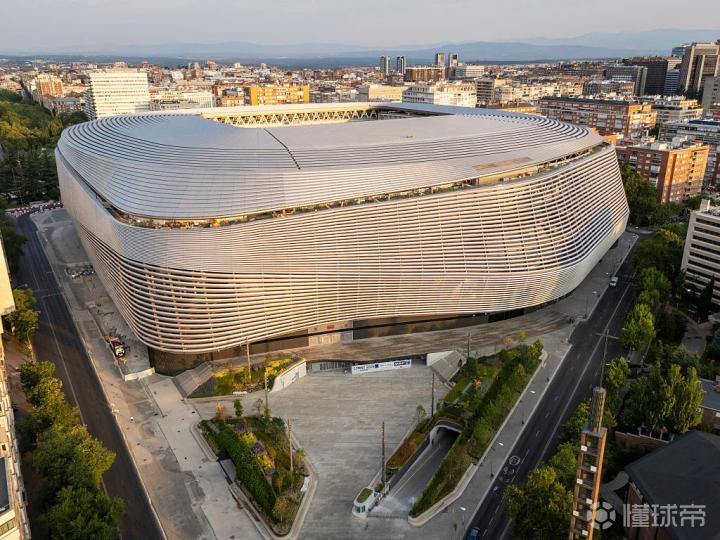
Multiple sources told The Athletic that there are "many reasons" for the Bernabéu Stadium to host the 2030 final. They pointed out that Spain is the largest host of the three countries and will host more matches during the World Cup; Spain also has extensive experience in hosting major events and is one of the strongest footballing nations in Europe, as evidenced by the performance of Luis de la Fuente's team in the 2026 tournament.
An industry insider familiar with the Spanish Football Federation's thinking added that sponsors and industry leaders would also be drawn to such a historic stadium, located in the heart of one of Europe's most popular capital cities.
However, the same person stated that since the Spanish and Moroccan football federations and governments officially became the hosts, the two sides have adopted very different approaches to their work, and the situation has changed significantly as a result.
“18 months ago, it was impossible for the Bernabéu to lose the 2030 final, but I wouldn’t be surprised today because the Spanish Football Federation’s position is very weak compared to everything Morocco has done,” the source said.
What is Morocco doing?
Before FIFA officially confirmed Morocco's co-hosting status, Moroccan officials had already begun planning to build a new stadium near Casablanca with a capacity of 115,000 people – the Hassan II Stadium.
Souzi-Yasir, Director General of Morocco's National Public Utilities Agency, told AS in May: "We want the final. We know that for many people, the Bernabéu is a football temple, but it is located in the city center and is already built. The Hassan II Stadium is brand new and easier to adapt to FIFA's requirements. Whatever they ask for, it can be met here."
The new stadium received approximately €1 billion in government funding. To meet all FIFA requirements, public investment will also be used to build supporting infrastructure, including a new railway and highway connecting the stadium to downtown Casablanca and the capital Rabat.
This massive investment aligns with Morocco's King Mohammed VI's policy of transforming the country into a football powerhouse. Fouzi Lekjah, who has served as president of the Royal Moroccan Football Association since 2014, is a key figure in this strategy, known for his ambition and distinctive personal style.
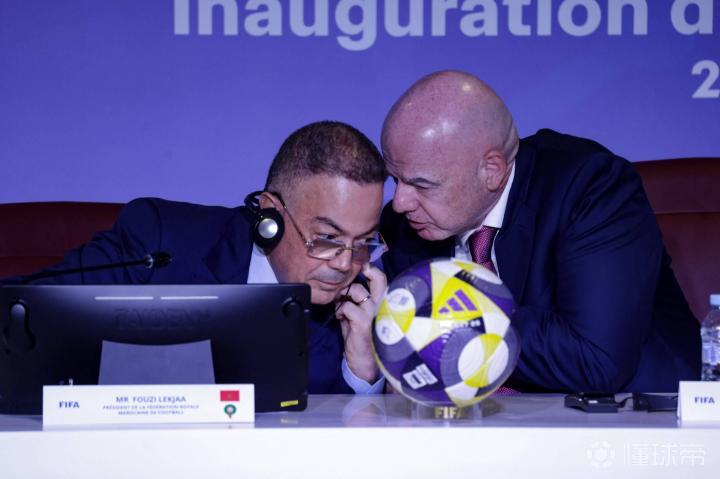
The 55-year-old Lekja is one of the most influential decision-makers in international football, serving as the first vice president of the Confederation of African Football and a member of FIFA's highest decision-making body.
Lekja has consistently been a staunch supporter of FIFA President Gianni Infantino. In July 2025, Infantino traveled to Rabat to inaugurate FIFA's new African office in the Moroccan capital, a branch office similar in nature to the one in Miami, where much of the preparation for the 2026 World Cup is being carried out.
Sources familiar with the top-level thinking behind the Moroccan tournament preparations told The Athletic that they believe it would be "fairer" for Casablanca to host the final, following FIFA's principle of rotating tournaments among continents. They pointed out that Africa has only hosted the World Cup final once before, in the 2010 South Africa World Cup.
What is Spain doing?
In recent years, the Spanish Football Federation has experienced a lot of turmoil and changes, especially after former president Luis Rubiales was convicted of sexual assault for kissing Gianni Hermoso after Spain won the Women's World Cup in August 2023, and subsequently resigned.
The current president of the Spanish Football Federation, Rafael Luzan, has been dealing with domestic institutional issues. Several industry insiders say that, at least for now, he has not yet established the strong international relationships he has with his Moroccan counterparts.
Another industry insider who attended the Spanish Football Federation's annual congress in Madrid on June 30 said that concerns about "losing" to Morocco in the 2030 final were among the most pressing issues for delegates at that meeting.
On July 7, Spanish Minister of Education, Vocational Training and Sports, Milagros Toron, was asked about growing concerns in the country regarding this issue.
“There’s nothing,” Torron told Spanish journalists. “These are the reports, but none of them are official. I can assure you that this government will try to make sure the final is held in Spain.”
On July 10, ahead of the European Championship quarter-final match between Spain and Belgium, Luzan also responded to these rumors on DAZN.
“Spain is the biggest player in this World Cup, and we have already started preparations. The countdown will begin in September,” Luzan said. “Spain is fully capable of hosting large-scale events, as you saw when Pope Leo XIV visited the Bernabéu Stadium in early June.”
Spain's strong performance at the 2026 World Cup, especially their complete domination of Argentina in Sunday's final, has once again proven their strength on the field.
The following day, Italian media published a statement by La Liga president Javier Tebas, who claimed that FIFA was destroying football and called for Gianni Infantino's resignation. Tebas is also the vice president of the Spanish Football Federation. Multiple sources told The Athletic that these remarks would damage Madrid's chances of reaching the 2030 World Cup final.
"Why would we want to clash with FIFA after just winning the World Cup?" said a source familiar with FIFA's thinking. "It's completely unhelpful."
La Liga has been asked to comment.
How to decide?
FIFA maintains extremely tight control over all major decisions related to the World Cup.
This unprecedented joint hosting arrangement by six countries was meticulously designed at the highest levels. When the decision was made, a senior source within the Spanish Football Federation admitted that the last-minute addition of three South American countries surprised them.
The venue for the 2026 World Cup final wasn't finalized until February 2024. FIFA's decision-making process was also highly confidential; according to The Athletic at the time, the final decision was made by Gianni Infantino and a small number of FIFA's top executives.
The New York/New Jersey bidding team put in tremendous effort to win the final hosting rights, with Dallas being a strong contender. Numerous politicians, sports figures, and celebrities have publicly voiced their support for the Metropolitan Life Stadium. If a similar two-way race occurs in 2030, FIFA may use this opportunity to negotiate better terms with the winning bidder.
Multiple sources also indicated that FIFA prefers stadiums where it can maintain as much control as possible. This could be advantageous for Morocco, as Lekjah, who is also a government minister, reports directly to King Mohammed VI.
Within Spain's democratic system, this decision-making process is not so smooth. Tensions also exist between the Socialist government and Football Federation President Luzan, who was previously a politician from the main conservative opposition party.
The Spanish Football Federation declined to comment formally on its relationship with the Spanish government, nor would it discuss the impact of the competition to host the final on its relationship with the Moroccan Football Federation.
A source from the Spanish Football Federation told The Athletic: "We know Infantino likes to be courted, and Morocco has done everything it could, even more. However, we still see no possibility of the final not being held in Spain."
One factor widely considered to be the Bernabéu Stadium's advantage is the past alliance between Real Madrid president Florentino Pérez and Gianni Infantino. Despite being embroiled in different power struggles, both men have opposed UEFA president Ceferin.
Perez also supports Infantino's revamped Club World Cup program. Earlier this summer, Infantino also offered official support to the Real Madrid president during his successful re-election.
"The biggest chance at the Bernabéu now is for Florentino to go to his friend Gianni Infantino," said a source who has worked with both Real Madrid and FIFA.
FIFA has been asked for comments on this article.
Is there a Trump factor involved here?
Of course, the Trump factor has always been involved.
The US president has long been dissatisfied with Spain, believing that Spain has not provided sufficient funding to NATO. Spanish Prime Minister Pedro Sánchez has also repeatedly angered Trump, including by frequently accusing Israel of genocide in Gaza, criticizing the US military action in January to arrest Venezuelan President Nicolás Maduro, and refusing to allow US aircraft involved in the war with Iran to use Spanish bases in March.
"Spain is a hopeless place, Spain is a terrible partner in NATO," Trump said at the NATO summit in Ankara, Turkey on July 8. "We don't want anything to do with Spain. They are beyond redemption, they are bad people."
Sanchez said he had an “informal” and “friendly” conversation with Trump about football in Ankara, adding, “The United States and Spain maintain a very positive relationship on social, cultural, economic and political levels.”
This did not stop Spanish radio station Kopp from claiming that Trump is pressuring FIFA to allow Morocco to host the 2030 final, because Morocco is a better "partner" for the United States.
In recent years, the United States has been strengthening its military ties with Morocco. Trump has long supported Morocco's control over Western Sahara—a former Spanish colony believed to hold potentially untapped offshore oil reserves.
The atmosphere in the stands on Sunday appeared quite harmonious, with both Sanchez and Trump seated in the front row at the Metropolitan Life Stadium, and Spain captain Rodri lifting the Jules Rimet Trophy. Photos show the two shaking hands before the kickoff.
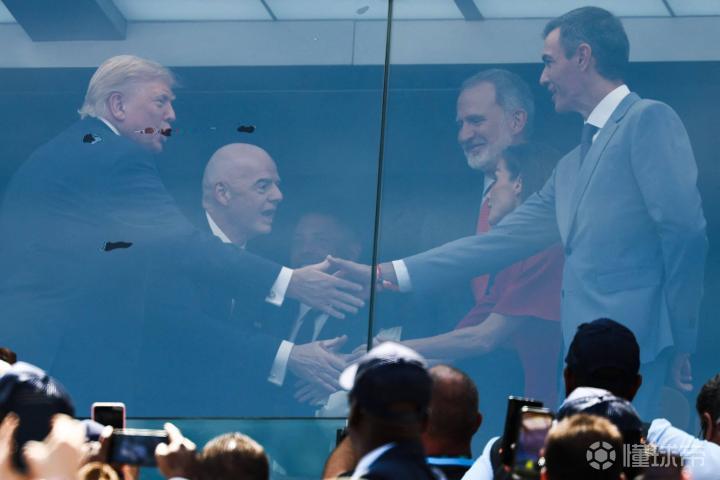
The Spanish Football Federation stated that they would not comment on matters unrelated to football.
Other industry insiders pointed out that although Trump and his administration have a significant impact on the 2026 World Cup, the United States will have a different president in four years, and FIFA's focus will shift elsewhere.
What will happen next?
During the 2026 World Cup, FIFA invited representatives from the 2030 host cities to Miami and Dallas to observe the matches and learn about the tournament's organizational structure, including Madrid and Casablanca. The location of the tournament's international broadcasting center and FIFA headquarters was also under discussion.
“The Spanish capital has the best infrastructure and is best suited to host large-scale events,” Sonia Cea, head of sports affairs at the Madrid City Hall, told El Mundo in the United States. “It would be unthinkable if the final were not held in Madrid.”
Throughout the bidding process, multiple sources have clearly stated that the real deciding factor is the views and interests of FIFA's top management.
Potential changes to the tournament format could also have an impact. The 2030 World Cup is expected to have 48 participating teams, the same format as this year's expanded tournament. However, Gianni Infantino recently told the Swiss media outlet Bluewin that "a 64-team World Cup is definitely a problem, and the relevant committee will study and discuss it after this World Cup."
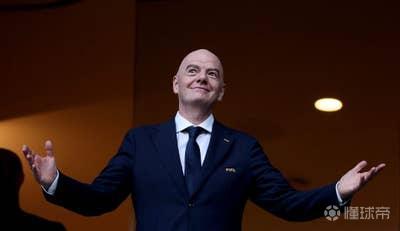
This idea is unlikely to be finalized before the next FIFA Congress. The next congress will be held in Rabat next March, which also demonstrates Morocco's position in the center of football power.
At that congress, it was widely expected that Infantino would seek a fourth term as FIFA president and would face virtually no competition.
The African and South American football federations have announced their unanimous support for Gianni Infantino's re-election. However, it remains unclear how most European football associations will vote. Several incidents during the World Cup have drawn considerable criticism, particularly Trump's public claim of involvement in the Balogun affair, after which the American striker was allowed to play following a FIFA suspension of his ban.