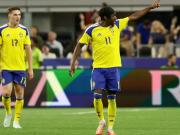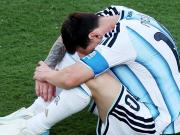
According to the Mail, Messi's popularity among the British public has plummeted due to the Argentine team's controversial behavior at the World Cup.
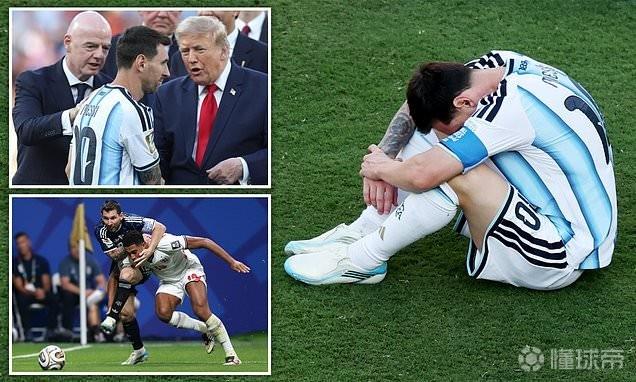
According to a YouGov poll, nearly half of respondents now hold a negative view of Messi. This shift stems from Argentina's disrespectful behavior during the tournament – their 0-1 defeat to Spain in the final, followed by a post-match clash with their opponents. Enzo Fernandez was sent off in regular time, while Paredes faced heavy criticism for attacking Eric Garcia and Gavi after the match.
Even Messi himself was embroiled in the disgraceful farce of the final: he attempted to get Cucurella sent off for briefly covering his mouth with his hand. According to FIFA's rules for that tournament, a player covering their mouth during a confrontation is automatically sent off; Paraguay's Almiron and Ecuador's Incapie had previously been penalized for the same reason. However, Cucurella was not making any confrontational verbal remarks, and neither the referee nor VAR intervened.
Furthermore, many fans believe that the referees made numerous decisions that favored Argentina throughout the tournament, suggesting that the matches were "rigged."
The Argentine team's repeated declarations of ownership of the Falkland Islands through chants and banners failed to win over British fans.
All of this has negatively impacted Messi's popularity. Before the World Cup, 55% of the public held a positive view of him, with only 9% holding a negative view; now, positive opinions have plummeted to just 29%, while negative opinions have soared to 44%. This means that, according to a YouGov poll, Messi's net favorability rating among the British public has plummeted from +46 to -15. In short, people don't like him as much anymore.
This rating is far lower than his old rival Cristiano Ronaldo, whose net favorability rating is -2. Furthermore, Jeff Powell, a senior sports columnist for the British media, removed Messi from the top five of his all-time best player list due to his various actions.
To be fair, Messi, who scored 8 goals in this World Cup, is often a beautiful and refreshing sight amidst his more boisterous teammates. He once escaped a red card for a suspected stamp on an opponent in Argentina's first match against Algeria; but after the final whistle on Sunday, while his other teammates were still taunting him, he stood up and shook hands with Yamar, and the Argentine team also turned their backs to the champions when celebrating their victory in Spain.
Spain defeated Argentina 1-0 in extra time thanks to a 106th-minute winner from Ferran Torres. Any accusations of referee bias against Argentina in the final were quelled by Enzo Fernandez's red card late in regulation time. However, many still cannot understand why Spain's Nico Williams had a goal disallowed for a questionable foul on Otamendi during an attack.
This continued the pattern of controversial refereeing decisions that favored Argentina throughout the tournament. In Argentina's opening group stage match against Algeria, Messi should have been punished for a stamp, but escaped punishment entirely. Shortly after scoring the first goal, Messi's studs struck Algeria's captain, Mandi, in the right shin and Achilles tendon during a challenge. The referee only awarded Algeria a free kick, and VAR didn't even review the incident.
Meanwhile, Egypt reacted fiercely to a series of key refereeing decisions during their Round of 16 match against Argentina. Egyptian coach Hossam Hassan angrily accused FIFA of manipulating the World Cup. First, a goal by striker Mustafa Ziko was disallowed after a VAR review due to a questionable foul by Marwan Attiyah on Lisandro Martinez. The foul occurred 18 seconds earlier on the other side of the pitch; Attiyah did indeed touch Martinez, and the controversy lay in whether the failure to award a penalty was a clear error. Egypt was even more furious about the sequence of Argentina's winning goal: they claimed they should have been awarded a penalty. Salah was tripped in the box by Julian Alvarez, but VAR appeared to have completely ignored the incident. Argentina then scored on a counter-attack, in stoppage time.
The Swiss team was equally furious after their quarter-final loss to Argentina, accusing the referee of "favoritism" and "targeting them." The biggest controversy of the match was Swiss striker Embolo's dismissal after receiving his second yellow card for diving. Recap: Paredes received a yellow card for a foul on Embolo, but referee Pinheiro was subsequently asked by VAR to review the case under the new "mistake of identity" rule. Replays showed that Embolo deliberately extended his leg to make contact with Paredes before falling – he was the one who dived, hence the second yellow card. Xhaka stated, "It's painful to lose because of a referee's decision. Rules are rules, but that decision killed the game; we could have beaten them 11-on-11." Manuel Akanji said, "When the referee targets you, the game becomes very difficult. Every dive and foul by Argentina was ignored; I've never experienced such a one-sided game." Teammate Freuler said, "I still don't understand why VAR was able to intervene in that situation; FIFA needs to explain it to me."
Yakin added, "After equalizing, we clearly took the initiative, but unfortunately we were wrongly penalized by the referee. That decision was baffling and simply beyond my comprehension."
Furthermore, the Argentine team has not yet been punished by FIFA for repeatedly chanting lyrics related to the Falkland Islands. FIFA strictly prohibits political chants, slogans, and banners within stadiums. The Haitian team was previously asked to remove small print mentioning the War of Independence from their jerseys. After their semi-final match against England, Argentine players held up a banner that read "The Falklands belong to Argentina." They could have faced disciplinary action for this, but were not punished before the final. The United States even expressed support for this, with Andrew Giuliani, head of the White House's FIFA task force, stating, "We believe in the First Amendment to the U.S. Constitution." FIFA's credibility has long been low, and their decision to lift the suspension of U.S. striker Balogun after a phone call from Donald Trump, allowing him to play against Belgium, did not help restore public confidence.