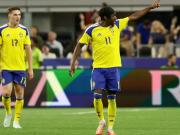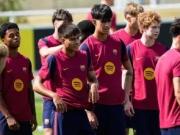
In the final of this World Cup, Argentina lost 0-1 to Spain, missing out on the championship. After the match, Argentine journalist Pablo Carrozza posted a long video on his personal account reviewing the World Cup final, stating that the final was a "behind-the-scenes" affair orchestrated by FIFA, and that Argentina was the one sacrificed.
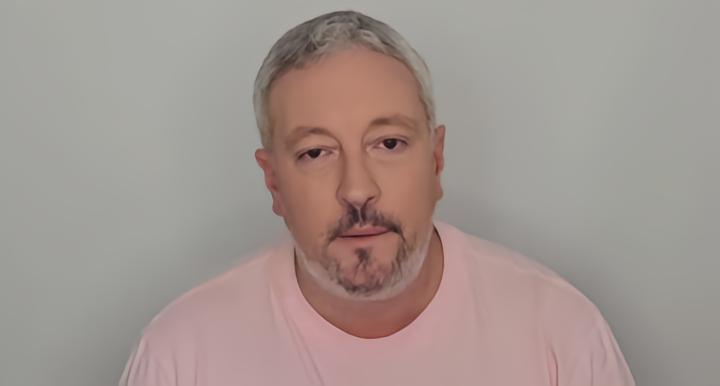
The following is a partial excerpt of the video content (due to the original length being too long):
Hello everyone, how have you been lately? I hope everything is going well for you all. I'll get straight to the point and talk about the many unanswered questions surrounding this World Cup final. As an Argentinian, frankly, we still find it hard to accept this result. The match keeps replaying in my mind, and I'll analyze each point one by one, sharing my thoughts with those of you who are also struggling to find answers.
I have some relevant information, and I would also like to share my views from the perspective of geopolitical competition: betting forces, commercialized football, and the interests behind the football industry are all intertwined here.
For example, the US president and Gianni Infantino once worked together to save a player (Balogun) who had already been shown a red card in a match, allowing him to play in the next game despite his red card. This incident is related to Infantino's re-election in March next year, and in November this year, FIFA will hold its congress in Morocco to determine the list of candidates.
All of this is closely related to the stadium itself, football matches, and the commercial interests of football: the controversial water break, injury time, referee decisions, various deals, and a series of unusual events that we have witnessed firsthand.
Let's start with the Slovenian referee (Vinčić). Argentina's record against him in the past hasn't been ideal, while Spain has a clear advantage against him, achieving three wins and two draws. What am I trying to say? Argentina didn't want him to officiate this match from the beginning, which is one of the reasons Messi publicly stated this before the game.
All the signs are there, and everyone knows in their hearts that FIFA needs a European team to win the championship.
Next, I will re-examine the development of the entire incident to help everyone understand my analytical perspective.
Previously, the Spanish Football Federation had consistently opposed Infantino's re-election. The owner of Paris Saint-Germain also opposed him, and he plans to run for and challenge Infantino's position. To formally run, he must secure enough nominations and votes from the continental football federations before November, which is the FIFA Congress in Morocco I just mentioned.
Another key figure: Dariusz Mioduski, owner of Legia Warsaw, Poland.
The Spanish Football Federation originally planned to support him in hopes of weakening Infantino's power and believed that he could become Infantino's successor.
The situation gradually became clear: Infantino could secure the support of CONMEBOL, but not the full support of UEFA. Therefore, he desperately needed a European team to win the World Cup to quell the anger of the European side.
Not only is the World Cup champion title contested, but the top scorer award is also controversial.
Let's start with the third-place match. This match itself had almost no competitive significance, and many players were unwilling to participate. The French team made extensive rotations, but Mbappe was the only one who desperately wanted to play, because he wanted to win the World Cup Golden Boot.
Ultimately, the match ended with a score of 6-4. As you can imagine, bookmakers constantly adjusted the odds and handicaps throughout the game, and the situation changed continuously.
The match saw several reversals of fortune. England initially held a commanding lead over France, but France gradually closed the gap, and Mbappe surpassed Messi in goals to ultimately claim the individual honor.
Ultimately, Europe, France, and Mbappe are all beneficiaries of this match.
It's like someone told Mbappe in advance: "If you score two goals in this game, Messi will have no chance to catch up with you."
Ultimately, Mbappe won the World Cup Golden Boot.
The final match then began, and the referee was this Slovenian referee, not one from Chile, Uruguay, Paraguay, Ecuador, Colombia, or Mexico.
The referee was selected by UEFA, and Spain has a better track record in his previous matches.
In the last World Cup, his only refereeing appearance for Argentina was in their shock defeat to Saudi Arabia. I'm sure everyone remembers that loss.
Now let's focus on the refereeing issues.
Many Argentine fans will later argue that the team barely had any shots on goal, a very unusual performance.
I will analyze this in more detail later. Now, I want to break down the various speculations, rumors, and doubts circulating on social media one by one.
The point I want to make is that football is never just about 22 people chasing a ball; political maneuvering is always involved.
Spanish media outlets, such as leading sports publications like Chiringuito, have been creating public opinion and spreading the claim that FIFA is biased towards Argentina, citing Gianni Infantino's close personal relationship with Argentine Football Association President Tapia.
But the reality is quite the opposite: what Infantino really wants is the support of UEFA, especially the Spanish Football Federation, in order to obtain the votes he needs for re-election.
Therefore, he sent a signal to Spain: Rest assured, you will be treated well, and your advantages will surpass those of Argentina.
In the end, a miracle happened, and Spain lifted the World Cup trophy.
France won the 2018 World Cup and Argentina won the 2022 World Cup, so it is impossible for Argentina to defend their title again.
FIFA has always prioritized commercial interests.
Previously, Infantino traveled to the United States to meet with Trump, and the US president directly intervened in the rules of the game and interfered with the red card decision, which caused a very negative reaction in European football.
At the time, European authorities warned Infantino that if he continued to maintain a deep connection with Trump, his chances of re-election would essentially be gone.
It was previously believed that the Trump camp might support Messi, given that Messi had already joined Major League Soccer in the United States.
Subsequently, a series of operations took place.
Rodri won the Ballon d'Or.
Undeniably, Rodri is a world-class midfielder, but doubts remain: it is surprising to many that a player who has almost no goals and rarely provides assists has won the Ballon d'Or.
The award has been the subject of much controversy, with some questioning why a midfielder would receive the Ballon d'Or, or why a player who rarely wins games with crucial goals.
Meanwhile, Kubasi won the World Cup Best Young Player award.
It's easy to see that many important individual awards ultimately went to European players.
Let's go back to that third-place match, which ended 6-4.
I want to emphasize again that not many people really wanted to play this game. Even most of the French team lacked interest; only Mbappe was fully committed because he knew this was an opportunity to surpass Messi and compete for the Golden Boot.
This match was largely influenced by the betting market.
I know that saying these things may cause a lot of trouble, but I have always chosen to speak frankly and tell all the stories behind the scenes that I have seen at the stadium.
Previously, the French defense was considered world-class, rarely conceding more than one goal in a single match.
But in the end, they were scored six goals by England.
On the other side, Argentina and England went through a tough battle, with Argentina coming back from behind to win; while France managed to break through England's defense four times, scoring three goals in a row.
It is inherently unreasonable to determine the World Cup Golden Boot winner based on the number of goals scored in a match that has limited relevance to rankings and honors.
This honor should not have been decided based on the result of the third-place match.
Therefore, it is not difficult to speculate that someone deliberately pushed Mbappe to participate in this match to help him win the Golden Boot.
At the same time, Infantino could use this opportunity to ease UEFA's dissatisfaction and resolve the conflict caused by Trump's intervention in the red card incident.
There are also several factions within UEFA: one is the owner of Paris Saint-Germain, and the other is the owner of Legia Warsaw, both of whom plan to challenge Infantino.
Ceferin is among them, and a dark horse may emerge in the next election.
The list of candidates will be officially finalized this November, and there are currently four to five contenders preparing to join forces to challenge Infantino.
Notice a detail: during the FIFA broadcast, in the halftime tribute to legendary players in the final, players such as Xavi, Puyol, Iniesta, and Ramos, representing Spain's golden generation of 2010, appeared. Ramos then presented the award to Spain.
However, no Argentine legends were featured at all during the entire process. While Argentine legends had appeared in previous matches, they were conspicuously absent from this final. Don't you all find this highly suspicious? It's as if FIFA already knew Spain would win, so they focused on featuring Spanish legends.
Infantino deliberately curried favor with European football by arranging for a UEFA-approved Slovenian referee to officiate the final.
Referees are not selected by a simple lottery.