
In the final of this World Cup, Argentina lost 0-1 to Spain, missing out on the championship. After the match, Argentine journalist Pablo Carrozza posted a long video on his personal account reviewing the World Cup final, stating that the final was a "behind-the-scenes" affair orchestrated by FIFA, and that Argentina was the one sacrificed.
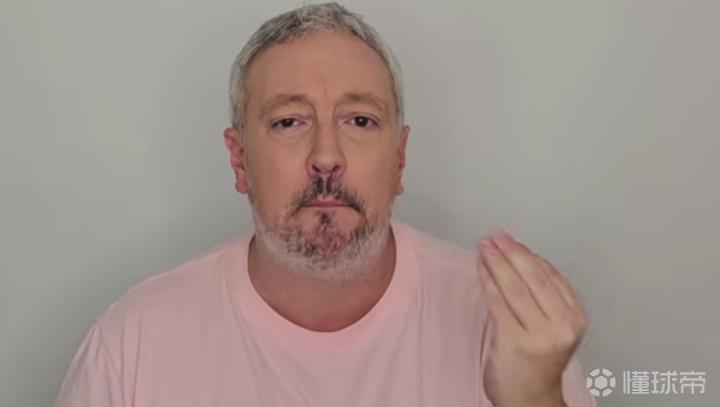
The following is a partial excerpt of the video content (due to the original length being too long):
Billions of people watched the final, with only a few regions unable to receive the live broadcast due to infrastructure limitations. The halftime show featured performances by world-class stars such as Shakira and BTS, allowing FIFA to further unleash its commercial value. By forcibly adding rule changes such as water breaks, the World Cup was packaged as a month-and-a-half-long "Super Bowl-like" commercial extravaganza.
After the expansion, the competitive and entertainment value of some matches decreased, but stadiums remained packed. Lower ticket prices, reselling on the secondary market, and the influx of American spectators led more and more ordinary people to attend matches, much like they would attend baseball or football. Many spectators wearing Argentine jerseys weren't traditional hardcore fans; they might simply be Latino supporters of Argentina or wealthy individuals who could afford to spend $20,000 on tickets. Football is gradually becoming a commercial game for a select few, while ordinary fans can only watch from home on television. I couldn't travel to the US to watch a match in person due to visa issues, but I don't want to discuss my situation too much here.
Returning to the core issue: FIFA's selection of Slovenian referee Viktor Venčić to officiate this final was not a coincidence. Gianni Infantino did not want to see Argentina successfully defend their title. If Argentina won consecutive World Cups, the Spanish Football Federation and UEFA might not support his re-election, whether in the November elections or at the congress in Morocco in March. Especially if Spain suffers controversial refereeing decisions in the final, the conflict between the two sides could escalate completely.
Therefore, FIFA allocated more resources and interests to Europe in this tournament, partly to court the Trump camp and partly to maintain relations with the European football system, thus helping Infantino complete his commercial plans and leave the United States with huge profits. Many behind-the-scenes events, such as the unusual circumstances surrounding the Ecuador-Mexico match, have yet to be thoroughly investigated. The Ecuadorian Football Federation issued a statement, but ultimately nothing came of it. Scaloni's emotional outburst at the post-match press conference, Messi's public expression of dissatisfaction before the match, and the conflict between Otamendi and Rodri were not without reason.
The Argentine team knew from the start of the match that they were facing not only Spain, but also UEFA, FIFA, and even the forces behind American politics. This explains the players' unusually serious demeanor before the game. However, this Argentine team never considered playing passively, nor did they give up on attacking. I reiterate: Scaloni's tactics were just five minutes away from perfection, and only one step away from making World Cup history. A series of injuries, coupled with defensive errors in the final stages, altered the course of the game. If Simeone's final shot had found the top corner, the final result might have been entirely different.
As fans, it's easy for us to focus only on the problems within our own teams, while ignoring the massive commercial interests behind FIFA.
Finally, one more point: Many rumors suggest a tense, even hostile, relationship between Argentine Football Association President Tapia and Gianni Infantino, but the reality is quite the opposite; there is a degree of mutual interest between the two. Currently, some are even attempting to push Tapia out of the Argentine football management system. Feel free to think about this and share your opinions in the comments section.
I have tried to present the whole story as comprehensively and in detail as possible, but due to its length, it inevitably involves a lot of content. I did not prepare a complete script in advance; I simply presented the information I had received recently in front of the camera, discussing the Argentine team's dissatisfaction with the referee, the Spanish team, Infantino, UEFA, the Spanish Football Federation, and the third-place match, among other things.
Modern football increasingly resembles a Las Vegas boxing match, packaged as a commercial entertainment show. Audiences are fully aware of the behind-the-scenes manipulations, yet they still pay to watch. People hope football can remain pure and fair, but the reality is that international politics and commercial maneuvering have already deeply penetrated the sport.
Looking back at the Copa America era, Bolsonaro stormed the stadium to participate in the victory celebration parade, and Argentina subsequently faced numerous controversial refereeing decisions. Messi, representing the Argentine national team, publicly clashed with CONMEBOL, and Tapia firmly supported his captain, yet the team ultimately suffered losses, affecting their qualification for the 2019 Copa America final. At that time, FIFA and various political rules seemed to have been broken; now, the issue of Argentina displaying the Falklands flag is being heavily discussed, attempting to explain the team's ultimate loss in the final.
In my opinion, the significance of a Falklands flag even surpasses the trophy itself. I am proud of the Argentine players who dared to display the Falklands flag in front of England. Now, "The Falklands March" is trending on Spotify, and more and more young people are beginning to pay attention to and understand the Falklands dispute. FIFA verbally emphasizes that "football should stay away from politics," but Trump's ability to influence the football environment and Infantino's constant involvement in political deals clearly demonstrate this double standard.
This tournament, orchestrated by Gianni Infantino and Donald Trump, has raked in an immeasurable amount of money. Now, the World Cup is no longer limited to a single host country; it's co-hosted by multiple nations, expanded to 48 teams, and features large-scale cultural performances during halftime. This final match had a 27-28 minute halftime break, during which top global artists took to the stage.
Ultimately, the World Cup trophy fell to Madrid. Real Madrid, the "Chiringuito" program, and Florentino Pérez are all entangled in complex webs of interests. Many hidden stories may not be revealed for now, but time will eventually unveil more of the truth.