
Even after the 2026 World Cup concluded, related topics and discussions continue. Recently, The Athletic invited 14 writers from different regions to review the tournament, sharing their observations and evaluations of the World Cup from multiple perspectives, including team performance, player contributions, the hosting experience, and future trends.
As the tournament concludes and players return to their clubs, these journalists and commentators from diverse backgrounds offer a comprehensive summary of the 2026 World Cup from their own perspectives, attempting to capture the most memorable moments and stories of this global football extravaganza.
Has FIFA's expanded World Cup format worked? Which team was the most disappointing?
Henry Horncaster: One loss isn't enough to ruin the entire tournament, but the US's poor performance against Belgium was truly impressive. Before the match, Belgium's strength was widely underestimated, and Garcia deployed arguably one of the best tactical solutions of the World Cup. Even without key players like Lukaku, De Bruyne, and Doku in the starting lineup, Belgium completely dominated the hosts. Meanwhile, Trump's intervention in the Balogun red card incident created immense public pressure, clearly affecting the US players on the field, making them play hesitantly.
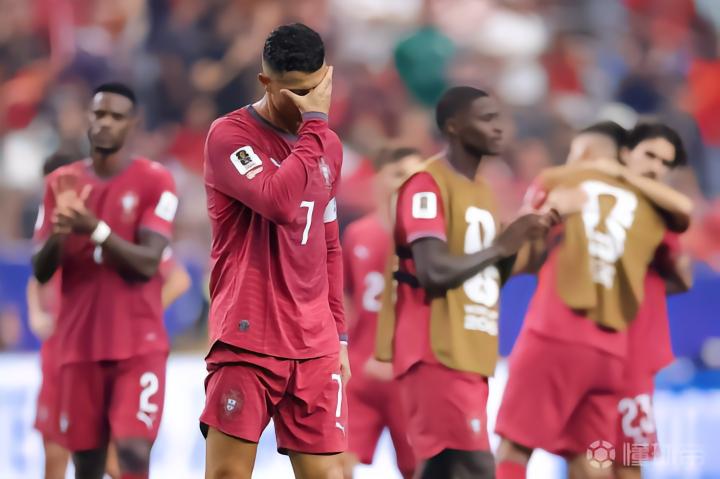
Kai: I agree with Henry's assessment of the Portuguese team. Everyone's focus is on Ronaldo, but the team's problems go far beyond that. Players like Vitinha and Bruno Fernandes, who performed brilliantly in European competitions last season, have fallen far short of their usual level in this World Cup. It's difficult to determine whether the problems stem from fitness, tactics, or the team's internal atmosphere, but Portugal's overall performance has been disappointing. Germany's disappointment is relatively less pronounced, given that they struggled throughout the knockout stages after defeating Curaçao.
Bushnell: I would choose Portugal. While their knockout stage loss to Spain isn't shameful, it's truly regrettable that a team with top players like Vitinha, Bruno Fernandes, Neves, Nuno Mendes, Leao, and Bernardo Silva only put on a truly convincing performance against Uzbekistan.
Stafford Brower: Turkey's performance was very mediocre. The problem wasn't just a lack of technical and tactical skill, but more importantly, the team's overall emotional state was out of control. After falling behind against Australia, they quickly panicked and couldn't find their rhythm. The match against Paraguay best exposed their problems; the team had 88 minutes left to look for an equalizer, but they squandered attacking opportunities time and time again, ultimately collapsing completely under the pressure of elimination.
Krafton: Portugal's poor performance wasn't entirely unexpected, given that they've experienced similar situations in several major tournaments led by Ronaldo. But if I had to choose the most disappointing team, I'd say France. They have a world-class squad, yet they completely failed to perform to their potential against Spain. This World Cup will undoubtedly leave a regret for Deschamps and the entire French team.
Cardenas: Brazil is still the Brazil we know – disappointing. We thought Ancelotti's arrival would bring a fresh start, but the final result didn't meet our expectations. The team played a conservative style, appeared tense during the game, and lacked overall entertainment value.
Green: If we exclude Italy, I would choose Ecuador. A team that conceded only 5 goals in 18 South American qualifiers conceded 5 goals in 4 World Cup matches, scoring only 2. Of course, I ultimately chose South Korea. Their group stage situation was initially very favorable; they had a chance to finish second in their group and advance to the final 32-team tournament in Los Angeles. Captain Son Heung-min plays for FC Los Angeles, and the area boasts the largest Korean-American community outside the Korean Peninsula, which should have helped South Korea recreate the atmosphere of their 2002 World Cup home games. However, after defeating the Czech Republic in their opening match, South Korea quickly collapsed, failing to advance and even losing the chance to compete for one of the best third-place finishes. Ironically, Son Heung-min finally ended his goal drought this summer, but that goal came in the Los Angeles derby while playing for FC Los Angeles.
Anka: Senegal. As the reigning champions of the Africa Cup of Nations, this team was initially expected to perform well in this World Cup. However, Senegal first lost to Norway in the group stage, and then suffered a surprising defeat to Belgium in the final round of 32. Nine out of ten African teams that participated in the qualifiers successfully advanced to the World Cup, and there were high expectations for African teams to achieve their best-ever result. However, many African teams collapsed in the final stages of their matches, making the overall viewing experience frustrating.
Miller: I also pick Senegal. Before the tournament, they were considered one of the strongest teams in Africa, but they collapsed in two crucial matches, missing a golden opportunity to make history.
Weiss: Brazil. Although this Brazilian team's squad depth is not as great as in the past, as five-time World Cup champions, their quiet defeat to Norway and early exit, setting a record for the team's earliest World Cup elimination since 1990, is hard to accept.
Paulo Tenorio: The United States. Perhaps they weren't the biggest disappointment of this World Cup, but the way they were eliminated was certainly unbearable. They missed a golden opportunity. The problem wasn't just losing to Belgium, but that the US team completely failed to compete in front of tens of millions of viewers, being dominated throughout the entire match. This is a harsh reminder that American soccer still has a long way to go before it truly rises to prominence.
Williamson: I agree with Paul. The way the US team was eliminated was a real waste of a golden opportunity.
James: The shortlist was actually quite long, including Germany, Uruguay, Portugal, and Turkey. But ultimately I chose Turkey. Their group wasn't particularly difficult, and their 0-2 loss to Australia in the opening match was a huge surprise and foreshadowed their poor performance afterwards. They were eliminated after just two games, a result that's all the more embarrassing considering that eight of the twelve third-placed teams in this World Cup advanced.
Matthews: Tunisia's performance was absolutely terrible. They sacked coach Ramouche after their first match, and after a crushing defeat in the next game, new coach Renard also seemed destined for dismissal. Ultimately, the team lost all three matches, scoring only 2 goals while conceding 12.
Which host city offers the best experience?
Bushnell : I visited four U.S. host cities, and Seattle impressed me the most. Many large stadiums in the U.S. are surrounded only by parking lots, but Lumen Stadium boasts a unique cityscape. On match days, the city center is packed with fans, and public transportation is very convenient. Even when there are no matches, the World Cup atmosphere is palpable throughout the city.
Horncastle : Atlanta. While new stadiums like Sofi Stadium and AT&T Stadium garner attention, the Mercedes-Benz Arena boasts all the advantages of a top-tier American stadium: a centrally located, easily accessible location, and visually stunning. The media section even offers complimentary soft-serve ice cream, and it was here that Argentina staged two epic comebacks against Egypt and England.
Cardenas : I've lived in Atlanta for a long time, so I agree with James's point of view. But the Aztec Stadium has an irreplaceable legendary history, adding a unique charm to this World Cup. Although the transportation to the stadium is inconvenient and modern facilities are lacking, it remains a holy site for football, and its historical significance and symbolism are irreplaceable.
Kay : I visited six cities, and my favorite was Kansas City, which was the most welcoming to the World Cup. There were some minor transportation issues at the beginning of the tournament, but the atmosphere on match day was fantastic, and fans who had traveled from afar felt the local enthusiasm.
Crafton : My feeling about Seattle is that it's not that the World Cup came to Seattle, but that Seattle truly integrated into the World Cup. FIFA sometimes transforms stadiums in different cities into a highly uniform model, including fan plazas, commercial areas, and sponsor display areas, but Seattle has retained its own unique urban character.
Green : If we're only talking about stadium facilities, the Aztec Stadium is undoubtedly number one. But judging the best host city is difficult; I think Seattle and Atlanta are tied. Both cities have a strong football tradition, iconic stadiums are located in their city centers, and they fully capitalized on the World Cup opportunity to showcase their appeal to the world.
Anka : The whole of Boston warmly welcomed the Scottish fans; it was a wonderful scene.
Weiss : Toronto faced considerable skepticism when it was initially slated to host the World Cup, with concerns about insufficient local interest, excessive traffic congestion, and the inadequacy of the temporary stands at BMO Stadium. Ultimately, however, Toronto successfully hosted six exciting matches, with fan gatherings visible throughout the city. Fan parades showcased the city's multiculturalism, with immigrant communities from various countries celebrating the World Cup together. From Canada's first World Cup finals match to the knockout stage clash between Portugal and Croatia, Toronto accomplished its mission flawlessly, creating many unforgettable memories.
Tenorio : Seattle, without a doubt. The stadium location, the atmosphere, and the city experience are perfectly combined, making it both pure and fun, the ideal American football viewing experience.
James : I frequently travel between Dallas and Kansas City, and the people in both cities are incredibly friendly (feel free to contact me if you want to know where to get good protein bowls in Kansas City). The viewing experience in Mexico City is fantastic, with an incredibly vibrant football atmosphere, but it can also be chaotic and noisy at times. Someone as composed as Lang should be able to adapt well to such an environment.
Matthews : Kansas City. The location is certainly an advantage, but more importantly, the city truly welcomes Algerian fans. That's what sports should be about.
Miller : I've only watched games in Houston, so my answer is: Houston won't work.
Williamson : Seattle's stadiums, both in terms of visual appeal and the sound of the crowd, possess the qualities of a potential football mecca.