
Even after the 2026 World Cup concluded, related topics and discussions continue. Recently, The Athletic invited 14 writers from different regions to review the tournament, sharing their observations and evaluations of the World Cup from multiple perspectives, including team performance, player contributions, the hosting experience, and future trends.
As the tournament concludes and players return to their clubs, these journalists and commentators from diverse backgrounds offer a comprehensive summary of the 2026 World Cup from their own perspectives, attempting to capture the most memorable moments and stories of this global football extravaganza.
What is the moment that left the deepest impression on you?
Brøller: Kalezic's stoppage-time equalizer against Algeria. Kalezic's career has been plagued by injuries, suffering consecutive cruciate ligament tears between 2022 and 2024, missing what should have been his prime. At 29, he is unlikely to participate in another World Cup, but this header saved Austria and gave him a classic World Cup moment that many players dream of.
Horncastle: The scene of Almiron covering his mouth while communicating with an opponent, ultimately resulting in his red card, is unforgettable. After the microphone audio of referee Barton was leaked, it was widely circulated by netizens in various electronic remixes: "Review the video... Paraguay's number 10 covering his mouth while communicating... Red card." This has become a highly representative and memorable moment of this World Cup.
In addition, I was also impressed by the scene where Lukaku led the whole team in a "trumpet dance" celebration after Belgium eliminated the United States.
Kai: The first word that comes to mind is "Messi". It's truly amazing that he can still illuminate the World Cup stage at his age. His brilliant moments are countless. Eight days before his 39th birthday, on a hot night in Kansas City, he scored a hat-trick against Algeria; that performance was simply perfect.
Putting football aside, watching another legend, Bob Dylan, perform in Kansas City a few weeks later was also an unforgettable experience.
Cardenas: I was struck by the sight of Argentine and English fans ignoring each other's national anthems before the match. I don't condone such behavior, but it certainly created a tense and fiery atmosphere for the semi-final.
Bushnell: Argentina's repeated comebacks in the knockout stages, and the immense emotional impact that accompanied the team's progress, were truly moving.
But for me personally, the moment I stepped into Sofi Stadium on June 12th was even more unforgettable. I personally experienced the passion of American fans and the unique atmosphere of a World Cup held on home soil.
Over the past few months, we've been covering various topics behind the events, including logistical arrangements, geopolitical factors, and ticket pricing. It was at that moment that I truly realized what the World Cup coming to the United States meant. This became the starting point for the subsequent nationwide World Cup fever.
I grew up in a region where football culture wasn't very strong, and seeing the sport impact tens of millions of Americans has been a powerful experience for me.
Crafton: I was impressed by Trump's comments on Tuchel's tactical choices in the match against Argentina. He said, "Kane is a top attacker, why are you using him as a defender?"
In the consulting industry, this might be called "a unique perspective from an outsider".
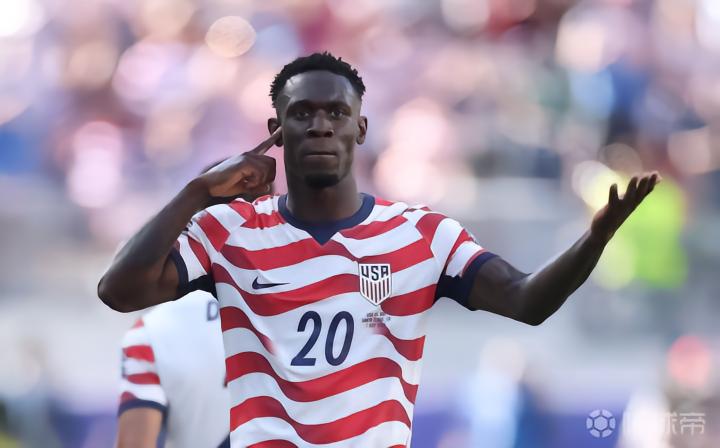
Green: Overall, what pleases me most is that friends and family who previously had limited interest in football have truly fallen in love with the sport through this World Cup. Focusing on the matches themselves, I was deeply impressed by the resilience the US team showed against Bosnia and Herzegovina after Balogun's red card. Tillman sealed the victory with a free kick, and at the moment of the goal and after the final whistle, the entire Levi Stadium crowd sang "Take Me Home, Country Roads," with Pochettino joining in.
Although some controversies arose around the team afterward, those beautiful moments became even more precious because of it.
Anka: The World Cup is a constant reminder that humans share many common emotions.
Football itself is exciting enough, but off the field, fans from all over the world express similar emotions when their teams face life-or-death moments. I completely understand the complaints of a Croatian female fan when her team was on the verge of elimination; I also empathize with the Paraguayan fans who kept taking deep breaths and silently chanting "calm down, calm down" after Germany equalized.
Tenorio: Messi, at 39, is still maintaining a top-level performance; that's my favorite moment. From an American soccer perspective, the US team's 2-0 victory over Australia is equally significant. Although the match against Paraguay was also very exciting, nothing can replace the fervent atmosphere before the Seattle Sounders game and the scene of the entire stadium singing "Take Me Home, Country Roads" after the match.
After covering American soccer for so long, I'm not sure if I'll ever experience such a wonderful national team tournament again.
Weiss: From a macro perspective, the unique celebrations of each team are unforgettable, such as the Netherlands' iconic side-step celebration and Norway's Viking-style shouts. If I had to choose a single moment from the match, I would think of Cabral running to the stands to hug his girlfriend after scoring. That's the purest and most touching aspect of football.
James: The charm that the Norwegian team displayed throughout the World Cup deeply impressed me. Haaland once said that the team hopes to leave a lasting impact on the country, and that's not an exaggeration.
This team has united the entire nation and won the support of a large number of fans overseas. Victory doesn't necessarily make a team more likable, but Haaland and the Norwegian team certainly have.
Matthews: The image of Cabral embracing his loved one after scoring is what impressed me the most. That moment reminded everyone that whether playing or watching a game, what truly matters is the people around you, not just the final score.
Miller: Enzo Fernandez's winning goal against Egypt could have been my choice, but since I was there in person, I'd rather mention the moment when Curaçao's Comenench scored against Germany.
Curaçao ultimately suffered a crushing 1-7 defeat, and the goal, in retrospect, seemed insignificant. However, in the mixed zone after the match, it was difficult to discern which side truly emerged victorious. The Curaçao players were simply overjoyed to have reached the World Cup stage and scored a goal.
Williamson: What makes me happiest is that football has truly become a topic of discussion among the general public.
England's continued progress has sparked ongoing debate in the UK; meanwhile, in the US, more and more people are falling in love with the sport. Of course, I've also witnessed some of the most disappointing moments of this World Cup.
What is the worst moment?
Bushnell: Trump's call to FIFA President Gianni Infantino, and the subsequent controversies surrounding the US team, are, in my opinion, the most regrettable events of this World Cup.
This all continued until the U.S. Round of 16 match against Belgium. What should have been the most important match in American soccer history was instead shrouded in a constant media storm.
On the morning of the match, Trump publicly criticized Balogun's red card decision, becoming the focus of media attention for a considerable period. This external pressure affected the team's mentality, ultimately leading to a humiliating 1-4 defeat for the United States to Belgium.
In just 48 hours, the promising journey of the home World Cup ended in the most disappointing way.
Cardenas: A national leader publicly claiming that he can influence key decisions that benefit his own team will quickly damage the credibility of a World Cup.
This was a dark but unavoidable day in World Cup history.
Horncaster: Remember when Infantino said he would ensure Iran's smooth participation in the World Cup, even claiming he would be willing to travel by bus from Tehran to pick up the team if necessary, and urging calm? Taremi called it a "disastrous World Cup," and his assessment is completely understandable.
The playing conditions for the Iranian team outside their Tijuana base were extremely poor. Even more regrettable was that U.S. Homeland Security Secretary Mullins publicly stated that he jumped for joy after seeing Iran eliminated.
Krafton: Somali FIFA referee Altan was accused by the US government of having links to terrorist organizations and was ultimately denied entry to the United States, thus missing the World Cup. This is undoubtedly one of the most unbelievable events in World Cup history.
To take a lighter approach, consider this: during the World Cup held in the height of summer, FIFA initially banned fans from bringing bottled water into stadiums, only to later lift the ban under pressure. This perfectly illustrates the conflict between the commercial interests of the event and the fan experience.
Stafford Brower: After the Balogun affair, many people realized that even with the World Cup's credibility affected, Infantino could still remain firmly in his position as FIFA president. This was very frustrating.
As long as the major football associations continue to receive their share of the profits, many problems seem to be able to be ignored. This leads us to a pessimistic view of the future.
Green: Without a doubt, the worst event was the Balogun red card incident and the series of chain reactions triggered by Trump's intervention.
Henry has already provided a complete analysis from an American football perspective. If we only consider the match itself, many of my colleagues and I share the same question: how exactly did Tuchel plan his tactics against Argentina? Did Tuchel waste Kane's last World Cup?
Anka: The unfair treatment the Iranian team suffered throughout the tournament is an undeniable stain on this World Cup.
Weiss: The Balogun controversy is undoubtedly the most serious issue.
If we look at it from another angle, I would mention the first-ever water break in this World Cup.
This moment makes one realize that the traditional format of football matches may be changing. Whether the World Cup will be further split up in the future, or even have its traditional two-half structure altered, for commercial reasons, is a question worth paying attention to.
Tenorio: The U.S. Soccer Federation's appeal against Balogun's red card ultimately led to Trump's intervention, which became the starting point of the whole incident.
I believe this was a mistake, and it went against Pochettino's long-held principle: the team is always above the individual. Before the most important game in the team's history, the overall media environment and the positive atmosphere that the team originally had were completely altered.
James: From a personal perspective, the last 30 minutes of England's game against Argentina were extremely agonizing. The team kept retreating and ultimately lost the game; the outcome was already becoming clear.
From a broader perspective, the Balogun affair left me unsure how to evaluate it. Fortunately, the United States ultimately did not defeat Belgium; otherwise, FIFA and Gianni Infantino might have faced an even more serious public relations crisis.
Furthermore, some controversial scenes that occurred before the final and during the halftime break were equally frustrating.
Miller: If I could only choose one image, I would think of Taremi's dejected expression when he declared this World Cup a "disaster".
Judging solely from the treatment during the competition, the Iranian team's experience can hardly be described as fair. Furthermore, the controversies surrounding sexual assault allegations involving several participating players have cast a shadow over the entire tournament.
Matthews: The problem actually arose before the World Cup even started. Visa restrictions prevented fans from many countries from traveling to the games; even the mother of Cape Verdean goalkeeper Voznia was initially unable to enter the country.
The atmosphere of this World Cup could have been much more vibrant if all fans had been able to make it to the stadiums.
Williamson: There were a lot of disappointing images.
After the final, a fan dressed in luxury brand clothing and wearing a scarf representing both teams caught my attention. Such a scarf shouldn't exist in the first place, as it doesn't truly represent either team. Even more disappointing, he seemed only interested in prediction platform data and photos related to the halftime show.
Seeing this, I couldn't help but worry about the future direction of football.