
Even after the 2026 World Cup concluded, related topics and discussions continue. Recently, The Athletic invited 14 writers from different regions to review the tournament, sharing their observations and evaluations of the World Cup from multiple perspectives, including team performance, player contributions, the hosting experience, and future trends.
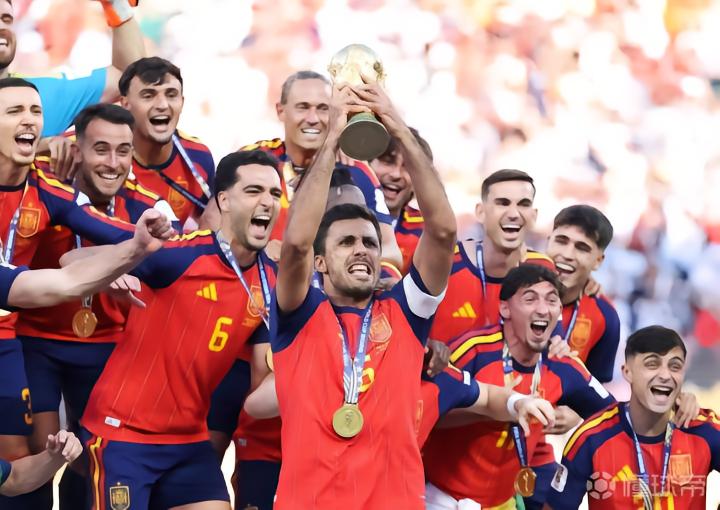
As the tournament concludes and teams return to their clubs, these journalists and commentators from diverse backgrounds offer a comprehensive summary of the 2026 World Cup from their own perspectives, attempting to capture the most memorable moments and stories of this global football extravaganza.
Who will win the next Men's World Cup?
Bushnell : Spain is the biggest favorite. They will be playing at home, and their performance over the past three years has been incredibly convincing; it's hard to find any reason to argue against them. The only uncertainty is that football is full of chance, and no team can lock in the championship a few years in advance.
Horncastle : Without a doubt, I choose Italy; they will replicate the legend of 1982.
Kai : I think Zidane will lead the French team to the top. He has that kind of magic in big games.
Green : Perhaps I still have hope. Portugal has a lot of young, talented players. They will co-host the World Cup in 2030, and hopefully the team can get rid of the tactical problems left over from Martinez's tenure and stop relying too much on Cristiano Ronaldo, the 41-year-old striker who has played almost every game in this World Cup.
Cloughton : France. Their attacking talent is simply astounding. (Of course, I also realized I seemed to have forgotten the lesson I'd learned before – a team's success often depends not only on attack, but also on a solid defense and midfield.)
Cárdenas : The World Cup is being held in Spain, right? Then I'm ready to witness them successfully defend their title.
Broll : Many of the key players in this Spanish team are still at the peak of their careers four years later, including Pedri, Gave, Cubas, Baena, and Yamal. They also have three world-class goalkeepers: Simon, Garcia, and Raya.
Weiss : France. Mbappe led his team to avenge their previous defeat in Spain, winning their third World Cup title.
Tenorio : France. Their squad is virtually flawless.
James : My predictions for this World Cup semi-final were wrong, so it's even harder to predict what will happen four years from now, and we can't even be sure which teams will qualify for the next World Cup. Surely Italy won't miss out again? Out of support for France, I'm still going with the Bleus. Their future attacking line remains strong: Due is 25, Sergi is 26, Barcora is 27, Olise is 28, and Mbappe is 31.
Anca : Intuitively, I chose France; in my heart, I prefer England; but rationally, I favor Spain.
Matthews : Carl's predictions are very accurate. I'll offer a few less popular choices: Morocco, Brazil, or Germany.
Miller : I secretly hoped to win the title with the host Morocco, but as I predicted before this World Cup, my intuition is often unreliable, so I rationally chose Spain to defend their title.
Williamson : France. I still can't understand why they completely lost their form against Spain.
Mexico, Canada, and the United States – who will be the first to win the Men's World Cup?
Bushnell : The United States—However, it may be a long time coming, or even a distant dream. All three teams have a long way to go before truly reaching the World Cup. Mexico has a deep-rooted football culture, but its youth training system and resource investment are still insufficient; the United States has ample funding and well-developed sports infrastructure, but its football culture is relatively weak. However, in the long term, especially after this World Cup, as a new generation of fans grows up, starts families, and passes on their love of football to the next generation, more and more young people will participate in football, and the US football population and fan base are expected to continue to expand. Although US football culture is unlikely to reach the level of traditional powerhouses in South America and Europe, decades from now, they have every opportunity to build a men's national team that is competitive at the World Cup.
Horncastle : If Trump were to return to power, perhaps he could team up with "Johnny" Infantino to help the United States realize its World Cup dream. Since they were able to push for the repeal of Balogun's red card ban, they might be able to do even more.
Kay : That's a very difficult question. In the history of the World Cup, only eight countries have ever won the men's World Cup, and only six teams have done so in the last 60 years. The most recent champions are Argentina in 1978, France in 1998, and Spain in 2010. Even a team like England, which has consistently been a world-class team and frequently reaches the quarterfinals or even the semifinals, is still far from truly winning the title, let alone the three CONCACAF countries.
Green : Of the three teams, the US has the best resources and is gradually developing a football culture, which is why I chose them. However, the practical barriers are still very high. It's worth noting that only the US women's national team has ever won the World Cup, and they've done so four times. Realistically, none of these three countries have a chance of winning the title in the short term, but that doesn't mean they lack room for growth.
Anka : The United States is the most likely. But even so, I think it will probably be about 30 years before any of these three teams truly reach the World Cup semi-finals. To become a football powerhouse, a well-developed youth training system and infrastructure are fundamental; but to win the World Cup, besides strength, luck is also needed, and one must overcome various challenges such as injuries, red cards, and penalty shootouts.
Brohl : None of that is possible. I even think it will never happen. All three teams face huge obstacles; it's difficult to simultaneously have top players, excellent coaches, and the right opportunities in the right era. While football should remain optimistic, at both the club and national team levels, victories have long belonged to the traditional powerhouses. Unless the uneven distribution of football resources is addressed, the current格局 (structure/pattern) will be difficult to break.
Cardenas : The most obvious answer is the United States. They have 350 million people, a strong economy, and well-developed infrastructure. But I agree with Seb's point that it's unlikely I'll see a CONCACAF team win the World Cup in my lifetime.
Weiss : Any one of the three teams winning the World Cup would shock the world. If I had to choose, I would support the USA. But like Seb, I'm not too optimistic about them achieving their goal in the short term. Perhaps we can set a more realistic goal first—hopefully, by the 2030 World Cup, at least one of the three teams will be in the quarterfinals.
Tenorio : I don't think any of the three teams can win the title. If I had to choose one, I would pick Mexico. With their home advantage, they might have a chance to go further.
James : Do these three teams really have a chance to win the World Cup in the future? This isn't meant to disrespect them. I'm not even sure I'll see England win the World Cup again. Currently, none of these three World Cup host countries have shown a clear path to becoming the world's number one team. Incidentally, I've been involved in youth soccer training for many years, but I've always struggled to understand the prevalent "pay-to-play" model in the US.
Matthews : If you look at the hardware conditions, the United States is undoubtedly the strongest; but if you look at the football culture and historical atmosphere, Mexico has the advantage.
Crafton : Neither side can win. However, the United States has a good chance of winning the Women's World Cup next year, so let's wait and see.
Miller : One frustrating aspect of this World Cup is that many American online bloggers, despite their lack of football knowledge, strongly claim that the US will definitely win the World Cup if it seriously develops football. This view is unrealistic. Of the three teams, I think Mexico has the best chance, but ultimately, I doubt any team will achieve their dream.
Williamson : I can't be sure if all three teams will ultimately achieve their dreams, but if I had to predict the order, I would choose: the United States, Mexico, and Canada.