
According to The Athletic, an international sports integrity watchdog has issued seven warnings about potential betting irregularities during the 2026 Men's World Cup, raising concerns about match-fixing risks. FIFA's previous investigation, however, stated that no suspicious betting activity or signs of match-fixing were found.
The controversy stems from a monitoring report by the Group of Copenhagen, an independent international network primarily responsible for detecting, investigating, punishing, and preventing match-fixing in sports events. The group conducted a comprehensive integrity monitoring operation during the 104 matches of the 2026 World Cup and identified several potentially suspicious betting activities.
The European Commission has not yet released the full report, but has published a summary. According to sources, several events listed as potentially unusual include:
South African player Themba Zwane was sent off with a red card in the 84th minute of the World Cup opening match against Mexico;
In the group stage match between Spain and Cape Verde, the US cryptocurrency prediction market platform Polymarket raised $4.8 million (approximately £3.6 million) in betting on whether Spain could beat Cape Verde, while the match ultimately ended in a 0-0 draw.
In Spain's 4-0 victory over Saudi Arabia, the Video Assistant Referee (VAR) team took three and a half minutes to confirm the disallowance of Milan Torres' goal.
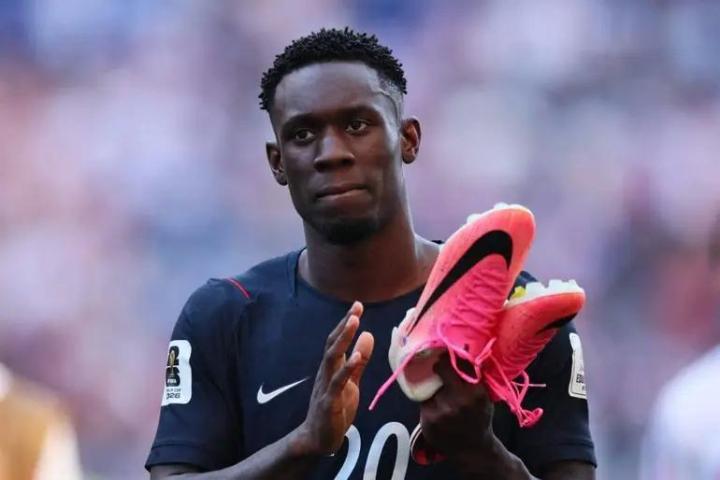
In addition, the report highlighted the red card incident involving American forward Folarin Balogun.
According to sources, Polymarket launched a prediction market on July 2nd called "Will Balogun play against Belgium?" On the same day, Balogun was sent off with a straight red card in the United States' Round of 32 match against Bosnia and Herzegovina.
FIFA's Disciplinary Committee only confirmed on July 5th that Balogun could participate in subsequent matches due to the suspension of his ban. The Copenhagen group report noted that among the other 14 players sent off with red cards in this World Cup, no similar betting market existed, and none of these players received exemptions from their bans. Balogun was the only player whose ban was being predicted to be lifted.
The Copenhagen Group is part of a cooperative system under the European Commission’s Macon Convention, which aims to combat match-fixing by changing international legal mechanisms.
The organization has formally requested FIFA to provide a written explanation regarding the Balogun incident. The Athletic has contacted FIFA and Polymarket for their responses to the findings of their investigation.
Christian Kalb, an industry expert who has long been involved in gambling regulation, said that the anomalies discovered by the Copenhagen group do not necessarily mean that the match was manipulated, and could also be caused by other factors.
He told The Athletic, "These anomalies could stem from non-manipulation factors such as changes in odds or market liquidity, and we must be very careful in our assessment."
FIFA Integrity Task Force: No suspicious betting found at the World Cup
The Copenhagen team's monitoring operation was conducted in collaboration with the FIFA Integrity Task Force, an independent body along with the European Commission.
However, on Tuesday, FIFA's Integrity Task Force released a report stating: "No suspicious betting activity related to the matches was found throughout the World Cup, nor were there any signs of match-fixing."
However, just one day later, the Copenhagen group released its monitoring results, stating that it had detected seven "yellow alerts" during the World Cup.
According to the organization's definition, a yellow alert means: "There are multiple unusual signs, including unexplained odds fluctuations, social media rumors, or information from unknown sources."
The Copenhagen Group categorized events into four levels based on their risk:
Green: Normal;
Yellow: Slightly increased alert level;
Orange: Increase vigilance;
Red: Highest level of alert.
"The unusual behavior identified by the Copenhagen team could simply be due to odds changes or adjustments in betting market liquidity," said Kalbu. "Many factors can explain this, and it doesn't necessarily mean manipulation."
"The real problem is that if these events involve conflicts of interest, or if someone has inside information, then the risk increases."
He further explained: "Market prediction can indeed help us discover some anomalous behavior, but we must be careful because they can also be used for risk hedging."
“Traditional betting companies may encounter situations where a large number of users bet on a clearly stronger team to win. If the betting amounts are too large, it can pose a risk to smaller betting companies, so they may hedge through prediction markets like Polymarket.”
"In this way, they are actually selling the result of strong teams failing to win, using it as an insurance mechanism to reduce potential losses."
The World Cup betting market reached $240 billion.
The Copenhagen Group estimates that global betting volume during this World Cup will reach $240 billion, roughly double that of the 2022 Qatar World Cup.
The agency stated that it closely monitored 15 World Cup matches, paying particular attention to the final round of the group stage, and also conducted integrity risk analysis on 12 major controversial incidents.
"The scale of betting on the World Cup is so enormous that it's difficult to simply deduce what's wrong with it," said Kalb. "Each match could involve billions of pounds in betting."
This World Cup also marks the first time the Copenhagen Group has continuously monitored prediction markets, including Polymarket and FIFA's official partner Kalshi.
Because these prediction markets are in a phase of rapid development, regulatory rules are not uniform across different regions of the world, making regulation quite difficult.
Chad Bennon, a gaming and hospitality analyst at Macquarie Group, told The New York Times, "The performance of the prediction market during the World Cup exceeded all our expectations."
The Copenhagen panel noted in its report: "These prediction markets present unprecedented problems: they allow users to place bets on a large number of different events, often anonymously, and using payment methods that are difficult to trace. Monitoring them is a first in the history of international sporting events."
The differing conclusions reached by FIFA and the Copenhagen panel regarding irregularities in betting during the World Cup have sparked further discussion about how to regulate integrity in future major sporting events.