Special Contributor | Chen Qiushi
“We’ve been waiting for this day for a long time,” said 58-year-old Maria Gomez, a caregiver at a local nursing home in Broxton. She immigrated to the United States from Santiago Island in Cape Verde in 1986 and has lived in Broxton for nearly forty years. Both of her children were born here, but her family’s television is always on Portuguese channels, watching those players of Cape Verdean descent running on the European field.
“In the past, when we watched football, we watched other countries’ national teams because we didn’t have our own teams to watch,” she said.
"Things are different now."
Brockton, in southeastern Massachusetts, is a typical small American town. The streets are narrow, lined with old wooden houses and unassuming shops; you might drive by and not give them a second glance. On this very street, the Brockton Cape Verde Association is housed in an old fire station. Two flags hang side-by-side in front: one is the American flag, and the other, a dark blue flag with ten yellow stars, is the flag of Cape Verde. Those ten stars represent the ten islands of Cape Verde.
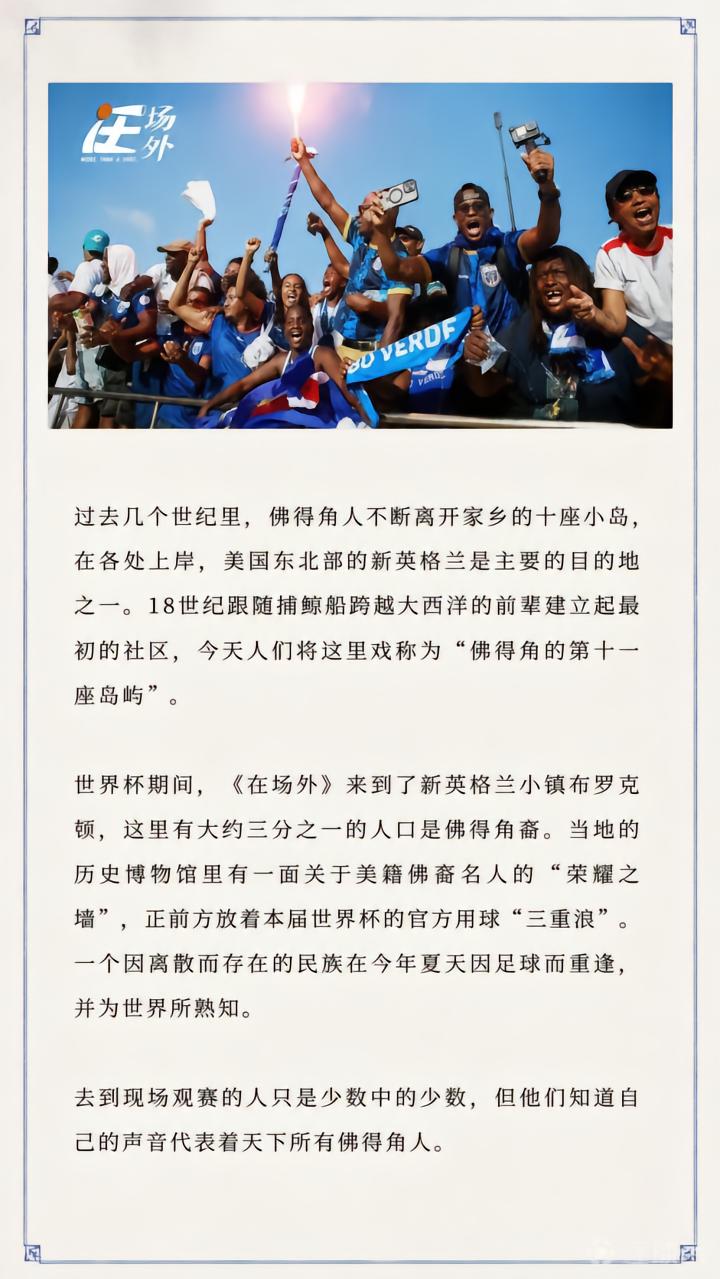
This year, the Cape Verdean national football team qualified for the World Cup finals for the first time in its history. This island nation, comprised of ten volcanic islands located off the coast of West Africa, has a population of only about 570,000, making it the second smallest participating country in World Cup history after Iceland in 2018. Last October, they defeated Swaziland 3-0 at home, securing direct qualification as group winners. That day, the Cape Verdean government even gave the entire country a half-day holiday so everyone could watch the game.
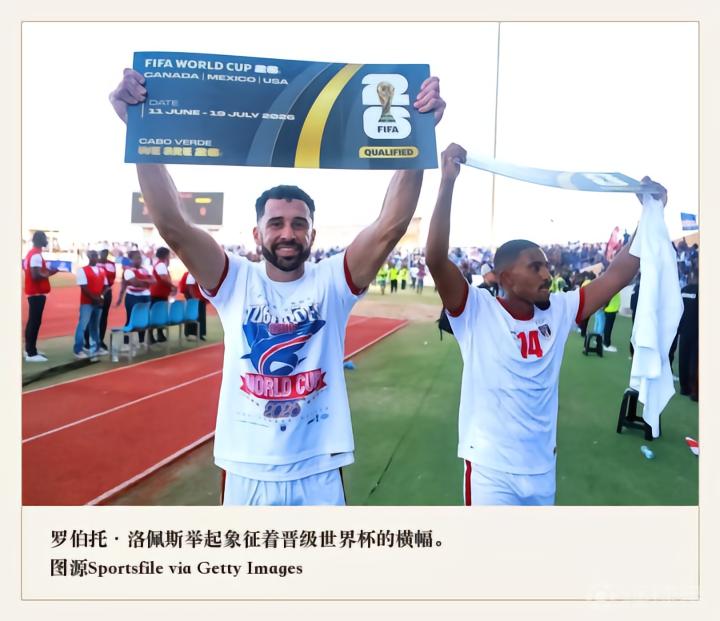
The day the news came, Gomez called her mother, who was still in Cape Verde. "We both cried on the phone for almost ten minutes," she said, "neither of us could say a complete sentence."
A nation that is "always leaving"
To understand why so many Cape Verdeans gather in New England, we need to first introduce New England itself.
New England refers to the six states in the northeastern corner of the United States: Massachusetts, Rhode Island, Connecticut, Vermont, New Hampshire, and Maine. Its total area is less than two Jiangsu provinces, with a population of around 15 million. Boston is the central city of this region, the site of the first British colony in North America. Long winters and a rugged coastline have made the region a haven for centuries, with people relying on the sea for their livelihoods: whaling, fishing, shipbuilding, and later textile mills and cranberry fields. Red brick buildings, white wooden churches, Ivy League universities, and lobsters are the most common images that outsiders associate with it.
However, for Cape Verdeans, New England is a land of opportunity to land.
Beginning in the late 18th century, American whaling ships based in New Bedford, Massachusetts, frequently stopped at the Cape Verde Islands for supplies and to recruit crew. The first recorded Cape Verdean to arrive in the United States dates back to around 1790. A truly large-scale migration occurred from the 1880s to the 1920s. These people are considered the first Africans in history to voluntarily cross the Atlantic.
As whaling declined in the late 19th century, some Cape Verdeans simply bought up old sailing ships discarded by American shipowners and converted them into "packet ships" that traveled between the archipelago and New England, thus taking control of this transatlantic route. New Bedford was therefore known as "Ellis Island of the Cape Verdeans." One of these schooners, the Ernestina, sailed until 1965, becoming the last sailing ship to transport immigrants from across the Atlantic to the United States.
After landing, many Cape Verdeans made a living in cranberry fields, docks, and textile factories in southeastern New England. In 1975, Cape Verde gained independence from Portugal. Because of the long period of separation and the wide distribution of its population, Cape Verdeans often say that there are more compatriots living off the island than on the island itself; New England is sometimes jokingly referred to as Cape Verde's "eleventh island."
Joe Miranda, chairman of the board of the Brookton Cape Verde Association, put the history more bluntly. “To understand how Cape Verdeans migrated to the United States, you have to know that Cape Verde only has ten islands and very few resources,” he said. “So there are actually more Cape Verdeans living abroad .” He estimates that there are now about 570,000 people on the islands, while more than one million Cape Verdeans are scattered around the world, a large portion of whom are in the United States.
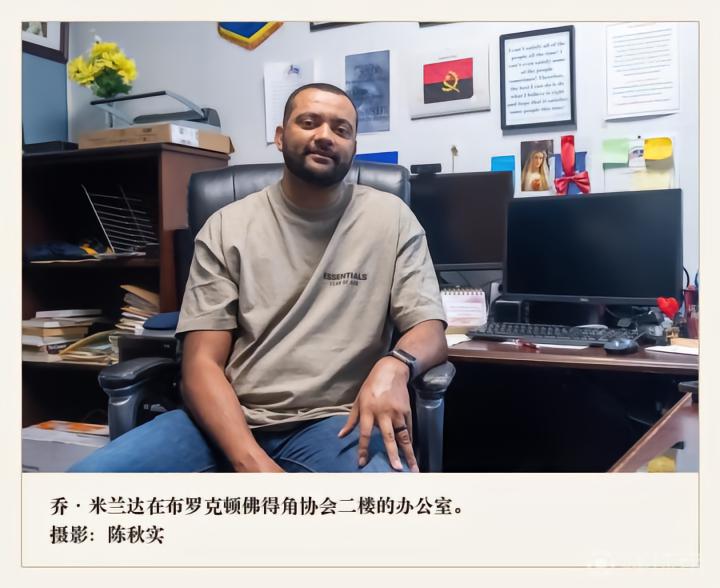
In the past, they relied on ships; now they rely on airplanes. He mentioned that one of the association's directors had worked on that ship that traveled back and forth across the Atlantic; and now, Cape Verdean airlines offer direct flights from the capital, Playa, to Providence, Rhode Island, a journey of six or seven hours. When Miranda himself came to the United States from Cape Verde in 1995, his parents had already settled there. "Usually, the family members who arrived first brought the others over," he said, "and then everyone stayed."
Boat after boat, one after another, brought their families here, and more than two hundred years have passed just like that.
The column not on the table
Cape Verdean Americans today are a group that is difficult to fit into a ready-made box.
Their ancestors were descendants of Portuguese colonists and West Africans who met on these desert islands, and their skin colors varied. They spoke Creole, a new language based on Portuguese but mixed with West African languages. Most of them were Catholic, and many still held Portuguese surnames. Historians studying this group have long noted that Cape Verdeans have long occupied an awkward middle ground in the United States: in the eyes of white people, they were not white; within the black-and-white dichotomy of the United States, they did not fully identify as African American, and many families simply identified themselves as "Cape Verdeans," nothing more, nothing less.
So in New England, Cape Verdeans are more likely to be bound together by language, churches, associations, and kinship networks. Miranda estimates that about a third of Brokton's population of just over 100,000 is of Cape Verdean descent. Besides Brokton, there are large Cape Verdean communities in Providence, Pottack, New Bedford, Fall River, Boston, and even Connecticut. The first generation typically works blue-collar jobs in nursing homes, construction sites, docks, and factories. By the second and third generations, the children were born in the US and speak English better than Creole; some became police officers, nurses, teachers, and even the mayor of Brokton is of Cape Verdean descent. In many homes, Creole has become a language only spoken by grandparents.
The invisible distance between the United States and Cape Verde is something Miranda deals with every day.
The table that flattened the Atlantic Ocean
In Brokton, this generational legacy has a specific address: the old fire station with two flags flying. The Cape Verdean Association, founded in 1977, will be fifty years old next year. "We're practically grandparents now," Miranda said half-jokingly. He explained that many other Cape Verdean organizations were "born" from this association: people come here to learn how to start a community, go back and establish their own organizations, and the legacy continues from generation to generation.
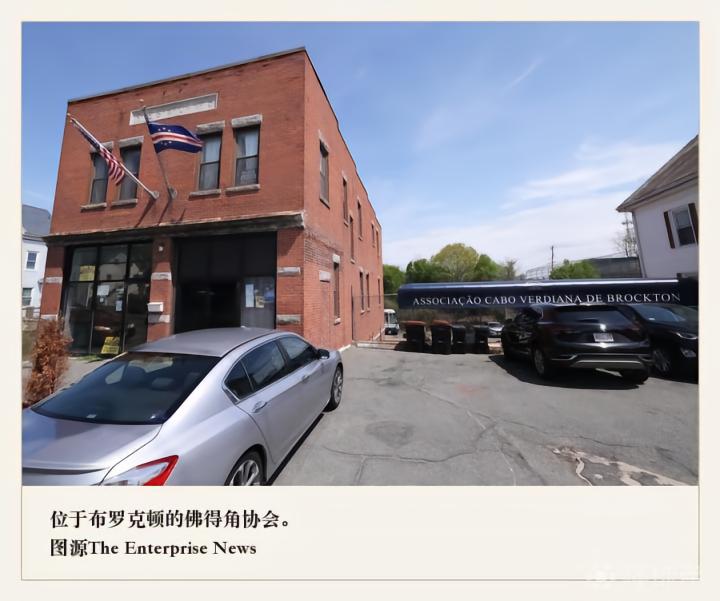
There's also a consular service point downstairs at the association. The Cape Verdean consulate is in Quincy, Massachusetts, while the embassy is far away in Washington, D.C. Miranda said that those who really need passports and birth certificates are often elderly people born in Cape Verde, most of whom don't drive and aren't used to computers and email.
"So we set up this point in the community to help them bridge the gap between Cape Verde and the United States."
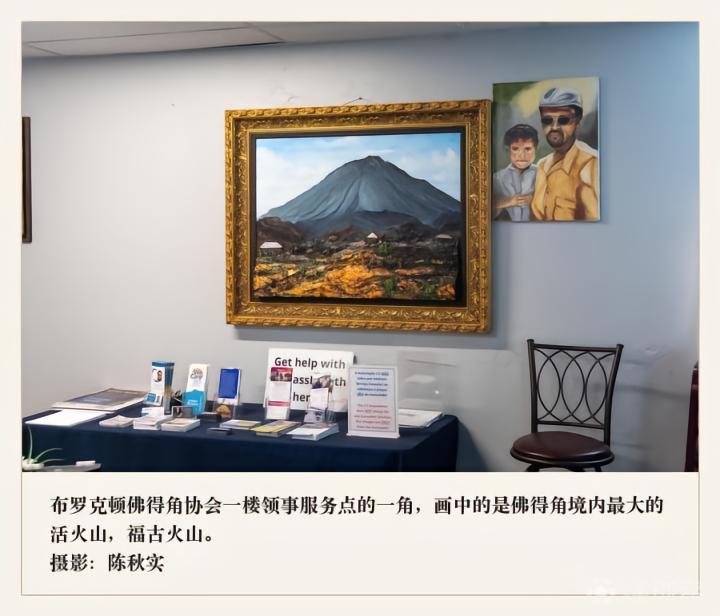
The exact nature of this hurdle is laid bare on that document processing table: a person born on Santiago Island, who has lived in Brockleton for decades, must prove their identity to both countries. Her birth record is in the parish register across the Atlantic, while her grandson attends the public school on this street. A passport and a birth certificate are the unbroken thread connecting these two ends.
Memories in that building on the street corner
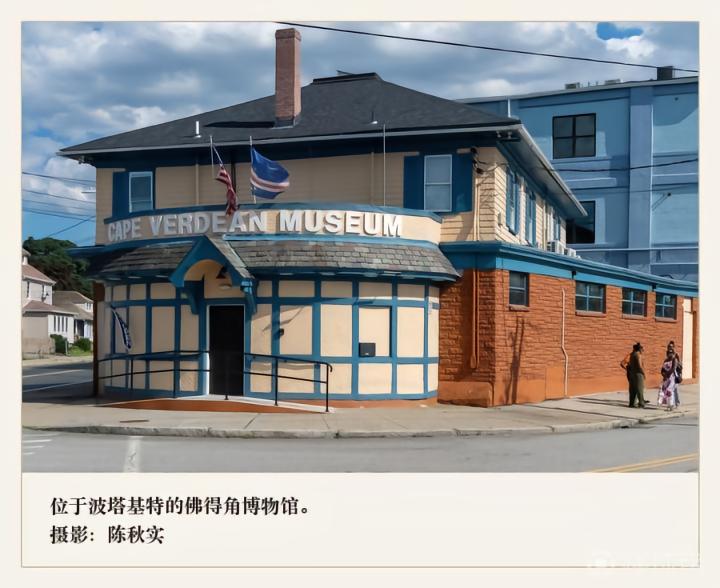
In Pottakett, Rhode Island, the nation's memory is preserved in a different way.
The Cape Verde Museum is located on a street corner, in an inconspicuous two-story building. Apart from the sign and national flag at the entrance, its exterior is not much different from the surrounding houses. It is of the same age, with the same facade, and quietly sits on an ordinary residential street, easily missed if you are not paying attention. But once you push open the door, this small building contains an entire family history that spans the Atlantic Ocean.
The exhibits here are few, but each piece is treated like a treasure. There are several stone cannonballs from the era when these islands were repeatedly attacked and defended. There's a small library, with an entire shelf filled with books about Cape Verde, in various languages and thicknesses, as if someone spent decades painstakingly collecting books written in Cape Verde scattered around the world, one by one, and bringing them all to this one room. There are also traditional Cape Verdean cooking utensils, things that were used for a lifetime on the island and later in American kitchens.
What the staff are most proud of is a "wall of honor".
On the wall hang names of Cape Verdean Americans who have made a name for themselves in American society. One of them is Hakeem Jeffries, the House Minority Leader and the only member of Congress of Cape Verdean descent. According to genealogists, his great-grandfather, Manuel Gomes, was born in Cape Verde, his great-grandmother, Rose Pina, was born in Massachusetts, and his parents were also from Cape Verde. This man, who now attends meetings in Washington and speaks on television, also traces his lineage back three generations to that sea.
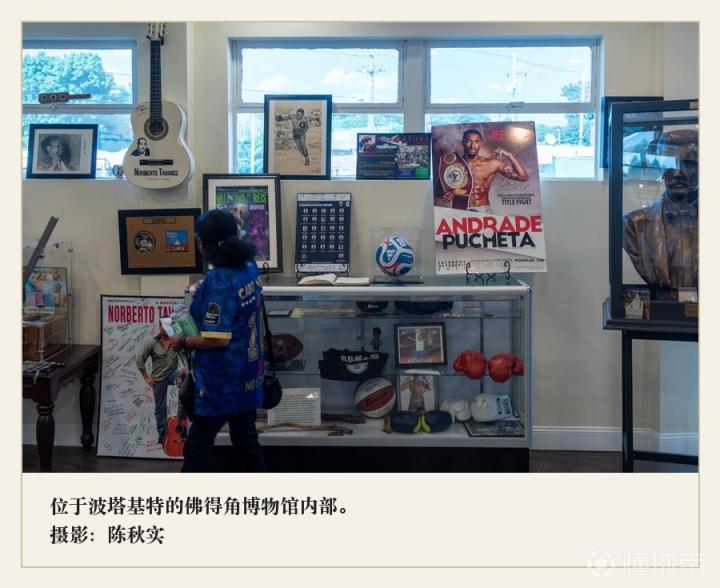
The meaning of that wall doesn't need to be written on the explanatory plaque: the descendants of those who boarded the ship back then have come here.
A soccer ball sat against the wall. Executive Director Joe Damora had gone to the Cape Verde team's training ground himself and had each player sign it. It sat there quietly in the same small building as the stones, cannonballs, old cooking utensils, and the bookshelf, as if the latest page of this story had just been tucked in.
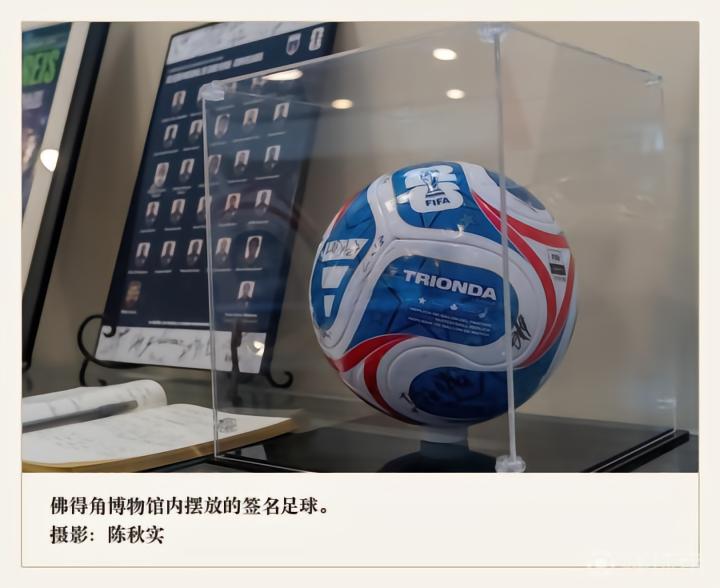
Damora said that every exhibit here was donated piece by piece by the overseas Chinese community. There were no purchases or loans; they all came from families within the community: things they brought with them when they crossed the ocean and things they couldn't bear to part with. Because of this, this place is more like a shared attic for the entire overseas Chinese community. Whenever someone is willing to donate an old item, it adds a concrete footnote to the story of Cape Verdeans in America.
Damora is reluctant to take credit for himself or the museum. In his view, the objects themselves are the ones that truly speak, because they all belonged to real people who actually made the crossing. "It's not us telling the story," he says, "it's the objects in the museum that are telling the story."
What reunited this scattered ethnic group this summer was football. "On many islands, football is the only sport you can play growing up; it's our everything," Miranda said. There's no baseball, no softball, no volleyball. Only in recent years have basketball and volleyball become popular on the islands.
So when the team actually made it to the World Cup, "that day was almost unreal," Miranda said. "Our country is so small, I never thought I'd see Cape Verde in the World Cup in my lifetime." And the decisive match was played on Cape Verde's home soil, which added another layer of significance for them.
From Atlanta to Miami
Cape Verde's group stage matches weren't scheduled in New England. The three games were played in Atlanta, Miami, and Texas, with the opening match against Spain. Miranda flew to Atlanta specifically to watch the opening game. Although there weren't many Cape Verdeans in Atlanta, the turnout of Cape Verdean fans was astonishing. They came from all over the United States, and even from Portugal and Cape Verde itself. "That's just how Cape Verdeans are; we're incredibly proud of anything they do," Miranda said.
As he walked onto the pitch, a Spanish fan patted him on the shoulder and said, "You guys are doing great to qualify, but you're probably going to lose 5-0 today." The first half ended 0-0. Towards the end, even the Spanish fans started applauding the Cape Verdean goalkeeper; every time he caught the ball, the entire stands erupted in applause. "The atmosphere was indescribable," he said.

Ultimately, only a minority can attend in person. Airfare, travel expenses, and accommodation are a significant barrier for many families. Gomez said that the community relies on churches and mutual aid societies to pool money to help some families cover the costs, but this only reaches a limited number of people. "Not everyone can go in person," she said, "but those who can go represent all those who cannot."
The story that followed has been written into World Cup history: Cape Verde drew all three of its group stage matches and advanced as the second-placed team in its group, becoming the first team since Slovakia in 2010 to reach the knockout stage in its first appearance in the tournament, and also the country with the smallest population to ever reach the World Cup knockout stage.
On July 3rd, in Miami, in the Round of 32, the opponent was the defending champion Argentina. Messi opened the scoring in the 29th minute, but De Roy Duarte equalized in the 59th minute. In the 92nd minute of extra time, Lima put Argentina ahead again. In the 103rd minute, Lopez Cabral curled a shot from outside the penalty area to equalize again, a goal many consider the greatest in Cape Verdean football history. In the 111th minute, Romero's header deflected off Cape Verdean defender Dinei and into the net – an own goal that sealed the victory. 3-2, Cape Verde was eliminated. Woznia made 10 saves in that match, 5 of which blocked Messi.
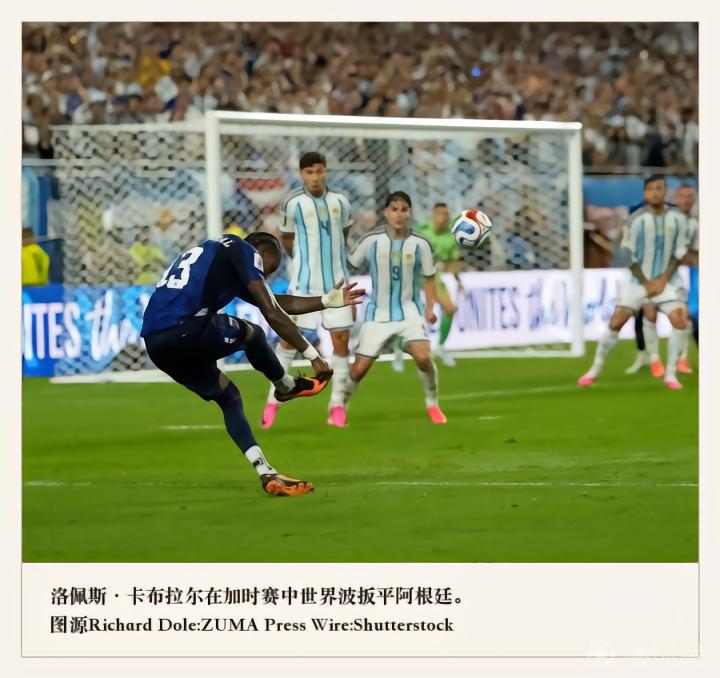
Both Duarte and Cabral, who scored the goals, were born in the Netherlands. The children of those who went abroad returned to score for their homeland.
Miranda was on vacation on a cruise ship for that game. There was no viewing party on board; he and his family huddled around their phones and laptops to watch the live stream. "The phone notifications were a minute or two ahead of the computer screen," he recalled with a laugh, as the score popped up first, and everyone on board felt their hearts sink. "It wasn't the result we hoped for, but I could accept it," he said, "because they proved how well this team can play."
Every corner of the world
What does the World Cup mean to a country with only about half a million people? Miranda's answer was brief.
"It tells the world that even the smallest country has opportunities."
This celebration had already crossed the Atlantic. Miranda said that during the few days he was exchanging emails with the reporter, he came across a video: a group of Cape Verdeans in China were having their own World Cup viewing party, speaking Chinese and Cape Verdean Creole. "Cape Verdeans are really everywhere in the world," he said, "like Chinatown, you can run into Cape Verdeans wherever you go."
There's also a rumor circulating that Cape Verde might come to China for a friendly match. Miranda is excited about it. For Brockton, however, the World Cup is over, the team has gone home, and what remains is something else. "It's still too new," Miranda said. But he believes the community will continue to support the national team, making the next tournament four years from now even more enjoyable.
"We don't want this to be our only World Cup."