
According to Yahoo Sports, after the Japanese team was eliminated in the round of 16 of the World Cup, Takefusa Kubo expressed his concern about the prospects of the younger generation taking over.
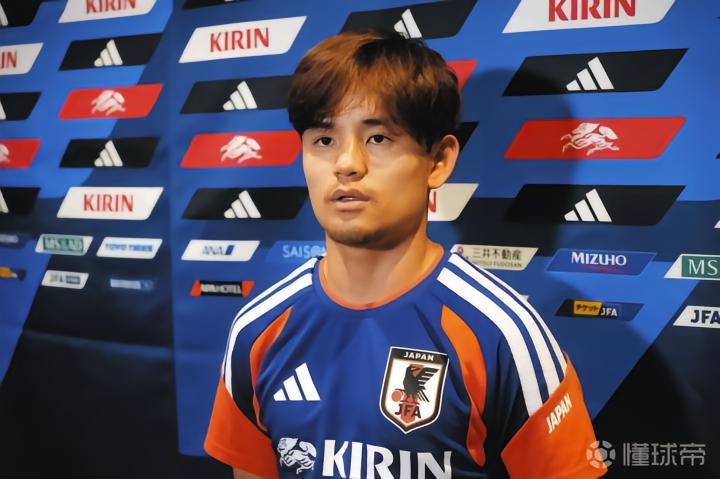
Japan lost to Brazil in the Round of 16 of this World Cup, and Takefusa Kubo, participating in his second World Cup, ended his journey with regret. The 25-year-old attacker frankly stated after the match: "In my opinion, how many players younger than me will make the World Cup squad four years from now? Unless the current players' form declines drastically, the lineup will likely be the same group of people. The current group is very strong, and I don't think there are enough young players to make the cut."
This World Cup ended with Spain winning the title, boasting 19-year-old Yamar and Kubasi, who have become the core of their attack and defense. Of Japan's 26-man squad, 13 were making their World Cup debuts, with only goalkeeper Ayako Suzuki, defensive midfielder Kaishu Sano, and left wing-back Keito Nakamura truly leaving a lasting impression. Only Ayako Suzuki fits Kubo's description of the "younger generation." Other members of the younger generation, Junnosuke Suzuki, Kento Shiogai, and Keisuke Goto, had limited playing time and it's difficult to say they delivered convincing performances.
The core of the Japanese team's lineup for this tournament is the Tokyo Olympic generation, primarily composed of players born in 1997 and 1998, such as Ritsu Doan, Ayase Ueda, Daizen Maeda, and Takehiro Tomiyasu, all in their prime. Most of them are participating in their second World Cup and will be over 30 in four years. Of course, there are also players like Junya Ito, who at 33 not only haven't declined but are actually improving, but without the younger generation to catch up, the team's sustainable development is impossible.
Under Hajime Moriyasu's leadership since 2018, the core of Japan's improved team after the 2022 Qatar World Cup was the Tokyo Olympic generation. With the addition of Kaoru Mitoma and Hiroki Machida, who missed this World Cup due to injury, this generation boasts abundant talent. How to break free from this "reliance" on the Tokyo Olympic generation will be a challenge for the next four years. With 19-year-old Ryunosuke Sato, who has already transferred to Valencia in La Liga, leading the way, it remains to be seen how many of these young talents will make it into the national team.
Hajime Moriyasu's term has been unusually extended by six months, and the new Japanese national team will start afresh with an international friendly match in Miyagi on September 24 (opponent to be determined). Building upon the core of this World Cup squad, the team will likely add new faces, and the coach's selection will also be closely watched.