
The "curse" that the Ballon d'Or winners would have a poor performance in the World Cup the following year has only been broken once in nearly 70 years.
The Ballon d'Or official website reviewed historical data, revealing that this phenomenon has persisted since the award's inception in 1956. The so-called "Ballon d'Or curse" may seem contradictory to the highest individual honor in football, but it has indeed existed historically. In the 1958 World Cup, Spain, the team of 1957 Ballon d'Or winner Alfredo Di Stéfano, failed to even qualify, which is considered the beginning of the "curse."
Subsequently, Simonsen, who won the award in 1977, was also unable to participate in the 1978 World Cup because Denmark failed to qualify. Sivori (Italy) in 1962 and Ronaldo (Portugal) in 2014 were both eliminated in the group stage. Five other Ballon d'Or winners finished as runners-up in the following year's World Cup: Rivera (Italy) in 1970, Cruyff (Netherlands) in 1974, Rummenigge (West Germany) in 1982, Baggio (Italy) in 1994, and Ronaldo (Brazil) in 1998.
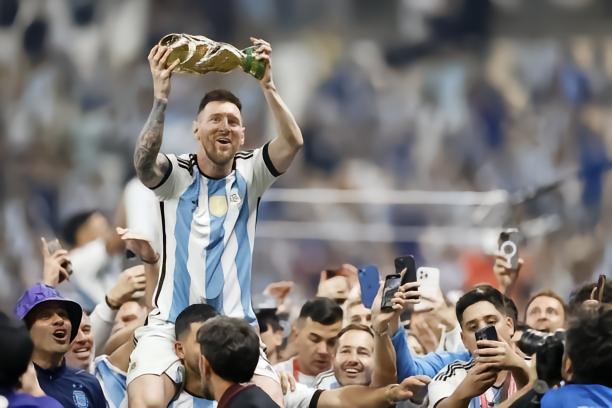
This "curse" lasted for 66 years and spanned 16 World Cups, only turning around in 2022. Lionel Messi, the 2021 Ballon d'Or winner, led Argentina to victory in the 2022 Qatar World Cup, breaking the trend. However, the 2022 World Cup was held at the end of the year for the first time due to weather conditions, and the Ballon d'Or had already been awarded to Karim Benzema in October of that year. If we take Benzema as a benchmark, his absence due to injury and France's loss to Argentina in the final would mean the "curse" still exists.
The 2026 World Cup also proved this point. Ousmane Dembélé, the 2025 Ballon d'Or winner and a key player for the French team, ultimately saw them eliminated by Spain in the semi-finals, ending their run in the top four.