On July 24, TA revealed that during the 2026 World Cup, U.S. Customs and Border Protection (CBP) launched a series of enforcement operations against counterfeit World Cup merchandise, seizing more than 445,000 infringing items, including a large number of pirated national team jerseys.
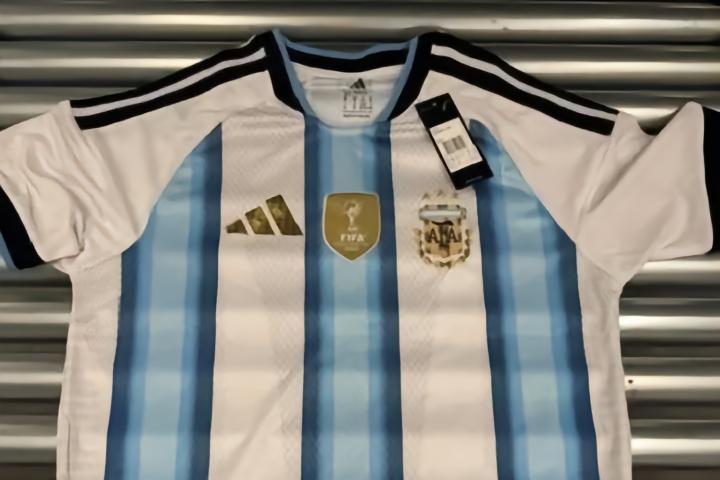
U.S. officials stated that these illicit transactions caused approximately $32 million in economic losses to related industries. Among all the counterfeit jerseys seized, one style appeared most frequently—the Argentina national team jersey bearing the number "Messi 10".
With the World Cup final being held at MetLife Stadium in New Jersey, located within the New York metropolitan area, and the tournament entering its final stages, the United States has intensified its crackdown on the sale and distribution of illicit goods.
Among them, "Operation Final Whistle" became one of the important operations launched by U.S. Customs and Border Protection to target the smuggling and sale of World Cup merchandise.
The most frequently seized counterfeit jerseys in this operation were Messi's Argentina number 10 jersey.
The most popular name in the counterfeit jersey market still belongs to Argentine legend Lionel Messi.
Fran Russo, field operations manager at the U.S. Customs and Border Protection’s New York office, told The Athletic, “The most popular counterfeit jerseys are still Messi’s. We’re seeing a lot of counterfeit Messi jerseys because of his outstanding performance at the World Cup. Of course, we seize a wide variety of items, but the most popular players tend to appear in the most counterfeit goods.”
Around the time of the World Cup final, numerous temporary stalls appeared in popular tourist areas such as Times Square in New York City. These stalls typically sold Argentina team jerseys for between $30 and $40, while the official Adidas version cost around $110.
With large numbers of Argentine fans traveling to the New York area to watch the game, celebrate the team's advancement, and even gather there after the final defeat, the "Messi 10" jersey has become the most purchased and worn style by fans.
When reporters from The Athletic asked some fans whether their jerseys were authentic, many did not deny it, but directly admitted that the jerseys were low-priced counterfeits, and said that they were purchased in the United States or online.
For many fans, the high price of authentic jerseys is a major reason for choosing counterfeit versions. An official jersey costs over $100, while a counterfeit version may only cost a third or even less.
In the New York area alone, 65,000 items were seized, and 1,400 flights and cargo were inspected.
U.S. Customs stated that in the New York area alone, law enforcement agencies completed approximately 2,000 package seizures and inspected 1,400 flights and cargo shipments, ultimately seizing approximately 65,000 illegal items.
Meanwhile, other law enforcement agencies also launched joint operations in the 11 World Cup host cities in the United States.
Among them, the National Intellectual Property Rights Coordination Center and other departments, under the name of "Operation Team Player," conducted surprise inspections of illegal sales stalls around stadiums and in the city center.
The operation has yielded significant results:
Approximately 16,000 counterfeit goods were seized in the Miami area;
Approximately 12,000 items were seized in the Houston area;
Canada, another host country of the World Cup, also seized approximately 16,000 items in Toronto.
Russo stated that this phenomenon is not unique to the World Cup; similar situations are also very common during major sporting events such as the Super Bowl in the United States.
He said, "Just like with the Super Bowl, we always see a significant increase in related merchandise shipments before the final, and even after the game ends."
Counterfeit goods involve not only copyright issues, but also the flow of criminal funds.
U.S. Customs and Border Protection stated that their crackdown on counterfeit World Cup merchandise is not solely aimed at protecting brand intellectual property.
More importantly, they hope to safeguard economic security, prevent profits from illegal trade from flowing into the hands of criminal organizations, and prevent issues such as forced labor from profiting through the supply chain.
However, Russo also admitted that it is not an easy task to make fans who choose to buy counterfeit goods because the price of genuine products is too high realize the risks involved.
He said, "We need to further strengthen public education so that consumers understand the risks behind these products."
Russo points out that the funds generated from purchasing counterfeit goods could ultimately flow into various criminal activities, including:
"From supporting terrorism-related activities to money laundering and other illegal activities."
He hopes fans will realize that buying counterfeit goods is not just a simple act of cheap consumption, but could be part of a complex and illegal supply chain.
Six to seven out of ten counterfeit goods come from China and Hong Kong.
According to U.S. Customs data, approximately 60% to 70% of illicit goods entering the U.S. market by air and sea originate from mainland China and Hong Kong.
The United States has stated that Hong Kong has long been a major region for the manufacture of counterfeit football jerseys.
During a raid, the declaration for a shipment listed "towels." However, upon opening the shipment, investigators discovered over 2,000 counterfeit items, including a large number of soccer jerseys.
This also shows that illegal trading gangs often use methods such as false declarations and concealing the categories of goods to transport goods in order to evade inspection.
Britain seizes £5.5 million worth of counterfeit World Cup jerseys, setting a new record.
Besides the United States, the United Kingdom also launched a crackdown on counterfeit jerseys during the World Cup.
On July 14, police in Scotland, in conjunction with several other agencies, conducted a raid and seized a record number of counterfeit World Cup jerseys.
The operation resulted in the seizure of approximately 58,000 counterfeit World Cup jerseys, with a total value of £5.5 million (approximately US$7.3 million).
The organizations participating in this joint operation include:
City of Edinburgh Trading Standards;
Police Scotland;
The National Trading Standards Intellectual Property team, located in Newport, Wales.
Back Four, a brand protection company.
Investigators eventually traced the counterfeit jerseys to a distribution center in Edinburgh, the capital of Scotland.
The center primarily targets the World Cup market by selling counterfeit goods, and only sells jerseys of the five national teams:
England, accounting for 60%;
Scotland, accounting for 20%;
France, accounting for 6%;
Spain, accounting for 6%;
Portugal, accounting for 8%.
"Counterfeiting is not a harmless act; it is part of the global criminal industry."
John Herriman, chief executive of the Chartered Trading Standards Institute, said: “This was a very important operation that dealt a significant blow to organized crime networks while also protecting consumers from purchasing products that may have safety or quality issues.”
He pointed out that the global trade in counterfeit and pirated goods has become one of the world's most serious illegal markets.
According to the latest international estimates, the global counterfeit goods market is worth approximately US$467 billion, accounting for 2.3% of total global trade.
Herriman emphasized: "This is by no means a crime without victims."
He stated that counterfeit goods not only harm the interests of legitimate businesses and reduce government tax revenue, but also expose consumers to risks and become an important source of funding for criminal organizations.