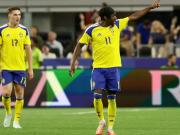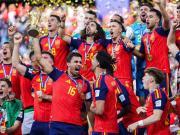
Spain didn't have superstars like Messi, Mbappe, or Haaland, but they won the World Cup thanks to their strong midfield system.

Since the final whistle blew in the World Cup final last Sunday in New York—to be precise, East Rutherford, New Jersey—I've been reconciling two ideas: one, that Spain isn't the most talented team in this World Cup, and two, that Spain might be the best international football team of all time.
The latter is not based on recent bias. We have the Elo rating system, which dates back to the very first international match, and assigns points to each national team based on the results of each game. Spain is the highest-rated team in the history of this system. The main reason is that they are unbeaten since March 2024, the longest unbeaten run in men's international football history.
We weren't entirely unprepared for this. France entered the semi-finals as one of the favorites to win the tournament, boasting a striker arguably among the world's top three, capable of scoring in rapid succession. But Spain dominated them, allowing only 10 shots and failing to create any clear-cut chances, ultimately keeping a clean sheet.
Even more impressive was their even tighter defense in the final against Argentina and Messi—the defending champions and the greatest player of all time—completely stifling their opponents' attack.
Spain has the best overall squad in this World Cup, that's for sure, but why?
Spain's two starting full-backs, Porro and Cucurella, were merely mediocre Premier League players at Tottenham and Chelsea respectively last season, both clubs experiencing nightmarish seasons. Their key center-back, Laporte, has moved to the much lower-level Saudi league. Even Kubasi, the tournament's best young player, was more of a "good young player" than a "top player at a young age" early in his Barcelona career. Looking at the attack: Baena spent most of last season as a substitute for Atletico Madrid, who finished fourth in La Liga. Oyarzabal, while scoring several crucial goals for Spain, hasn't reached double digits in La Liga goals (excluding penalties) in eight years. Yamal, while a superstar, only managed one goal and zero assists at the World Cup. England and France each have two players in the top six of the World Cup top scorers list, Argentina has Messi, while Spain has none.
Is this lineup really enough to achieve such success? Should a Spanish team, lacking superstar contributions in both defense and attack, really win the World Cup and look so much better than those star-studded teams?
But the more I think about it, the more I realize that the Spanish team fits a model that defines the modern World Cup. We can call it the "Rodri Theory," dedicated to this year's Ballon d'Or winner: the team with the best midfield is the team that wins the World Cup.
In modern club football, the midfield is the least important area on the field.
Don't believe me? Just look at where each team spends their money. As I wrote at the end of last year, here's the average investment Premier League teams make in their starting lineups across different areas of the pitch: - Goalkeeper: €6.55 million
- Defender: €29.9 million
Midfielder: €27.9 million
- Forward: €28.6 million
If we only look at star players—those who enjoy starting status at top teams—the gap is even wider: - Goalkeeper: €11.6 million
- Defender: €54 million
Midfielder: €47.1 million
- Forward: €56 million
This aligns with efforts to analyze football matches. Our understanding of a match's value lies in the probability of scoring: how much does a move reduce the team's chances of conceding a goal and increase their chances of scoring? When you look at a match from this perspective, most actions in midfield seem almost like a waste of time.
If you dribble past a defender in the penalty area, your chances of scoring increase significantly because you're likely in a position to shoot or create a chance. Dribbling past a defender in midfield is still a long way from a shot. Intercepting a pass in your own penalty area might just mean you've saved a goal. Intercepting a pass in midfield is still a long way from a goal, and if you fail to intercept, there's still an entire defensive line behind you.
However, international football is different from club football. I've written a lot about how difficult it is to form effective pressing or create threatening attacking patterns in international matches because you can't select your players, and the players you do select have almost no opportunity to train together. But to more simply summarize the difference, we can say that international football matches are much slower-paced.
In the recently concluded World Cup, the average possession time was 28.1 seconds – a full 2.5 seconds longer than the average possession time in the most recent Premier League season. This was undoubtedly influenced by the high temperatures, but it is also a continuation of a clear trend.
But this wasn't always the case. Here's a look at how possession time has changed since 1966: First, we see a gradual evolution towards a possession-based style of play. In the early 20th century, passing was still considered cowardly or unmanly in some parts of the world, and the early portions of the dataset show teams gradually shedding this absurd mindset. Tactics evolved rapidly, and players' individual skills improved accordingly, leading to longer possession times. Then, after 1986, things started to accelerate. Why? FIFA banned goalkeepers from handling back passes. But since 2006, the pace of the game has slowed again—and this is precisely the period when Barcelona and Guardiola's possession-based style became the mainstream tactical model and the basis for other teams' iterations. This is the version of football taught to children in most parts of the Western world today.
When the pace of the game is faster, individual talent at both ends of the court often takes precedence. Shooters have room to be creative, athletic, and improvise, while defenders need to make judgments in large spaces rather than react as part of a system. Over the past decade, the best players in the world have been guards who can cover space like tall free agents and attackers who can utilize space like explosive fullbacks or long-distance running backs.
But once the pace of the game slows down, the midfield plays a more crucial role. Because the ball doesn't move quickly across the field, these players attack more frequently near the opponent's penalty area and defend more frequently near their own. Possession moves slowly, so when the ball advances, the midfielders move with it; and when the ball retreats, they are not overtaken. This might seem too coincidental, but it doesn't mean it's untrue: the World Cup slowed down again starting in 2006. Since then, the team with the best midfield has won every tournament.
When Italy won their last World Cup in 2006, they were remembered for their defense, as is often the case with Italian champions. And for center-back Fabio Cannavaro winning the Golden Ball. Their defense was, without a doubt, outstanding: conceding only one goal in the group stage (an own goal against the USA) and another in the knockout stage (Zidane's penalty in the final). No other team managed to break through Italy's defense from open play throughout the tournament.
But they also had the best midfield in 2006. Admittedly, France fielded three legendary midfielders in the final – Vieira, Makelele, and Zidane – but Zidane was 34, Makelele 33, and Vieira 30. Italy's midfield consisted of 27-year-old Pirlo and 28-year-old Gattuso, with 29-year-old Totti behind them. They were all in their prime. Although Pirlo didn't become the beloved, meme-worthy, and long-passing master until later at Juventus, he was the only player in 2006 to win the Man of the Match award three times. He and Gattuso helped AC Milan win the Champions League final the following season. And Totti had the best season of his career the following season, scoring 26 goals and providing 9 assists for Roma.
Four years later, Spain demonstrated the epitome of midfield-driven victory. They fielded not only the renowned midfield trio of Busquets, Xavi, and Iniesta from Guardiola's Barcelona era, but also Xabi Alonso from Real Madrid, the only player in the last 20 years capable of matching Pirlo's long-ball playmaking abilities. In 2013, Guardiola moved to Bayern Munich, and Germany used his three midfielders in the same positions for much of the following World Cups: Kroos, Schweinsteiger, and Lahm. Other midfielders with significant playing time included Kroos, fresh from starting in the Champions League final for Real Madrid, and 25-year-old Özil, recently transferred to Arsenal and arguably the best playmaker in the world besides Messi at the time.
The 2018 World Cup is remembered as Kylian Mbappé's breakout performance, but the driving force behind France's victory was an unstoppable double pivot. N'Golo Kanté was at his peak, covering multiple positions, and in the seasons leading up to the tournament, he had led Leicester City and Chelsea to unexpected Premier League titles. Kanté's partner, Paul Pogba, is perhaps the most complete midfielder I've ever seen – at least, I've never seen anyone combine his passing ability, creativity, scoring ability, defensive coverage, technical talent, physique, and athleticism all in one. Pogba hasn't been able to maintain consistent form since leaving Juventus, but Didier Deschamps has always found a way to bring out his potential in the French national team. Furthermore, the team also had Antoine Griezmann, arguably the best two-way attacking midfielder of his generation, fresh from his best season at Atlético Madrid, operating in front of Pogba and Kanté.
When Argentina won the World Cup in 2022, it wasn't because Messi finally decided to realize his potential at 35. No, this Messi was far worse than we'd seen before. No, the biggest difference this time was that he no longer needed to drop extremely deep because no one could get the ball to him. In 2022, Argentina's midfield consisted of 23-year-old McAllister, 21-year-old Enzo Fernandez, and 28-year-old De Paul. McAllister and Enzo subsequently moved to Liverpool and Chelsea respectively, becoming some of the best midfielders in the Premier League, while De Paul was already one of the best passers in Europe. Most importantly, they were all excellent passers and ball-contestants. They not only provided the ball to Messi but also had enough coverage to compensate for his lack of defensive involvement.
Then there was Spain, who dominated that trio in the final. Rodri won the Ballon d'Or two years ago. Fabian Ruiz plays for Paris Saint-Germain, the reigning Champions League champions. Olmo, who developed under Red Bull and now plays for Flick's Barcelona, is one of the world's best pressing attacking midfielders, an ideal partner for the elite passers behind him. But that's not all. In the final, Spain's coach Luis de la Fuente substituted his entire midfield – and the team's performance was not affected at all. His substitutes were Barcelona's Pedri, whom I had rated as the world's best midfielder before the match, along with Merino and Zubimendi, both key players for Arsenal, who had just won the Premier League title and lost the Champions League final to Paris Saint-Germain on penalties.
To go further, who will Spain struggle against most in the knockout stages? Portugal. Their midfield consists of Vitinha and João Neves, two key players for Paris Saint-Germain, and Bruno Fernandes, the previous Premier League Player of the Season. Unfortunately, the decision to start a 41-year-old striker, Cristiano Ronaldo, negated any potential advantage the midfield might have created. So what is France's biggest weakness in this tournament? Their midfield, with 31-year-old Rabiot starting in every game except one. That's the problem.
So, when we face this situation again in 2030, I'll remember Rodri's theory. It's easy to be drawn to a team with the most strikers, the most attackers at Real Madrid and Paris Saint-Germain, a team coached by Klopp and Guardiola, a country with two elite full-backs, or a country with two world-class center-backs and a great goalkeeper. But unlike when I wrote about Paris Saint-Germain, Manchester City, and Bayern Munich, I'll no longer focus on the ends of the pitch or near the touchlines. I won't predict the next champion now, but if the past six tournaments are any indication, the title will belong to the country with the best midfielders.