In just four years, De la Fuente has transformed from a coach with a questionable resume into a widely recognized and highly regarded manager. Recently, this accomplished coach gave an exclusive interview to AS, explaining how Spain's style of play was formed and continues to this day.
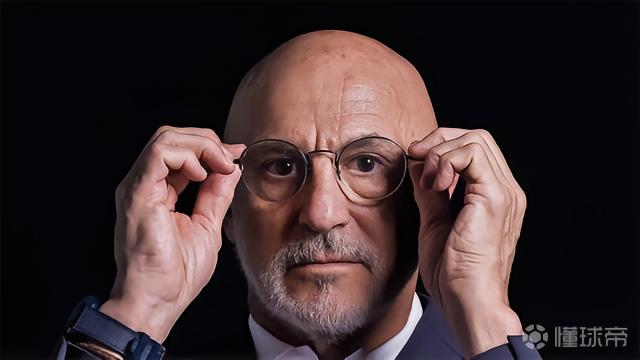
Image/AS
Four years ago, when you took over as Spain's head coach, you said, "I have the best players." Did you ever imagine that you would prove your theory by winning the World Cup?
Of course not, but the path is built step by step. This team has always been incredibly steady, decisive, resilient, and confident… When we embarked on our World Cup journey, I thought, “We will definitely fight to the end.” I’ve always said that (“I have the best players.”), but winning is another matter. In the final, we were clearly superior; our opponents didn’t even have a single shot on target. Although we were generally calm, that calmness was always in quotes, because even so, they could still have won. If Cubasi’s clearance in extra time had deflected off Unai Simón and into the net… Argentina could have won without a single shot on target. Fortunately, we handled that dangerous situation brilliantly.
What do you think when you hear people say this is Luis de la Fuente's World Cup?
I'll blush. But I hope everyone remembers that this was a World Cup belonging to an outstanding national team.
How did they manage to concede only one goal on their way to the championship? What are your thoughts on this statistic?
We only allowed our opponents 10 shots (on target) throughout the entire tournament, but this was because we had a well-practiced and highly effective defensive system. The team's overall defense was outstanding, with all 11 players on the field contributing defensively. We were very balanced in attack and defense; statistically, we were also a very potent attacking team. We scored many goals and conceded only one, which has become the norm: we scored over 100 goals in 50 matches but conceded very few. This is a very united and selfless team with a highly refined defensive system.
Were there any questions during the World Cup?
Not at all, not even in the first game. I don't know what others are saying, and that's precisely why I can remain calm. After the first game, we knew this was a process; if one day you lack inspiration while your opponent is in excellent form… the team continues to grow, playing better every day. The atmosphere within the team is also exceptionally good; in these 52 days, we haven't had any conflicts, which is truly remarkable.
Your substitutions have attracted a lot of attention. Were these adjustments made based on the team's performance, or were they planned before the match?
People make decisions based on intuition. At the start of a match, you might have a starting lineup in mind, but later you'll adjust it based on your feelings and training progress... Of course, everything is based on rigorous analysis and in-depth research. Our coaching staff has a very capable team, and the information they provide is very useful.
Secondly, in my opinion, there's also a sixth sense applicable to all situations—an intuition that gives you the judgment to make decisions in crucial moments. Because everything depends on how the game unfolds, you might start with a plan, but the situation on the field will prompt you to change it—it could be an injury, suspension, a red card, a goal conceded, or a goal scored. After all, this is football, and your plan might be overturned just 10 minutes into the game. But one thing is certain: the core principles remain unshakable and consistent. We implement this theory in every game, but different players will make minor adjustments based on their own characteristics. Furthermore, each player or coach develops this philosophy in their own unique way.
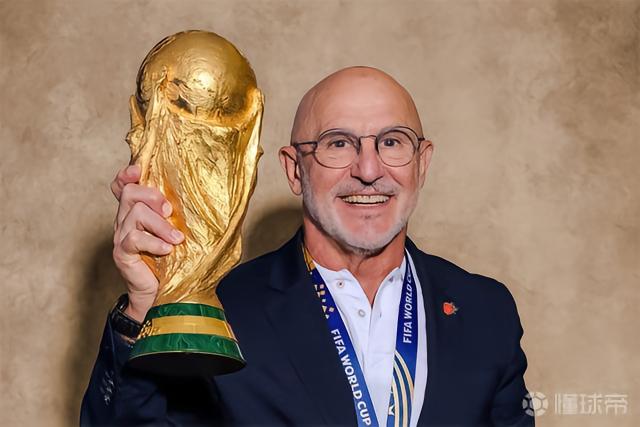
Image/AS
You brought on Zubimendi and Eric Garcia in the final, neither of whom had played a minute before. Weren't you nervous at that time?
No, there's one reason: I know they're in great form because I've seen them perform in training and have been following their progress. We know they're fully capable of starting, and I feel sorry for all the players who haven't played. In the European Championship, the only player who didn't get a single appearance was Remiro. I also wish everyone could play, because they all deserve it, really. But I don't have that sense of urgency or pressure to give everyone playing time; the team's interests come first. I also want to remind everyone that Zubimendi came on and performed brilliantly in the second half of the final in the European Championship, and he did the same a few days ago. As for Eric Garcia, what can I say? He's also an excellent player.
Many of the players on the team are people you've known since they were 16 years old. I guess that has helped you in managing the team during this tournament?
Of course, this is crucial. For example, Unai Simon, Merino, Rodri… they were all players from the youth team we coached starting in 2015. Before that, I also coached Marcos Llorente in the European U19 Championship qualifiers. We've been coaching this generation of players since they were 16 or 17, and it seems like we've completed the cycle. The World Cup final is on July 19, 2026. Eleven years ago, we won the U19 championship in Greece, but Oyarzabal and Fabian weren't there that time.
After winning the title, which player were you particularly happy for? Was Ferran Torres' situation a special case?
I was especially happy when Ferran scored in the final because I'm the kind of person who tries to be fair. When I saw those unfair comments and unfounded and exaggerated criticisms—some even malicious—our later experiences proved one thing: life will eventually give you a chance to stand up for yourself and prove yourself.
Ferran's statistics for the national team are outstanding, but so are his club statistics; his goal-per-game average is high, somewhat reminding me of Morata. I'm glad to see that when faced with injustice, people can say, "I'm here." Especially considering he won all of this under such circumstances; most people would have given up long ago.
After the World Cup, the controversy surrounding goalkeepers also came to an end.
The goalkeeper position is unique; you can't substitute or rotate players like you would for other positions. Let me reiterate, this isn't to say other goalkeepers don't deserve to start. We have three goalkeepers ranked in the top five in the world, and I firmly believe that. But you can't rotate them because even they themselves wouldn't accept it. They know goalkeepers need confidence, security, consistency, and continuous playing time…
The image of the three goalkeepers embracing after the final? We discussed that in a casual team conversation, talking about motivation, values, and so on. The image of the three embracing was a very representative moment from that discussion. Our goalkeeping coach, Miguel Ángel España, places great importance on this, so the message conveyed was undeniable. But this happens in every position; there are no conflicts between the players. Grimaldo and Cucurella are close friends, and Porro and Llorente are inseparable.
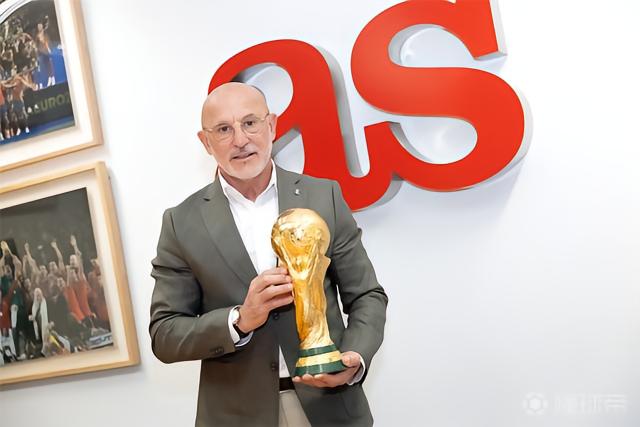
Image/AS
Do you think the 2024 European Championship will be harder to win than this year's World Cup?
These are two completely different competitions. We usually study European football very thoroughly, and the styles of the teams are quite similar. The World Cup, however, requires a different approach; you have to play against teams from Africa, South America, and other regions… For example, we already knew what the match against Uruguay and the final against Argentina would be like—that's just how South American football is. Our principle is to stick to our style of play; no one deviates from the planned strategy or falls into the opponent's rhythm, because we don't know how to play that kind of football. Our opponents are better at that style of play, and if we played that way, we would lose, and lose badly. But within our style of play, we are the strongest.
But this requires experience, and Spain is a very young team. Have you ever seen 18 or 19-year-old players so mature?
A player who reaches a top level at this age is exceptional because he is truly special. Players making their La Liga debut at this age are usually more mature because they are already earning a salary and taking on responsibility, while their peers are still in high school or just starting university. Players like Lamin (Yamaal) or Cubasi are exceptional; they are incredibly mature, possess extremely high intelligence, and in my opinion, they are geniuses.
Now, praise is pouring in, and football associations from other countries have also expressed their appreciation for this style of play, taking Spain as a role model.
These accolades will further strengthen this philosophy. Because this isn't something that happens overnight; it's the result of years of dedicated work, and we've always remained steadfast in our commitment. Every coach adds their own understanding, not only in the senior national team but also in youth teams at all levels, with the latter being even more important. But all of this is always built on a very solid foundation of philosophy, while continuously incorporating new understandings to adjust and refine this playing style.
But this style of play has remained unchanged since we started developing it; it even existed before I arrived. It has simply evolved because football is constantly changing. Every major tournament further refines this style of play. As early as the European Championship, people's impressions began to change because we started using wingers. Nowadays, transitions between attack and defense and speed are key. Previously, there was an almost unquestionable view: the higher the team's possession rate, the higher their winning percentage. That's no longer the case; a team with only 30% possession can still beat you 3-1.
Have any foreign counterparts inquired about or planned to imitate this approach?
It's been around for a long time. It started as early as the time of Ginés Meléndez (former Spanish U19 coach). Teams from England, France, Germany… for a period, Italian coaches frequently came to Spain, and Germany, for a time, built a very solid foundation, similar to ours. But it's not easy; it's very complex. First, it requires many years of effort; second, it relies heavily on the cooperation of clubs, where there are many excellent coaches who nurture players very well. Spanish players, having received this training from a young age, are best at implementing this style of play.
What similarities does this Spanish team have with the one from 2010? Are we still waving the tiki-taka flag high?
Football has changed a lot in the last 16 years. While our style of play hasn't changed, it has been evolving. I don't really like using the concept of tiki-taka or other similar ready-made terms. I know everyone uses them, but I don't like them. I think "combination football" (fútbol combinativo) is a more accurate term; tiki-taka sometimes sounds a bit derogatory. But then again, this style has long been deeply rooted in Spanish football. It first appeared in clubs, but it was the national team that solidified this concept and gave it such a huge influence. Although it originated in clubs, it can only originate in clubs, because the national team relies on clubs for player supply.
The new roster will be announced in September. What are the future rules? Has any player told you they want to retire from the national team?
The players are in great form, the team is young and still developing and maturing, and the players joining in the future will also be young. The team's future is very secure. Nobody told me I would retire after the World Cup, but after experiencing all of this, I think the opposite is true.
But I want to add that I'm saying this entirely out of goodwill. The players know I don't make promises to anyone. We have a very good relationship within the team, a bond that transcends purely professional relations. But let's keep things separate. Besides the coach-player relationship, we're also friends. I've watched them grow up, known their parents and siblings, and now their wives and children. Our relationship is extraordinary, but I won't make any promises or compromise based on personal feelings. Why? Because they know that what moves me is always fairness and honesty. Just as I trust them, one day I will also give opportunities to others. For example, Morata or Carvajal; they left behind invaluable assets, and their chapters in the national team are not yet over. If they regain their form, the door to the national team will always be open for them. We don't look at age; Navas was 39 and still got selected.
You have consistently emphasized that you consider not only skill but also character when selecting players.
These two things aren't mutually exclusive. We spent 52 days together at the World Cup, 45 days together at the Olympics, and 43 days with the U21 national team… As for character, I'd be surprised if someone didn't want their colleagues to be good people. I think that makes the team more stable. Moreover, it doesn't conflict with a player's skill, personality, or fighting spirit. We always confuse two different things. I feel much more at ease working with a group of good people. I've worked in the youth teams for so long; we know most of the players very well—I call them "raw materials." I know them very well, I know which players will never let you down, and I know which players won't show any displeasure even if they don't play a single minute during a 52-day training camp. We know exactly what kind of people they are.
Have you personally enjoyed this World Cup? Have you already set your sights on 2030?
I hope to experience it again in four years, because this experience is unique. The happiness, the life experience, the enormous success, and the nationwide sharing of this glory—it's all been fantastic. Thinking about the 2030 World Cup? I'm someone who only looks at the present. Right now, we're focused on the matches in September; that's what's most important to us. We're only thinking about the next event.