This article is reprinted and translated from Ultimo Uomo, originally published on July 22 local time, by Emanuele Atturo.
On June 19, a man approached the Spanish national team's World Cup camp in Chattanooga, USA.
He had thinning hair, a thick beard, and wore a pair of trendy-looking glasses. He held a matcha latte in his hand, wore very loose-fitting cropped jeans, had a film camera hanging around his neck, and wore a T-shirt with an ironic design underneath.
The security personnel looked him up and down, assessed him, and then, without much thought, asked him to leave the scene.
He didn't have a pass, and he claimed to be a football player, but looking at his attire, how could he possibly be a player? You can't really blame the security personnel for thinking that way.
Because what they were seeing was practically a real-life version of those internet memes. Someone dressed themselves up in the most absurd, ridiculous, and deliberate way you could imagine, covered in all sorts of exaggerated and pretentious trendy accessories.
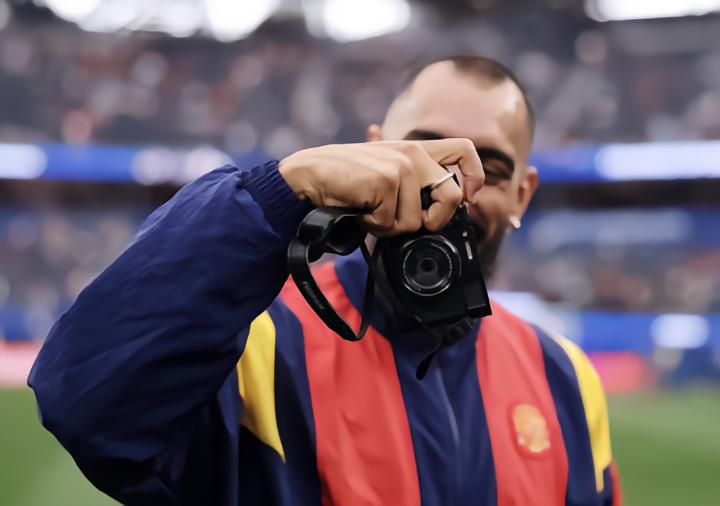
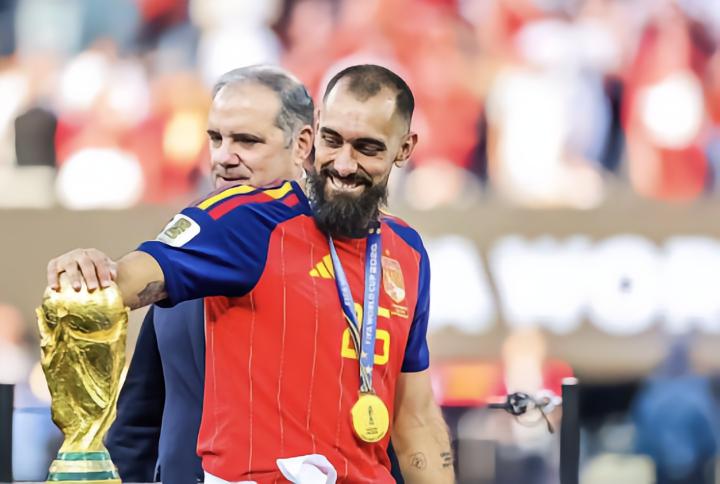
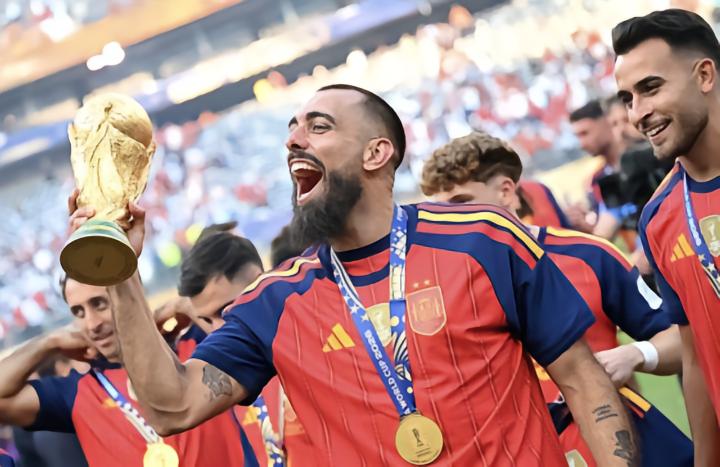
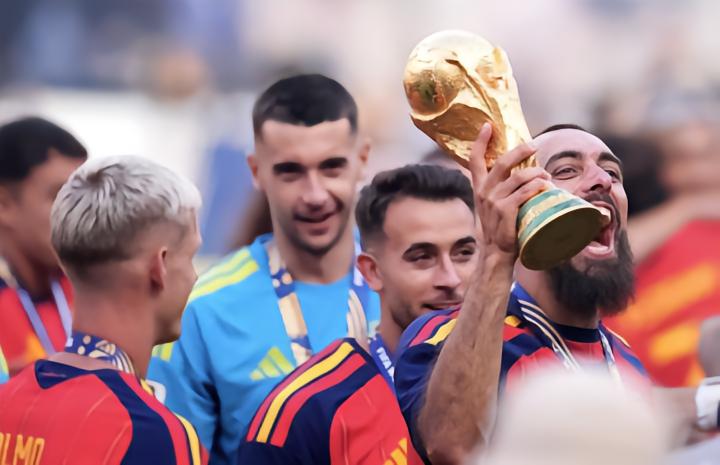
However, this person was indeed a professional football player, and just over a month later, he lifted the World Cup trophy as the champion.
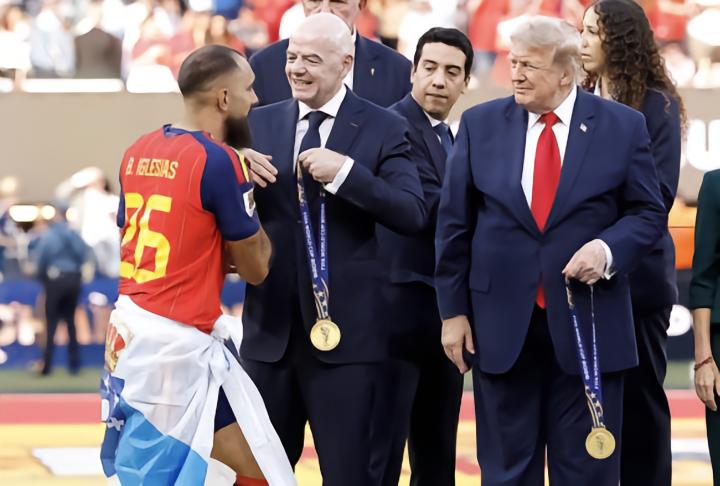
He held the trophy, raised his arms high for a photo, his arms covered with various small tattoos; he posed for a photo with Oscar-winning actor Javier Bardem, but did not look Trump directly in the eye when shaking hands with him.
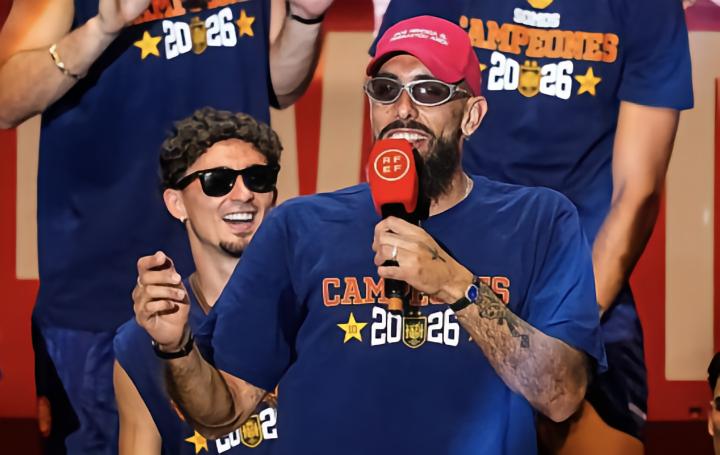
Back in Spain for the celebrations, he wore a baseball cap and sunglasses, operating a music device. He then played a remix of "Bam Bam," and Madrid's Piazza de la Cibeles erupted in cheers, the crowd seemingly dancing to the rhythm at his feet.
Then, he picked up the microphone and began to sing, showcasing a slightly old-school rap rhythm and stage presence.
The song he performed was "Cantando," from the early 2000s hardcore rap group "Violadores del Verso."
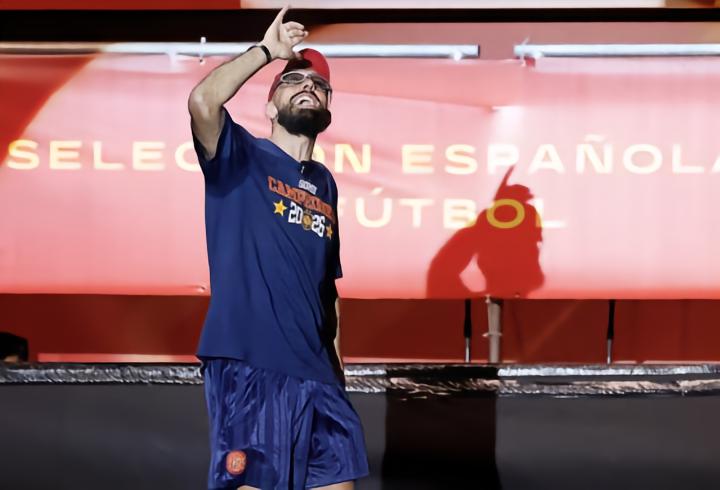
He still doesn't look like a football player, more like a DJ playing music in a music bar, a sommelier in a small natural wine bar in Paris, a marketing person at Gucci, or a regular customer at the Barbasso bar during design week, the kind of customer whose name even the waiters call out.
He seemed like the kind of person who would adorn his Crocs with all sorts of decorative accessories, attend a literature club, join a running community, and even sign up for a crochet club.
However, he was indeed a football player.
He only played for one minute in this World Cup. That's right, just one minute. He came on in the match against Portugal.
Even so, his contributions are still considered very important.
At least that's the kind of praise you hear from his teammates. Or perhaps Bellerin once conveyed a message to him on television: "People can't understand how important it is to have someone like you in the locker room. Someone who's willing to work hard and can motivate his teammates."
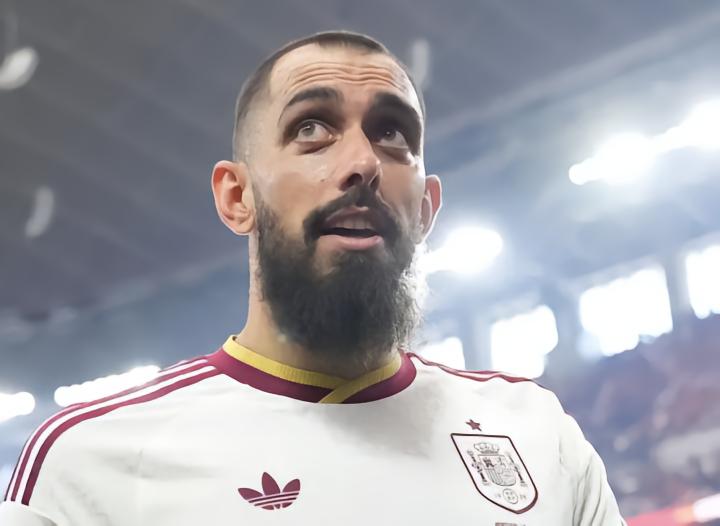
Borja spent a season at Celta Vigo scoring 16 goals, and his selection for the national team was entirely earned through his performance on the field.
However, Borja seemed somewhat out of place in a Spanish team that had abandoned the traditional center-forward style of play.
He's like an "alien" in the world of football, a player who should have been wearing a different jersey and belonging to a different system. There are actually a series of reasons behind his eventual selection.
In Spain, Borja represents the "talisman center forward" type.
Spanish football has gradually developed a playing philosophy that doesn't rely on traditional center forwards, thus bestowing these players with a unique status—they are both ridiculed and idolized. They almost never start, but are only brought on in crucial stages of the game, when the team is in trouble, to solve seemingly unsolvable situations. Teams use center forwards like a talisman, hoping they can tame the chaos and unpredictability of football, especially when possession-based football cannot fully control the game.
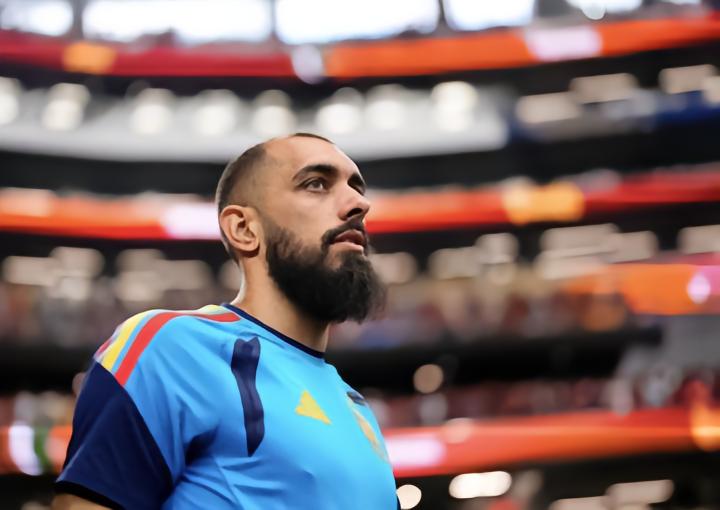
Center forwards are familiar with the secrets of the penalty area and can survive in that chaotic zone, which is precisely what Spanish teams usually try to avoid. For this reason, the center forward plays a role akin to a "god's assistant."
This Spanish team was so strong in the World Cup that there was no need to use Borja. Or more accurately, they had found their "talisman striker," Merino. He did the dirty work with several crucial headers in the final stages of the match.
However, the history of Spanish football is full of strikers of this type: Borja, Joselu, Negredo, and so on. They were all almost mythical strikers, possessing technical abilities that were not particularly impressive.
Even after truly understanding Borja himself and his football abilities, he still retains a "spy" quality. Perhaps he himself feels something similar, believing he's just someone who's lucky to have arrived here. He once recounted that when he first stepped into the Spanish national team's locker room, he realized it was a special team, a highly competitive group: "I saw everything here. I remember going home and telling my friends, 'I can't leave here, they'll become world champions.' That feeling was visible, palpable, and tangible."
Within the team, he became a positive force in the locker room. But perhaps he also represents a certain sentiment in the hearts of some Spanish fans, because Borja represents more than just a football player.
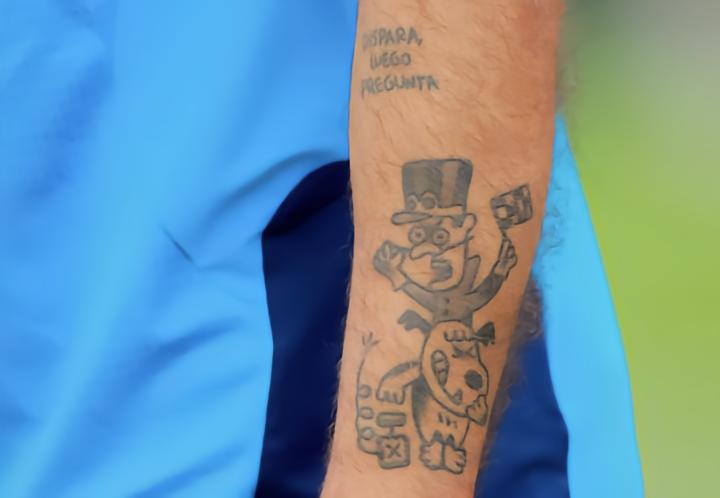
Many footballers are passionate about fashion, music, or various trends. But what makes Borja special is that his hobbies aren't just pastimes born from the boundless emptiness of a footballer's life. These things are an expression of a self-aware person, and sometimes even a channel for him to convey certain viewpoints.
Since 2020, he has expressed his support for certain social issues, especially the LGBTQ+ community, by painting his nails. You might think this is a form of "performative activism," but in the context of football, it's not. If an actor paints their nails, people might think it's just a personal style, or even a deliberate attempt to express individuality; but if a football player does it, the message is entirely different.
This can be seen from what Borja has suffered over the years; for many years, he has been subjected to insults from fans because of these choices.
He responded in an interview with L'Équipe, which was a very insightful one. He said: "If I had to choose between the two, I would definitely prefer to be gay rather than like them, full of hatred, doing nothing but hurling insults at others after the game."
In January, shortly before this interview, a serious incident occurred. After Celta Vigo's match against Sevilla, Borja stopped in the parking lot to give his jersey to a fan. However, he was surrounded by a group of opposing team fans and subjected to a barrage of homophobic insults. Following the incident, Celta Vigo issued a public statement supporting and protecting him.
Meanwhile, Celta Vigo fans organized a rally in solidarity, not only to support Borja but also to support anti-homophobia social ideals. When they arrived at the Balaídos stadium, they all wore the same nail polish as Borja.
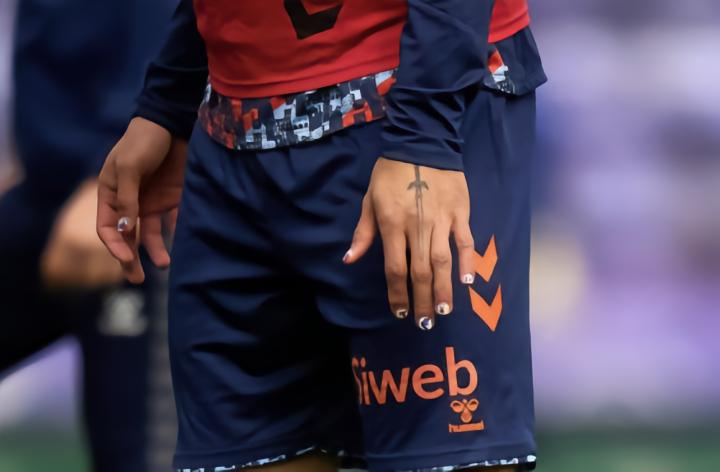
Borja added, “What really worries me is that a gay person might be afraid to come out because of this kind of reaction. It’s unacceptable for someone to be unable to be themselves or to love the people they want to love. Therefore, the fight against homophobia is very important. That’s why I’m willing to work hard for it.”
As time went on, the insults directed at him became more and more frequent and intense.
One reason is that Borja has gradually become a high-profile and influential figure. He is invited to appear on television programs and gives media interviews. His level of attention, purely from a footballing perspective, could even be said to exceed his competitive standing. But there is no conspiracy behind this.
The reason is simple: hearing a football player express more complex and thoughtful opinions than the usual formulaic statements is refreshing in itself. From a media perspective, interviewing Borja also means creating a more substantial and insightful report than a typical interview, rather than just listening to someone talk about their vacation in Sardinia again.
Borja is humorous, charming, and very interesting.
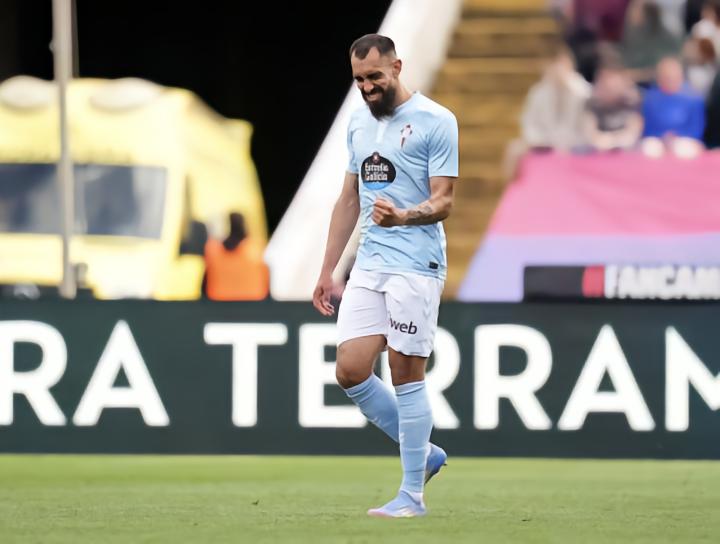
Borja has a nickname, "The Panda." This nickname stems partly from his physique, which is slightly "too bulky" for a footballer, and partly from his very gentle and friendly personality. He entered professional football relatively late, making his debut in the Spanish Second Division at the age of 24. He says that because his professional career started late, he has been able to maintain a greater connection with ordinary people's lives. He states that he is not the only footballer who thinks about broader social issues, but he is one of the few who is willing to publicly express these thoughts.
Before the World Cup final, he called the price of the final tickets "shameful." He did not shy away from revealing his bank account information (approximately 4 to 5 million euros in 2023), while also frankly admitting that such an income level was not normal.
He said: " I think we make too much money. Then people gradually get used to this kind of life and take it for granted, but that's wrong because it's not normal at all. When you play for a top club, you enter a bubble environment where everything is arranged. There, people will provide you with too many conveniences and even take care of you too well, so you may gradually lose your true sense of ordinary street life."
In a television interview, he stated his support for paying more taxes . Have you ever heard someone voluntarily say they wish they could "pay more taxes"? Borja said, "In my opinion, being able to pay taxes is a very good thing. I hope to live in a country where I need to pay taxes because those taxes can be used to build a high-quality public healthcare system and an education system that allows everyone to grow up and have equal opportunities. It makes me feel gratified to think that my money can help those who need it more and improve their lives."
You may disagree with all the issues Borja supports, but it's hard not to find such a footballer refreshing, someone who consciously, ambitiously, and courageously uses his public identity.
His philosophy is that as a citizen with public influence, one can actively participate in social discussions and contribute positively to public issues.
It's widely believed in the football world that politics should stay away from football and shouldn't be involved in related discussions. However, this idea itself is untenable; it's often only supported by those who don't want football players to express political views that differ from their own.
These are the people who always tell footballers, "Just focus on playing football and don't worry about anything else"—and they usually don't run into any problems. The reality is that most footballers have neither the will nor the means to support social issues that require courage. They don't want to, and of course, doing so often wouldn't benefit them; more often than not, they're simply not interested. The end result is that the gap between the world of football and real life widens and becomes even more difficult to bridge.
People like Borja make us feel that the gap between the world of football and real life has narrowed slightly. They are especially important because such voices are extremely rare, or even often completely ignored, in the world of football for those who share the same values.
Football is a world where some people want to protect and maintain a "toxic masculinity," preferring a closed and isolated environment. Therefore, people like Borja often face intolerance. This is why his existence is so important: what he represents is itself a challenge to the system. This threat doesn't come from what he says, but from his very way of being.
When he publicly supports Palestine, or makes gestures that some might consider "too feminine," or calls World Cup final ticket prices "shameful," he doesn't actually express any revolutionary views. The key point is that he's the one saying these things—a professional footballer at the La Liga level—and that in itself is revolutionary.
Now a world champion, Borja's voice carries more weight, and his image is both more controversial and more significant. When asked why the football world remains so deeply influenced by "toxic male chauvinism," Borja doesn't offer a simple answer.
He said, "It's as if football players are no longer seen as ordinary people, but as something above ordinary people, as if they represent the core essence of the patriarchal system."
Borja's importance lies in the fact that he is shaking up this singular, rigid model. He has broken down the absolute definition of masculinity in the football world, offering people a new possibility. Like all social issues at the political level, the significance of these actions lies not only in what they "are," but also in the impact they have on people.
For many progressives, or those with specific views on issues such as rights and social welfare, a love of football often seems paradoxical. They might ask, "Why can I still like this sport? Doesn't it constantly show us the most violent, toxic, and patriarchal side of the world?"
Even if we try to ignore the deep-seated political contradictions that football constantly presents, it is still difficult to completely escape this fundamental confusion.
If you are a woman, or a non-binary person, or simply someone who holds non-conservative and non-reactionary views on the world, how can you find a sense of belonging in football players? Many people choose to accept this inherent contradiction; others try to find something to rely on in the occasional fragments of humanity that football players display.
However, it is precisely when we see examples like those of Borja that we realize we have actually been making certain moral compromises in our pursuit of football. At the same time, finding resonance in someone can be a source of comfort.
Borja himself is experiencing this contradiction. He said, "I have a constant internal conflict . When I go to Saudi Arabia for the Spanish Super Cup (with Betis in 2022), my thoughts start to churn, and in interviews, I say: If it were up to me, we wouldn't play there."
It is precisely in this contradiction within Borja that many football fans can see themselves reflected. This is very important.
Borja proved to us that footballers are not all the same. Or more accurately, he proved to us that footballers can also be ordinary citizens, have their own views on the world, and not be afraid to express them.
He himself also spoke about this: "I told myself that what I was doing was important. I read a lot of messages that moved me. For example, someone said: 'I hate football, but I love Borja.' Or some gay men left me messages saying: 'Because I love and have relationships with men, I have to give up the football I love.' From a rational point of view, this makes no sense at all."
He also recounted an incident where, in a bar in Madrid, a transgender woman approached him to express her gratitude. She told Borja that she used to love football but had gradually drifted away from the sport, and that his presence was helping her reconnect with it.
Borja said: “I started crying. I didn’t know what to say. I often think back to that moment when I hesitate about whether to continue to express my position publicly.”
He's not a self-aggrandizing or attention-seeking person. This is evident in a detail from the awards ceremony: he shook hands with Trump. Panenka magazine directly asked him about it. He joked that he had to shake hands with Trump, or he might end up in jail.
But then he earnestly explained: people are actually well aware of his stance on certain issues, but his ability and sphere of influence are ultimately limited. He said, "I hope to be able to do many things, but the reality is that even though many people think I have unlimited power, in reality, I don't have that much ability to solve certain problems." He admitted that he must carefully choose the issues and struggles he wants to participate in. Otherwise, his voice will ultimately lose its meaning.
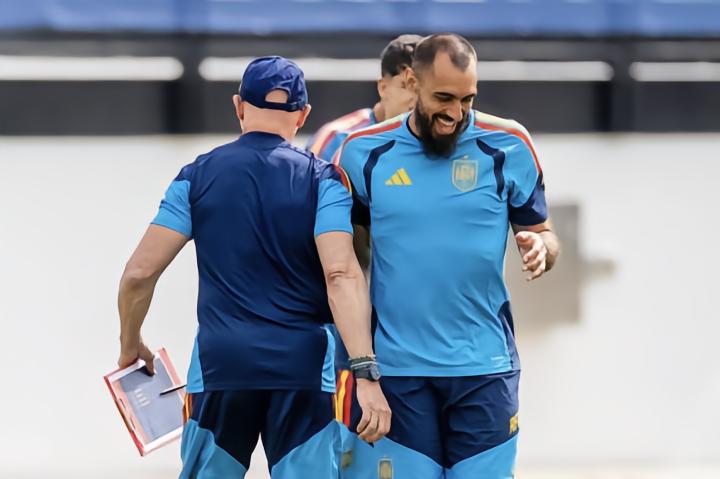
Now, among the "small tattoos" on his body, a new design will be added: a bald head, which is the portrait of Spain's head coach, De la Fuente.
He had promised that if Spain won the World Cup, he would get the coach's face tattooed on his body. Now, he must fulfill that promise.
In 2023, then-Spanish Football Federation president Rubiales was criticized for forcibly kissing female footballer Hermoso during a live broadcast. Borja subsequently announced that he would not play for the Spanish national team again until Rubiales resigned.
He wrote on social media at the time: "Wearing the Spanish national team jersey is one of the best things that has ever happened to me in my career. I don't know if I will be selected for the national team again in the future, but I have decided that I will not return until things change and this kind of behavior is no longer tolerated. For a fairer, more humane, and more dignified football."
At the time, almost everyone mocked him: "Borja? Who would call him up again?" "He could have just not made those remarks."
They believe he has ruined his chance to return to the national team.
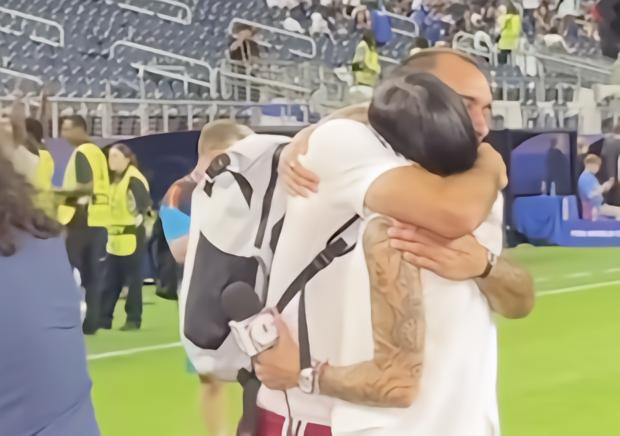
Borja and Hermoso embrace
It's quite incredible that Borja has now become a world champion.
But as someone wrote, "Great people often encounter incredible things."