A week has passed since the conclusion of the USA-Canadian-Mexican World Cup. Among the many key events of the tournament, the controversy surrounding the extension of Balogun's suspension remains a hot topic and can be considered one of the most watched events of the tournament.
When Balogun's suspension due to the red card was postponed, many fans became champions of justice, expressing their indignation at Trump's interference in the fair play of the game. They typed out their strong condemnation and even hurled insults at him online, while also expressing their utter contempt for Infantino's compromise and submission.
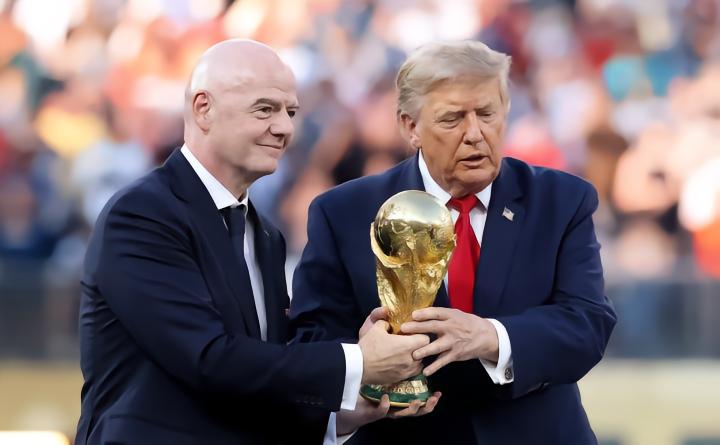
Why do we criticize Trump and the United States? Because they are bad! Interfering in the game, pardoning Balogun, and undermining the most basic fairness.
But why is he the only one who can intervene? Why has Russia been targeted for so many years without ever making a phone call to regain its freedom? Why can't Iran, which faces such difficulty entering the United States, resolve the visa and accommodation issues for players and team staff with a single phone call?
The United States has leverage to sanction FIFA.
The right to speak is never equally distributed; it depends on strength. Stronger power naturally translates to greater influence. Infantino's decision to compromise with the US demands was not simply because the US was the host country, but rather based on over a decade of accumulated and persistent deterrence. The root of this can be traced back to 2015, to the FBI-led anti-corruption raid that shook the entire world of football.
On May 27, 2015, on the eve of the 65th FIFA Congress and the FIFA presidential election, the U.S. Department of Justice, the FBI, and the IRS jointly charged nine FIFA officials and five representatives of sponsoring companies with extortion, money laundering, massive bribery, and tax evasion in the United States. At the request of the U.S., Swiss police raided a five-star hotel in Zurich, arrested nine high-ranking officials who were attending the FIFA Congress, and extradited them to the United States for trial.
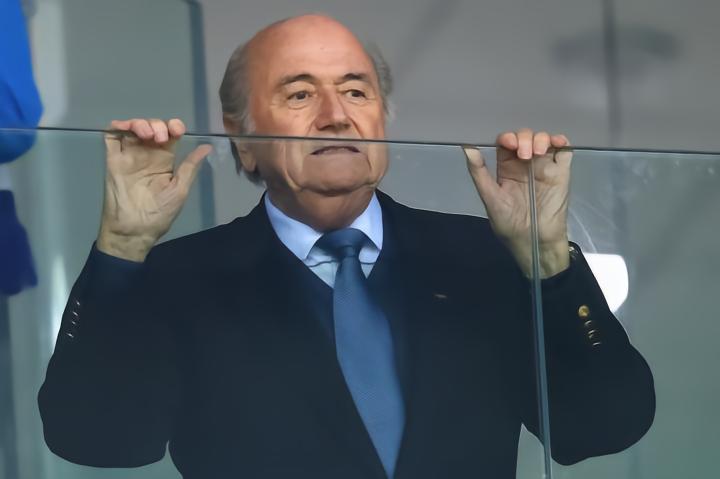
This is not a simple isolated arrest. The official US press release clearly states that the goal of this investigation is not only to punish individuals, but also to eradicate systemic corruption within FIFA and force the organization to reshape its governance, finances, and event operations from top to bottom.
Listen to this! It's outrageous! The US unilaterally announced a "restructuring" of FIFA, an international organization. Even more terrifying is that after the US made these statements, not a single football association in the world dared to utter a word of dissent...
Why, or rather, on what basis, can the United States conduct cross-border arrests of high-ranking officials of international organizations like FIFA? Who gave them this authority? The root of all this lies in the US judicial system's wielding of the Foreign Corrupt Practices Act (FCPA): Cases involving large-scale bribery and broadcasting rights transactions involve funds processed entirely through US financial institutions and settled in US dollars. As long as the financial chain touches the US financial system, the US has the power to prosecute across borders and request the extradition of suspects. Among the charges against FIFA executives is "tax evasion in the US," which gives the US leverage to influence and control FIFA.
The hegemony of the US dollar and the ties between US capital and FIFA's interests
FIFA is not simply a sports association that manages tournaments; it is essentially a large commercial organization that relies on commercial revenue to operate. Its three main revenue pillars are broadcasting fees, global sponsorship fees, and World Cup licensing revenue, and the entire financial chain is deeply tied to the US dollar system and the North American market.
Most of FIFA's commercial transactions and the prize money for national football associations' matches are settled in US dollars. If the United States launches an investigation, the relevant funds could be frozen at any time. For FIFA, which is highly dependent on stable cash flow, this would be an unbearable and fatal blow.
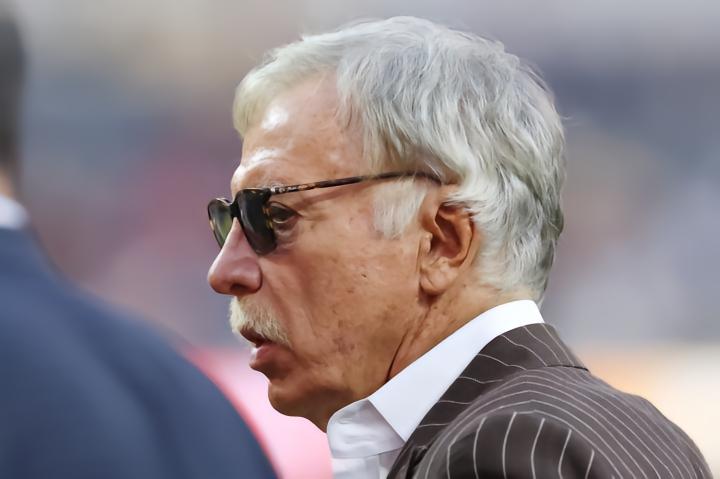
On the commercial front, the mature business model of American professional sports continues to exert its influence on the global football scene. In the past decade or so, American capital has made a major foray into the English Premier League, with several clubs such as Chelsea, Manchester United, Liverpool, Arsenal, Fulham, and Crystal Palace being majority-owned by American capital. American capital now controls nearly half of the 20 Premier League teams. Companies like Kroenke, Fenway Sports Group, and the Burley Consortium have continuously increased their investments, making football a key asset for American capital. This continuous influx of American capital into world football brings funds while subtly exporting American business logic. FIFA, if it wants to continue attracting North American sponsors and investment institutions, cannot ignore the demands of American officials and capital groups. The three intertwined links of dollar hegemony, American capital, and the American commercial sports market firmly bind FIFA's interests.
"Sports are not about politics" is just a slogan.
"Sports are apolitical" is an ideal principle in the sports world, but also the biggest point of contention in reality. Numerous real-world cases have proven that the application of this principle is highly flexible, with different countries experiencing drastically different treatments, the disparity in power directly determining the differences in treatment. We certainly hope that "sports are apolitical" and that sports can become more pure, but the reality is that, at present, this statement is merely a slogan, nothing more.
In February 2022, following Russia's military action against Ukraine, the International Olympic Committee (IOC) was the first to recommend suspending the Russian national team and its athletes from participating in international competitions. Subsequently, FIFA and UEFA quickly issued resolutions, completely banning the Russian national team and clubs from participating in international competitions: Russian clubs were ineligible to participate in the Champions League and Europa League, and Russian national teams at all levels were unable to participate in major tournaments such as the World Cup and the European Championship. The host country and quarter-finalists of the 2018 World Cup disappeared from international competitions. Four years later, Russia can still only play friendly matches, with its most recent opponents being Trinidad and Tobago, Burkina Faso, Egypt, Mali, and Nicaragua.
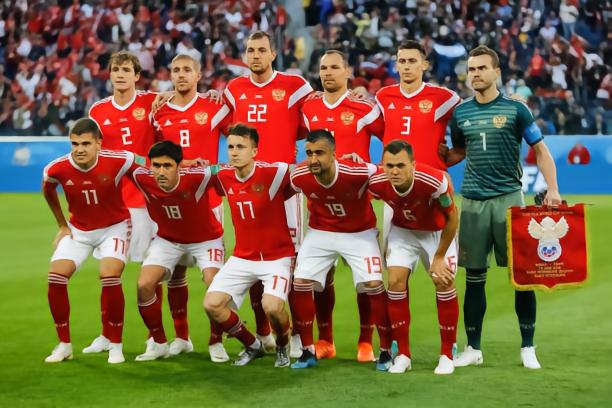
In stark contrast, FIFA's handling of Israel after the outbreak of the Israeli-Palestinian conflict was an extreme example of double standards. While Russia, another instigator of the conflict, was quickly banned, FIFA hesitated and ultimately let the matter drop when it came to Israel. Ultimately, this stems from US support for Israel.
In 2024, the Palestinian Football Association applied to FIFA for a global ban on the Israeli Football Association. In 2025, according to The Times, UEFA had begun discussing suspending Israel's participation in the World Cup. Although no final decision was made, the idea was emerging. Just when everyone thought Israel was finally going to be banned, in September of the same year, the United States strongly defended Israel, stating that it would "do everything in its power to prevent any action that would ban Israel from participating in the World Cup." This statement from the United States cast a big question mark over the ban on Israel. Finally, after a "long investigation," in March 2026, FIFA decided to impose only a fine of 150,000 Swiss francs on the Israeli Football Association, without any ban.
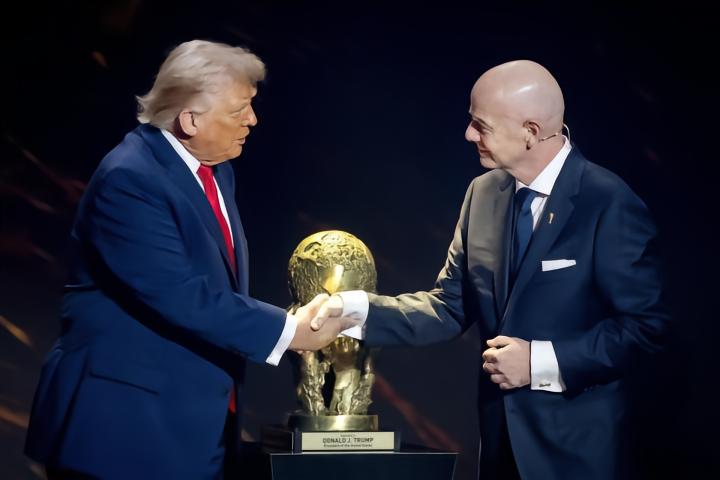
The way the host country, the United States, treated the Iranian team at this year's FIFA World Cup in the USA once again vividly demonstrated the law of the jungle. Iran qualified for the World Cup early on, but faced prolonged visa obstacles. Several coaches and football association staff had their visas denied by the US, and there were even reports of Iran being banned from the World Cup. Ultimately, the Iranian team was able to participate, but they based their training camp in Mexico. Players could only enter the US the day before matches and had to leave immediately afterward, resulting in lengthy border crossings that severely disrupted their preparations. The Iranian Football Federation repeatedly complained to FIFA about the US's politically discriminatory restrictions, but received no effective response.
On one hand, the US's mindless demands receive responses, ultimately influencing FIFA to change its penalty rules; on the other hand, Iran's legitimate demands are ignored, and as a participating team, it cannot even guarantee normal entry and exit to participate in the competition. On one hand, Russia faces a complete ban, forcing the team to play only friendly matches for over four years; on the other hand, Israel receives only a limited fine. This series of blatant double standards makes it easy to conclude that the so-called "sports should be kept separate from politics" is more of a propaganda rhetoric.
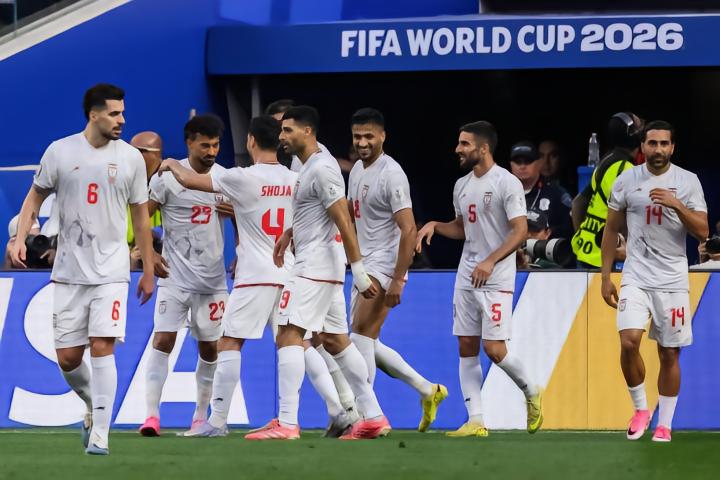
Football lacks absolute fairness. Within 90 minutes, skill determines the winner; outside of that time, all competition ultimately revolves around the power structure of the real world. On the field, strength prevails; off the field, power prevails. Looking at the Balogun incident, the harsher and more vile our criticism of the US and Trump, the more it proves their immense influence in the real world and international football. Our insults may be the greatest compliment to them. We hope for purity and fairness on the football field, but the real world operates on the logic of might makes right. Powerful nations possess more bargaining power, even the ability to change the rules; while the weaker side can only passively accept all possible outcomes…