Official data for the 2026 World Cup was recently released, revealing that the scale of the event's logistics, including hospitality and catering, is unprecedented, with staggering consumption figures for items such as hot dogs and beer.
FIFA President Gianni Infantino and US President Donald Trump emphasized from the outset that the 2026 World Cup would be the largest in history. After Spain's 1-0 extra-time victory over Argentina in the final on July 19th, despite some controversies, FIFA responded to external criticisms of the organization with data. From a competitive standpoint, the 48 participating teams indeed created the largest World Cup in history, and in terms of logistical support, FIFA also appears to have successfully completed the challenge.
“Everyone is a product of their own history, and there are always some key elements in that history: passion, cooperation and innovation,” FIFA Secretary General Matthias Grafström said in an official statement. “Whether it’s welcoming fans, preparing venues, supporting teams, protecting the playing area, or letting billions of people around the world experience the game, the people of North America have hosted an event that will leave its mark on sporting history.”
Approximately 9 million people visited the official fan zones set up by FIFA in each host city. The experience inside the stadiums was equally successful. During the World Cup, a total of approximately 675,000 hot dogs were sold across the stadiums, averaging about 6,490 per match across all 104 games. FIFA commented on these figures, stating, "If these hot dogs were laid end to end, they would cover 135 kilometers, equivalent to 1,350 football fields."
Due to the high temperatures during the World Cup, bottled water, which had been banned by FIFA, was eventually allowed to be brought into the stands, and this included products sold within the stadiums. This did not negatively impact beverage sales for FIFA and its partners. According to official data, 4.6 million non-alcoholic beverages or bottled water were consumed during the 2026 World Cup.
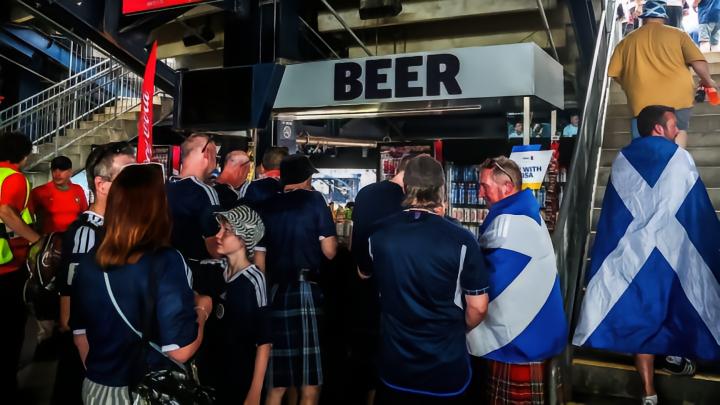
Beer sales also hit a record high, with fans purchasing over 5.5 million beers while traveling to Canada, Mexico, and the United States for the games. This figure only includes sales within the stadium and does not include sales in the surrounding area or within the host city.