According to The Athletic, Gianni Infantino plans to inject FIFA's commercial operations into a new company and sell a 20% stake for $4.2 billion.

He is very active online but dislikes the media. He travels the world in luxury private jets provided by Qatar. He runs a vast organization with various committees and thick rulebooks, but he makes the key decisions and only tells a select few what he's doing. He enjoys the limelight and the excitement. He wants to do more business with the Kushner family and feels his salary is too low.
His preferred strategy is to escalate, create momentum, and make more demands; so far, this approach has worked well for him. Some people think he's remarkable, while others don't.
Can you guess who it is? It's not that person, it's someone else.
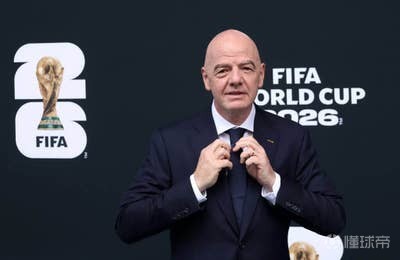
Yes, it was FIFA President Gianni Infantino. Approximately 24 hours later, he returned to the press center.
The latest news about Gianni Infantino is that he wants to put all of FIFA's profits into a new company and then sell 20% of it to private investors. The reasons are another matter. It's worth noting that if he's allowed to do this, each of FIFA's 211 member associations will receive $40 million over the next four years, instead of the currently planned $10 million. These member associations must decide whether to participate by September 19th, which is 52 days away.
For his supporters, the choice is simple. More funding can solve all the problems a national football association might face. If you were managing football in Aruba or Zimbabwe, why not?
But critics see this as the last chance to say "enough," or at least "wait, can we have some time to think?"
Given that Infantino has always wanted to move things quickly and “fix or break” things, this will proceed rapidly.
On one hand, votes in favor are being counted, contracts are being drafted, and logos are being designed; on the other hand, potential opponents are sending video invitations to football association officials for emergency meetings from their post-World Cup vacation lounge chairs.
Here are five questions that The Athletic attempts to answer.
Who will invest in this new company, and what will they get in return?
First of all, it should be said that FIFA was caught somewhat off guard when the general outline of Infantino's plan was leaked to the media on Tuesday local time.
This forced FIFA to ask a London-based public relations agency to start making calls, trying to paint a more positive picture of the matter. The agency had been working on the project for months. FIFA also hastily released a press release detailing further aspects of the plan.
Some might say we still only have a rough outline. But Infantino sent a five-page letter to the leaders of FIFA member associations on Tuesday evening, which The Athletic has seen. FIFA also released its own FAQ the following day.
Based on this information, it is now known that Gianni Infantino intends to create a new subsidiary called FIFA Forward Enterprise (FFE) to "integrate FIFA's commercial and event operations." This means that FFE will take over the media rights, sponsorships, and ticket sales for events such as the Men's World Cup, Women's World Cup, and Club World Cup.
FIFA, in its traditional sense, will then focus on football governance, disciplinary matters, rules, and other areas that nobody wants to pay for. However, FIFA will still hold an 80% stake in FFE, and Gianni Infantino, or another FIFA president, will serve as chairman of the FFE board.
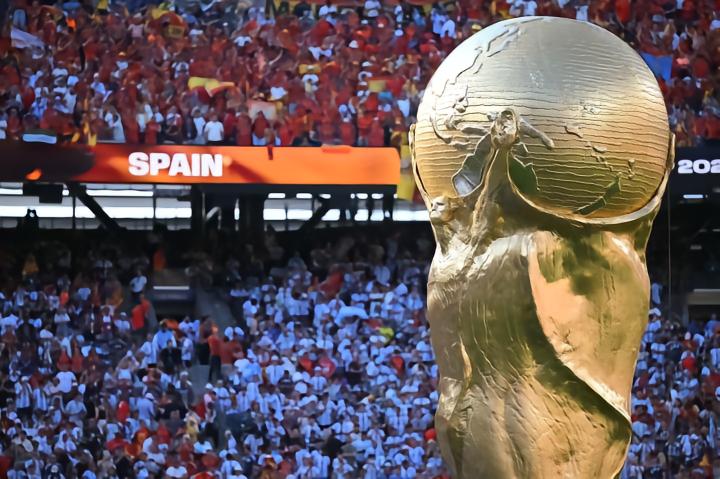
If a majority of the 211 member associations vote in favor, the remaining shares of FFE will be sold to a “regionally diversified investor group” led by Thrive Eternal. Thrive Eternal is a long-term investment firm founded in April of this year by Joshua Kushner, founder of Thrive Capital. He happens to be the younger brother of Jared Kushner, who is the son-in-law, advisor, and peace envoy of U.S. President Donald Trump.
FIFA did not explain why Thrive was given this opportunity, only stating that the project was advised by global bank JPMorgan Chase, Italian consulting firm OpenEconomics, and former Liberty Media CEO Greg Maffei. The selection of these advisors was also not explained.
According to the plan, Infantino hopes to sell one-fifth of FFE's shares to a Thrive-led consortium for $4.2 billion. He will then distribute this windfall to member associations wishing to "participate" through a new funding program called the FIFA Fast-Forward Programme. This program is an addition to the regular FIFA Forward Programme grants that all football associations have received since 2016.
If the entire plan is approved, the member associations will receive a one-time FFFP grant of $20 million, plus an additional $20 million in FFP grants over the next four years, totaling $40 million. If the equity sale is not approved, the member associations will only receive $10 million through FFP from now until 2030. This is an increase from the $8 million in the previous four-year cycle, but far from the life-changing level that Infantino has presented them with.
Thrive will not lack potential partners, as private equity firms and sovereign wealth funds have been lining up for this type of deal for years.
CVC Capital Partners, which has made similar and highly profitable investments in Formula 1 and the NFL, will certainly be interested in this deal. Ares, Blackstone, Apollo Global Capital, KKR, and Dynasty are also likely to be interested. "Geographic diversification" sounds like a veiled reference to sovereign wealth funds in the Gulf region, such as the Saudi Public Investment Fund.
As for why these investors are willing to make this deal, the answer is the same as in the example of that small football association: why not? A one-time payment will give them a share of FIFA's commercial revenue, and as for how long that will last, we are still waiting for the answer.
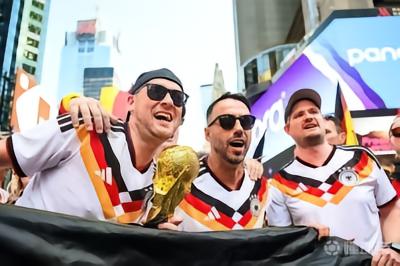
But the experience of all sports organizations that have done similar deals in the past shows that funds always win. This is similar to the British government's past practice of asking private investment to help build hospitals and schools. British taxpayers did get new buildings, but by the time they paid off the costs, there might have been two or three that could have been built.
Who is Joshua Kushner, and how close is he to Trump?
As mentioned earlier, this 41-year-old American is the brother of Jared Kushner, Ivanka Trump's husband.
His father is Charles Kushner, a real estate developer, lawyer, and current U.S. ambassador to France and Monaco. In 2005, Charles Kushner was convicted of illegal campaign contributions, tax evasion, and witness tampering, sentenced to two years in prison, and had his law license revoked in three states. However, he was pardoned by Trump at the end of his first presidential term in 2020. Charles was formerly a Democrat but has become a major donor to Trump's campaign in recent years.
Joshua remains a Democrat, a point consistently emphasized by FIFA, the FFE PR team, and Thrive. He and his wife, supermodel Karlie Kloss, have donated to Barack Obama's foundation; Kloss has publicly endorsed the three most recent Democratic presidential candidates and has been involved in abortion rights advocacy. They were also both invited to Taylor Swift and NFL star Travis Kelsey's recent wedding, making their affiliation with the non-Magical camp quite clear.
However, Joshua maintains close ties with his brother and father, who are key figures in Trump's inner circle. We will never know whether this will be a help, an obstacle, or have no impact on his business career.
What is certain is that Joshua founded Thrive Capital with $5 million in seed funding when he was only 24 years old. Seventeen years later, with the help of some well-known investors and nine funds, Thrive manages $50 billion in assets, and Joshua's personal wealth is estimated at around $5 billion.
He made his money by investing in media and tech startups such as Instagram, OpenAI, and Spotify. He also bought a minority stake in the NBA's Memphis Grizzlies in 2019, later selling it to buy a similar stake in the Miami Heat, also an NBA team. Thrive hopes to get a piece of the pie if the NBA eventually creates a new team in Las Vegas.
However, his biggest step in the sports world to date may be the first deal completed by his new company, Thrive Eternal, in April: agreeing to buy a minority stake in the MLB San Francisco Giants. This deal is still awaiting league approval.
How much money will this raise, and where will the money be used?
Who knows for Kushner and his partners? But if the proposed FFE structure already existed, private investors would be facing a fifth of the $15 billion FIFA would earn over the four-year cycle leading up to the 2026 World Cup—a return of $3 billion. That's not bad for a $4.2 billion investment, especially considering there will be many more four-year cycles to come.
Of course, everyone knows that this cycle is particularly lucrative. Its revenue is double that of the four-year cycle ending with the 2022 World Cup, because it includes the inaugural Club World Cup with 32 teams and a World Cup with 48 teams, which is largely held in one of the world's richest markets.
This summer, FIFA left with very little untapped revenue. With most of the 2030 Men's World Cup matches to be held in Morocco, Portugal, and Spain, it looks unlikely that the same revenue figures will be achieved.
Unless, of course, the 2030 World Cup adds 16 more teams and 24 more group matches, allowing Infantino to obtain his envisioned 64-team "global happiness" product, or the Club World Cup continues to expand in some way.
Both of these adjustments will increase the necessary inventory for FFE, allowing it to approach the revenue levels of the 2026 World Cup, even if it cannot charge the same high ticket prices.
If adding more matches isn't enough, FFE can also charge broadcasters for the extra advertising time during the halftime water break. This additional revenue stream is a welcome surprise for FIFA's media partners during this summer's tournaments.
If the above sounds a bit vague, that's because it's true. Everyone's speculating. But a relatively well-founded guess is that Infantino is so enthusiastic about this idea because he knows that not every World Cup cycle can be as lucrative as the US market. Therefore, establishing a new company entirely focused on the commercialization of FIFA's major tournaments, coupled with the initial incentives from private investors, should smooth out the revenue peaks and troughs somewhat.
While there is no direct evidence that this was one of Infantino's motives, several sources who requested anonymity to protect their relationships said that one benefit of discussions within the football world is that it provides political cover for any blatant business moves he might make.
Other sources, also anonymous due to privacy concerns, speculate that this is all to create a job for Gianni Infantino after 2031. His eligible fourth and final term as FIFA president, the one he is currently vying to secure, ends in 2031. This new job could potentially earn him a salary close to that of the presidents of major North American leagues.
FIFA has denied ever discussing Gianni Infantino for such a position. The FAQ states: “The proposal does not establish a future role or compensation scheme for any specific individual. FFE will have a dedicated management team and board of directors. No candidates have yet been selected for these positions. If the project receives the support and approval of a majority of member associations and the FIFA Council, appropriate procedures will be followed to fill these positions.”
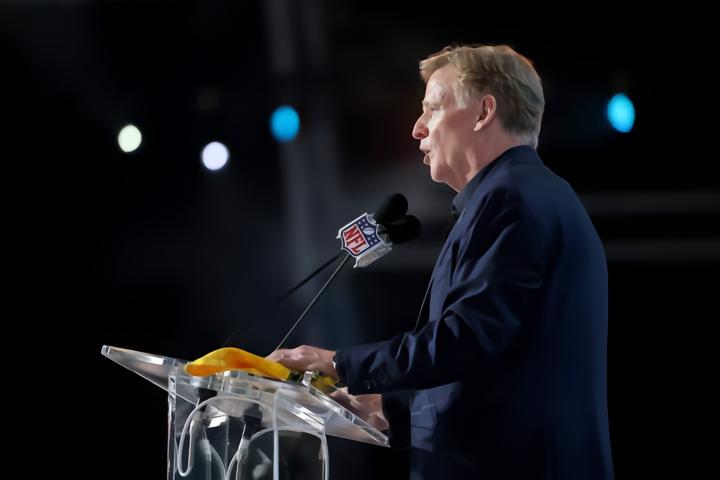
The Athletic has learned from multiple sources that Gianni Infantino sees himself as president of the American sports leagues. These sources requested anonymity to protect their privacy. Incidentally, NFL Commissioner Roger Goodell earns approximately $60 million annually, ten times the meager salary FIFA pays Infantino.
But what is all this money for?
FIFA tirelessly assures everyone that it is a non-profit organization. It states that its sole purpose is to raise as much funding as possible from its activities and then distribute it to its members to help them develop football locally. The majority of this funding is distributed through the FIFA Forward Programme, created by Gianni Infantino after succeeding Sepp Blatter in 2016. During his tenure, these grants quadrupled to $8 million every four years. Now he says the next cycle could reach $20 million, the cycle after that $22 million, and $24 million after 2035.
For at least three-quarters of FIFA member associations, these are staggering sums. They rely entirely on these grants to cover the costs of national training centers, development programs, coaching courses, and grassroots facilities. As FIFA notes in its FAQ, the funds also helped “countries such as Cape Verde, Curaçao, Jordan, and Uzbekistan qualify for the FIFA World Cup for the first time this year.”
Unfortunately, even before the Infantino era, some used this money to buy beachfront properties and luxury cars, and to pay for endless vacations. FIFA has assured the world that those days are over. It also stated that, unlike the disastrous years under Blatter, FIFA now does require member associations to explain how the funds are used and subsequently conducts audits.
The prevailing view within the football community is that corruption and waste are far less prevalent than in the past, but eradicating them completely is virtually impossible. A FIFA spokesperson stated, "Over the past decade, FIFA has undertaken profound governance and management reforms, with a clear focus on transparency and fulfilling its mission to develop football globally."
Perhaps a better question is why FIFA believes these member associations need so much additional funding right now? After all, their Forward Programme grants are already increasing because FIFA itself has been actively commercializing its assets, and it has approximately $4 billion in reserves. Therefore, FIFA could actually fund the Fast-Forward Programme without having to sell a portion of future revenue to Kushner and his partners.
FIFA did not answer this question in its FAQ.
Who can stop this? Will they?
You, me, all of us can. We can stop it if we simply stop watching FIFA matches starting tomorrow. But we're all hopelessly addicted, and Infantino knows that.
What he can't know, and doesn't seem too worried about, is how our children will respond to being served the same thing again and again. It might not even be the same thing anymore, because the quality will inevitably be diluted, superstars will get injured and fall, or they'll start choosing when to put in the effort. Especially when the same thing keeps going up in price.
But this won't happen anytime soon, and it won't be enough to stop the plan.
Therefore, the only solution is for a larger, wealthier members' association, in conjunction with the clubs, the league, and the players' union—the talent pool and the party that pays for and develops talent—to say to him, "Enough, Giannis, enough."
Since this incident came to light, UEFA, the governing body of European football, has issued two strong statements. However, given the long-standing rivalry between FIFA and UEFA, UEFA's strongly worded statement was already anticipated at FIFA headquarters. The weaker member of FIFA often sides with FIFA when the stronger party, UEFA, speaks out. Infantino understands this politics better than anyone.
What's even more interesting is that the CONCACAF and the AFC have also expressed their dissatisfaction.
The CONCACAF (Confederation of North, Central American and Caribbean Association Football) is particularly significant. Its member associations hosted last year's Club World Cup and this summer's Men's World Cup, and the 2031 Women's World Cup has already been confirmed to be held in the United States, Mexico, Jamaica, and Costa Rica. Gianni Infantino is also eager to bring the Club World Cup and the Men's World Cup back to North America as soon as possible. While CONCACAF members may not have direct control over many matters, the funding that determines the success of FIFA Forward Enterprise will come from their respective regions.
Currently, at the FIFA member level, only UEFA has truly attacked the principles of this idea itself. Football associations in Asia, CONCACAF, the UK, France, Germany, and the global players' union FIFPro have only criticized the process. Their main complaint is that they were completely unaware of this until they read media reports about it.
Considering that these organizations all have representation on the FIFA Council, which is essentially Infantino's cabinet, this is already quite bad. But it's not so bad that any party is willing to take actions that would bring Infantino to a standstill, such as boycotting the World Cup or simply withdrawing from FIFA. At least not yet.
The 55 member associations of the European Football Association will hold an online meeting on Thursday. Some associations oppose the procedures and principles under Infantino's leadership, while others oppose only the procedures. The new president of the Czech Football Association, who has already dealt a blow to the idea of European unity, told Sky Sports UK that he quite likes the plan.
But what if a majority of UEFA members agree to unite? With members from Africa, most of Asia, Oceania, and South America eager to close the financial gap with Europe and hoping to host more than the currently planned three group stage matches for the 2030 Men's World Cup, Infantino knows he has the vote.
The only way to stop this is for England, France, Germany, and other European clubs, leagues, and unions to join forces and remind FIFA that six of the eight quarter-finalists in this summer's World Cup come from UEFA member associations, and that these teams have a large number of stars who grew up and work in Europe.
Most of the players from Morocco, one of the two teams that didn't reach the European quarterfinals, were trained at European club youth academies. Many of the key players from Argentina, another quarterfinalist team, also play for European clubs. In the most recent Women's World Cup and last year's Club World Cup, Europe also contributed five of the quarterfinalists.
As mentioned earlier, Europe will also host most of the matches in the next Men's World Cup. Unless Infantino can conjure up a competitor out of thin air to challenge the current sole bid, the 2035 Women's World Cup will also be held in England, Northern Ireland, Scotland, and Wales.
Europe has another card to play: the potential intervention of national governments and the European Commission.
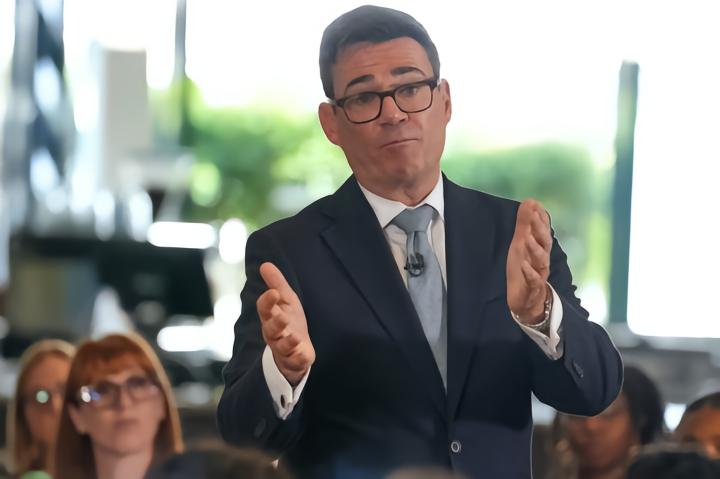
British Prime Minister Andy Burnham and French Sports Minister Marina Ferrari, among other politicians, have publicly opposed FIFA's proposal. European leagues have also filed complaints with the European Commission against FIFA for abusing its market dominance. This stems from Gianni Infantino's refusal to consult with the leagues regarding his plans to create and expand various competitions. The European Commission, based in Brussels, is considering whether to launch a formal investigation.
Therefore, Europe is important. However, it would be even more helpful if European football could try to find common ground with North and Central America, Asia, Oceania, and any other regions that oppose Infantino's autocratic style and are constantly trying to expand FIFA's share of the global football economy.
Will they do that? Possibly. There is certainly enough anger out there; it just needs someone or something to bring it together and use it effectively.
Infantino may have already given them this entry point: the outside world believes that he is willing to sell the World Cup for his own ambitions.
Even in Aruba and Zimbabwe, this is not an easy thing to sell.